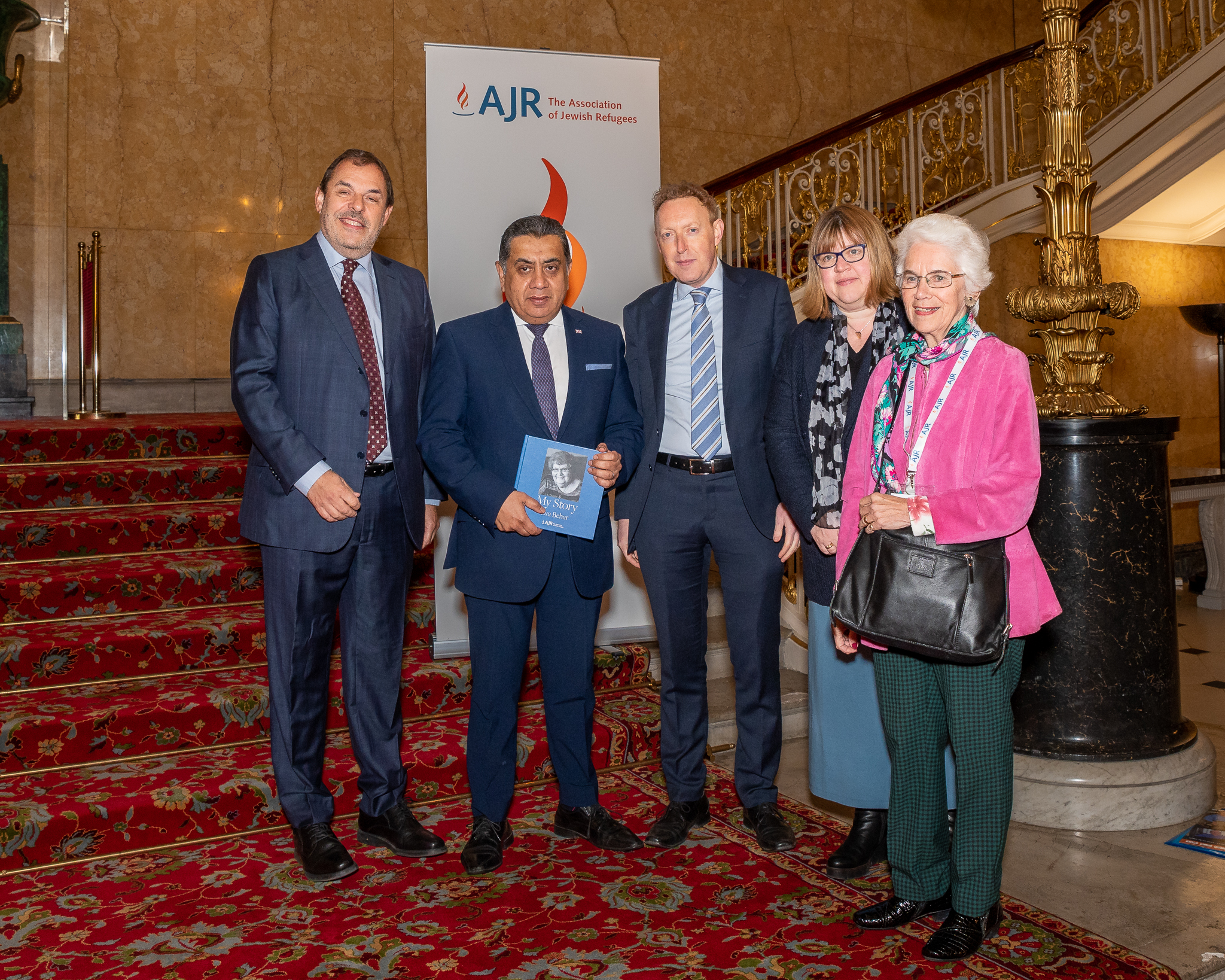
It’s a wrap for AJR’s fascinating two-day international forum which was attended by academics, educators, historians, descendants of Holocaust survivors and refugees and anyone with an interest in Holocaust testimonies.
The Forum took place in London on the 19 and 20 of April 2023 at the spectacular location of Lancaster House in St James’s Park.
This Forum brought together archives, museums, and other institutions which hold collections of Holocaust testimonies and feature Holocaust testimonies in their (digital and non-digital) spaces as well as educational recourses and next-generation participants.
Speakers included historians Dr Robert Williams, Finci-Viterbi Executive Director USC Shoah Foundation, Prof. Dan Stone, Prof. Tony Kushner, Dr Andrea Hammel and James Bulgin, and journalists Natasha Kaplinsky OBE, Daniel Finkelstein OBE, and Jonathan Freedland.
Held in partnership with the German Embassy and the Foreign, Commonwealth & Development Office, we were also delighted to welcome His Excellency Miguel Berger (German Ambassador), Lord Ahmad of Wimbledon, and The Rt Hon. the Lord Pickles (UK Special Envoy for Post-Holocaust Issues).
With declining numbers of Holocaust survivors and refugees, the conference facilitated conversations between world-renowned experts to re-evaluate and access the many ways Holocaust testimonies have been collected, displayed, and curated since the end of the Second World War, and reimagine their future usage.
The conference, which featured a wide-ranging programme, was a forum that created dialogue between various stakeholders: archive professionals, curators, educators, film makers, and oral historians, who have been involved in the creation and dissemination of resources featuring Holocaust testimonies.
The conference seeked to address four primary aims:
1. Shed light on the history of the collection of Holocaust testimonies – while many people use Holocaust testimonies for their research and/or to create educational resources, very little attention is normally given to the context in which the testimony was created. This conference investigated how the gathering of testimonies has changed over time and how the methodology applied by different institutions has influenced the collected narratives.
2. Critically engage with the educational usage of testimonies over time – The forum enabled museum practitioners from across the globe to discuss how testimonies have been displayed in the past and how they can be used in the future. The conference also explored the use of testimonies on social media platforms and other new media.
3. Explore Testimonies as a form of social action in fighting prejudice and antisemitism – the forum explored how the creation and dissemination of Holocaust testimonies can be used in the fight against prejudice and antisemitism and how to encourage young people to engage with these testimonies.
4. Create dialogue among Holocaust testimony stakeholders and highlight good practice – a joint initiative to create a portal through which archives of testimony captured from UK based Holocaust survivors and refugees can be accessed, was launched at the forum. The forum invited the various institutions to think collaboratively about the roles and responsibilities of being a custodian of Holocaust testimonies, aiming to create a platform for all major UK stakeholders. The AJR is the UK’s largest dedicated funder of Holocaust educational and remembrance programmes and for the last 20 years has collected Holocaust testimonies for its own AJR Refugee Voices Archive, which will feature in the portal.

Photographs by Adam Soller Corporate Photography
[envira-gallery id=”88576″]