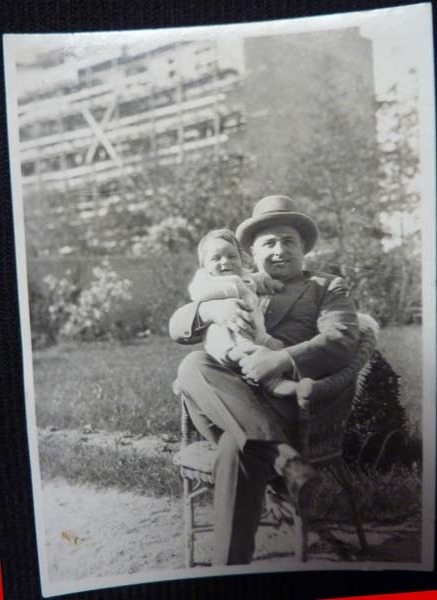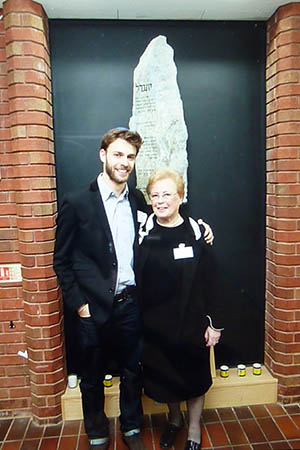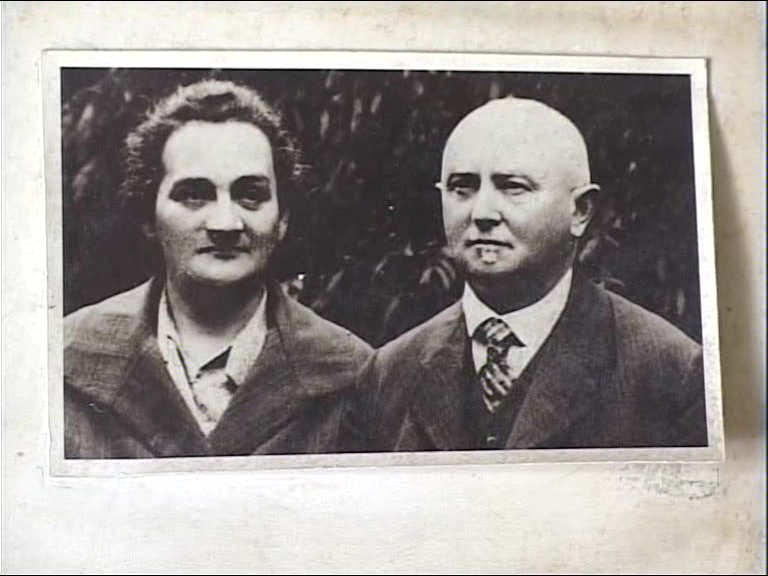
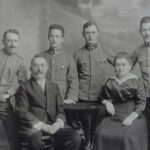
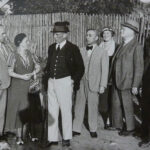
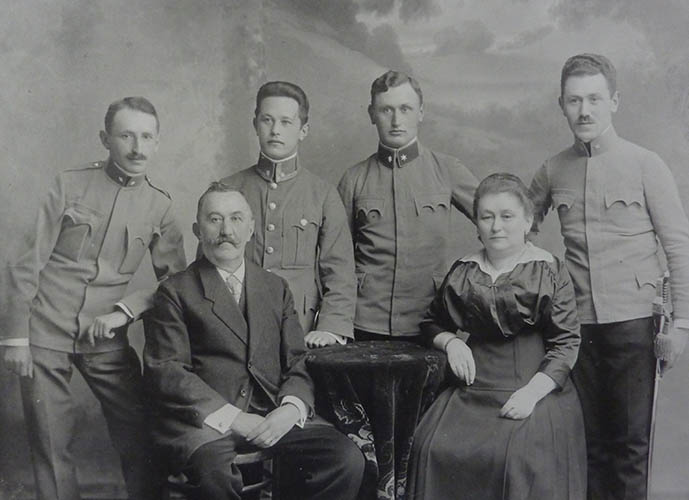
Helga Ederer: HE’s paternal grandparents Fantl, standing from left, eldest son Otto, her father Rudolf, Josef, Richard, Jindrichuv Hradec, around 1914
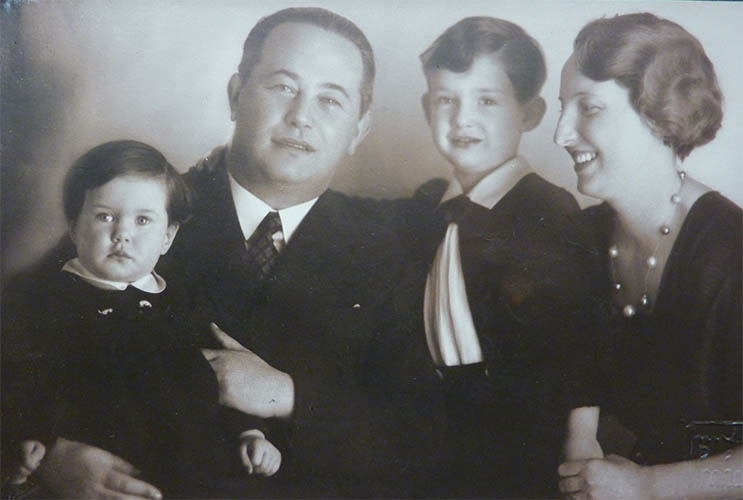
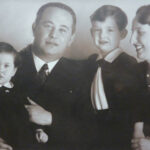
Helga Ederer: The Fantl family at peace
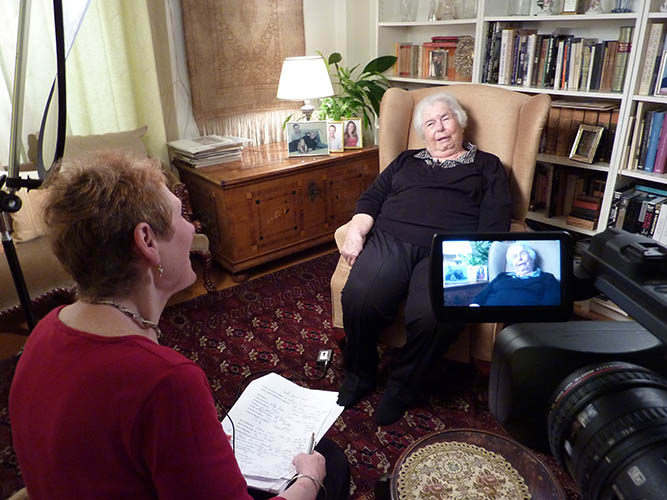
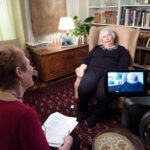
Helga Ederer: 2017
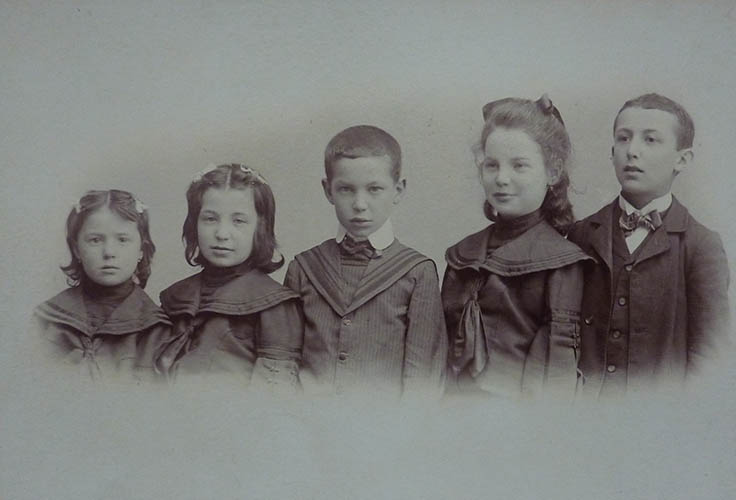
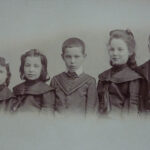
Helga Ederer: Herta’s mother who was the youngest and siblings, Zdenka, sister Marta, Otto, Olga, and ?, Pribram, 1904
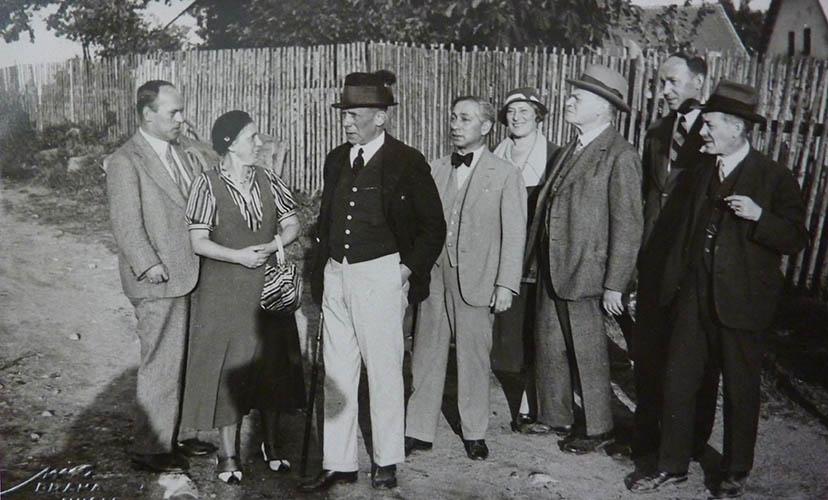
Helga Ederer: HE’s maternal uncles
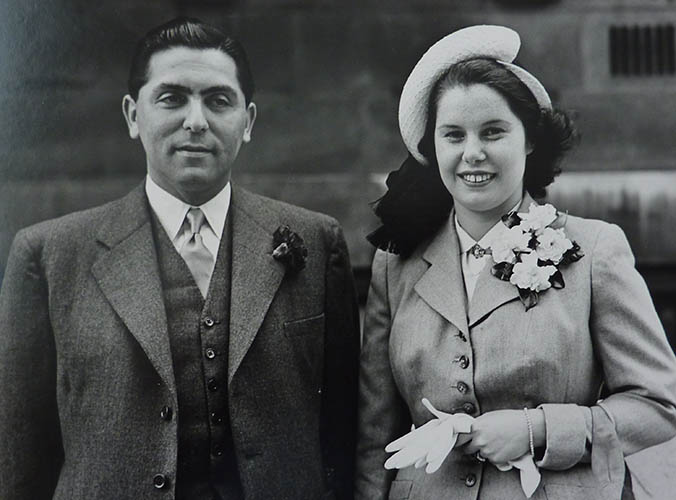
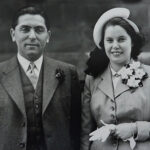
Helga Ederer: Willy and Helga (nee Fantl) Ederer, Wedding day, London, 1950
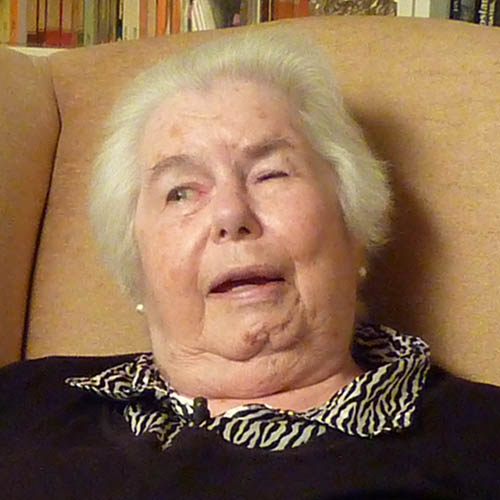
Helga Ederer: 2017
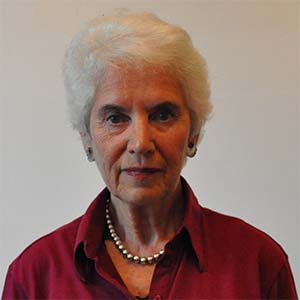
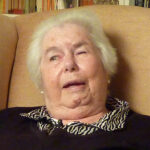
Helga Ederer
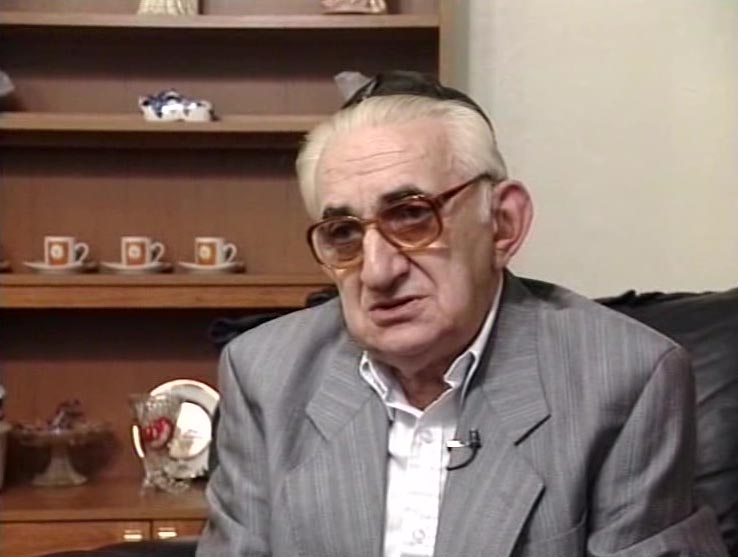
Born in Prague in 1931, Helga Ederer spoke both Czech and German, as did her lawyer father, Dr
Born: 1931
Place of Birth: Prague
Arrived in Britain: 01/06/2026
Interview Number: RV 154
Experiences: Auschwitz , Concentration Camp Survivor
Interview Summary
Born in Prague in 1931, Helga Ederer spoke both Czech and German, as did her lawyer father, Dr. Rudolf Fantl, from Jindrichuv Hradec (south Bohemia), who had studied law in Vienna. Although the family was not very religious, relatives were prominent “conscientious good Jews” in their community. Her mother, Zdenka, from Pribram (central Bohemia), worked first in millinery then in fashion, designing and cutting.
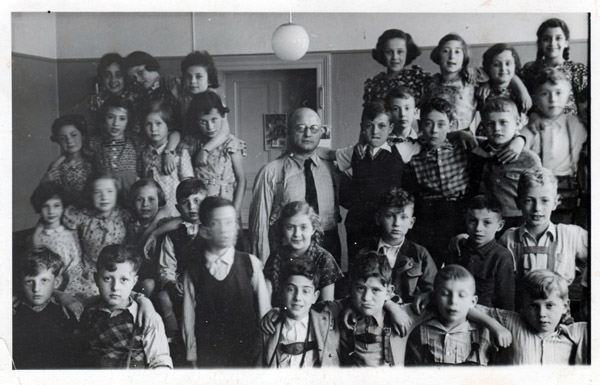
The interviewee initially attended a French school in Prague, but her happy early childhood, and effectively her elementary education, ended following Nazi Germany’s seizure of rump Czechoslovakia on 14‒16 March 1939. For a time she attended a Jewish school; however, fears for her safety there increased. Her home had already been requisitioned by German officers, forcing the Fantl’s move to one room sub-divided for two families. In 1942 they were transported to Terezin.* Everything they had taken was confiscated, including (to Helga’s delight!), a gold brace for her teeth. Boys/girls lived in separate rooms; the interviewee was “seriously ill all the time” and marvels that she survived.
In 1943 the family was transferred to the ‘Familienlager’ (‘family camp’) in Auschwitz-Birkenau extermination camp. Their transport and two others (before/after), each three months apart, were marked “Sonderbehandlung” (“Special treatment”).** The Fantl’s did not have their head shaved, but men/women lived apart. Dr. Fantl worked in a coalmine, his wife and daughter dug trenches, while the younger son, Tomas, worked as a messenger in the camps before being sent to Buchenwald. Interviewee Helga Ederer twice evaded fatal selections; she ascribed her survival to resilience and advice from her older half-brother, Jan (Honza), who falsified documents to make her older than she really was. He, though, was gassed on 7 March 1944 in front of his mother; she “aged immediately.” 3,000 young Czechoslovak Jews were killed that day, Helga stated. It was also the birthday of Czechoslovakia’s first President, Tomas G. Masaryk; the irony did not escape her. Her father was ordered to join the notorious 1945 death marches, but his eyes had suffered from the coal dust, and he asked to remain behind. The German officer shot him. It was one day before US forces took the area.
Mother and daughter had hidden in a barn while others marched on, and were suspicious of the Soviet soldiers who liberated Poland. Forced to work on a farm, they eventually made their own way back to Prague, often on foot, in 1945. Still wearing camp uniforms, they finally reached their home in Revolucni Street, in the Old Town, and by chance met relatives; other people were less welcoming. Despite the gap in her schooling, the interviewee was placed with children her own age, then belittled e.g. for not knowing her times tables.
Zdenka Fantl retrieved some hidden gold and raised a loan enabling her to start her own fashion business, specializing in ladies’ model raincoats which she exported to key London stores like Harrods, and Debenham & Freebody. In 1947 she married Englishman Julius (‘Aussi’) Aussenberg, gaining British citizenship, but they remained in Czechoslovakia until the Communist coup of 25 February 1948. The interviewee joined them in London, flying into Northolt in June/July 1948. Following a six-month English for Foreigners course in Cambridge, she trained to be a designer and cutter, but disliked the work and took a one-year Pitman secretarial course.
Helga and Willy Ederer married in Marylebone Registry Office on 11 July 1950. He had come to Britain in 1939 to study English, and did not return to Czechoslovakia. In wartime he became a diamond polisher in Soho’s Greek Street; post war he dealt in diamond jewellery but hated it,*** and felt that he had missed out in life; times were hard. When Helga’s step-father died, her mother “was hysterical, her nerves finally gave way”, but “who could help her after what she had seen and been through?”
Like her mother, Helga Ederer did not harbour hatred against Germans, nor did she oppose travel to Germany or the purchase of German goods; that she asserted, was the hard-line attitude of Anglo-Jewry, not the Continental Jewry that had suffered and was generally forgiving. In post war Germany, Zdenka Fantl/Aussenberg employed a young former SS officer, and met Oskar Schindler, the ethnic German Czechoslovak industrialist. Schindler gave her a book comprising accounts of “good Germans” including him, in which he wrote her a personal dedication. The book was passed to the interviewee, then to her son John,**** who was so impressed by Czechoslovak-born Rabbi Hugo Gryn, that he became religious.
In contrast, Helga Ederer is not religious, but her message was “do personal good.” She does not suffer from ‘survivor’s syndrome’, and has visited what in 1993 became the Czech Republic. She does not feel that she belongs there, though she regained some family properties through post-Communist restitution. Despite her long residence in Britain, she has never felt truly ‘settled’ anywhere; she was “British, but not English.”
Notes
(*) The Czech book to which the interviewee referred in the film, was Terezinska Pametni Kniha (Terezin Commemorative Book), published in 2 volumes by Institut Terezínské iniciativy in 1955; it lists those who were there. For details see:
<http://www.terezinstudies.cz/publications/terezin-memorial-books.html>
(**) “Special treatment” (“Sonderbehandlung”) abbr. S.B.; according to Wikipedia is “known primarily as a euphemism used by Nazi functionaries and the SS for murder”, and “and was one of a number of nonspecific words the Nazis used to document mass murder and genocide.” <https://en.wikipedia.org/wiki/Sonderbehandlung>, Google, downloaded 8 September 2015
(***) The Jewish element, the situation regarding Belgian refugee diamond polishers in wartime Britain, and the difficulties of dealing post-war in diamond jewellery as recounted by the interviewee, are affirmed in the comprehensive semi-biographical work by Lichtenstein, Rachel, Diamond Street. The Hidden World of Hatton Garden, London/New York/Dublin: Penguin Books, 2013.
(****) The book is now in Switzerland; Helga Ederer did not recall its title, but after the interview mentioned that her brother Tomas had suggested a film be based on it. Their step-father ‘Aussi’, who had been General Manager of Fox Film in Europe before Hitler’s rise to power, took it up, but in the early 1950s found no-one was interested in war films. The film Schindler’s List was released in 1993.
Place of Birth
Anyway, so…as soon as we got to our - the whole thing was tragic-comedy. My mother equipped us for going to Terezin. We had sort of jumpsuits, overalls, and so on. And…We carried all the luggage in. And as soon as we arrived, everything was taken away from us. And I was stupid enough I had - you know, I had a…a brace. And the wire was gold. And that was the first thing they took away from me and I was of course stupid enough to be very pleased…which meant that ever since then I had rabbit teeth. And when we got to Terezin I was put with the girls into the girls’ home, and my brother into the boys’ room - boys’ home - and my father with men and my mother with women. But my career in, in, in, in the girls’ home wasn’t very long either. Because I was constantly ill. I felt - I still feel sorry for my parents. The poor things thought I would never survive; I had one thing after another. I was really seriously ill all the time. And the people in the girls’ home said, “This is enough. We, we are in - fed up with nursing that girl. Let her mother look after her.” And they turfed me out. And I went to live with my mother and she had to look after me. But then we were taken to Auschwitz so she didn’t have to look after me very long either.
I went to school. Now that was a- that was really a horrible experience. Because I hadn’t been to school. And when I went there… they put me to the- to the form according to my age. Nobody asked, “What did you do during the six years of war?” They didn’t care. They put me there.
The- the documents, you know, the Germans were meticulous in, in…in documenting everyone. Everyone had a card and everyone was documented exactly. And that transport, and our transport and the transport that came after- There were three transports and three months apart. And they all had the mark “Sonderbehandlung”. But anyway, when the first transport, with the with Sonderbehandlung …went into the gas chambers, we thought that we would do the, that our fate would be he same, after six months. And… we were also after six months the familienlager was changed was- And we were …separated totally. My mother and I went among the women to Stutthof to a work lager, and my father went to a coal mine, and my brother remained there in, in…in Birkenau as, as…a…a, well he was really a…a - a runner. He ran with messages for the Nazis from one lager to another. And he stayed in, he really had the hardest lot of us all, because he stayed in Auschwitz right up to the end, right up to January ’45. And ended up after…after some rather bad transport he ended up in Buchenwald. So. That was my brother. My - my eldest brother was gassed as I told you once. He was gassed on the 7th March, ’44. And… my mother and I, we survived the- we survived digging trenches. Tank trenches. And my father was in… in… in a - a coal mine. And on the, on the marches… he couldn’t - he couldn't walk any further because he couldn't see; he had eczema in the eyes from the coal dust. And he asked the officer in charge if he could stay behind and the officer said, “Yes, of course.” And shot him on the spot. And the column was then overtaken by the American troops a day later.
My mother and I we were in Poland and we were liberated by the Russians. And my mother quite rightly didn’t trust them a bit and refused to be repatriated by them… because a friend was repatriated by them and ended up in Russia. And didn’t come out till late 50s. So we, we…we stayed in Poland. We… we, …stayed away from the transport. It wasn’t- the atmosphere and the discipline wasn’t very strict any more. You could hear the Russian guns. So of course the Nazis were not very strict; on the contrary, they wanted to have testimony from us that they were good - that they were not nasty to us. And anyways, so we stayed behind my mother and I and a group of women hid in a barn, while the transport marched on. And …we stayed there and… the other women tried to be repatriated by the Russians when they came. And my mother and I we didn’t. We stayed on an abandoned farm. And… the Russians pressed me into work. My mother was too ill. But I had to look after cows. I was a town child. I didn't know that cows had horns; I thought that only wolves had horns. But anyway…it was good fun. Because I had…I had a dog which the…English prisoners of war had to leave behind. They had been on that farm before, and they were repatriated to Germany proper. And they had to leave the dog behind. And nobody wanted that dog. It only…it only responded to English commands. So I had it. It was a lovely dog. And it guarded me. If any Russian came near me… it guarded me.
My mother & I went to Stutthof to a work lager & my father went to a coal mine. My brother remained in Birkenau as a runner. He ran with messages for the Nazis from one lager to another. He really had the hardest lot of us all, because he stayed in Auschwitz right up to the end, right up to January ’45. After some rather bad transport he ended up in Buchenwald. So. That was my brother. My eldest brother was gassed on the 7th March, ’44. My mother & I survived digging tank trenches. My father was in a coal mine. On the marches he couldn’t walk any further, he couldn't see; he had eczema in the eyes from the coal dust. He asked if he could stay behind & the officer said “Yes, of course.” And shot him on the spot.
My mother had to fight for everything. And she had to fight to get things returned to her. She hid quite a lot of things with, with… Aryan friends and she didn’t get… more than half back. I remember going with her to - to some people who looked after the furniture of our dining room. And they said, “Yes we have it and it’s very nice. But we got used to it! What are we going to do?
REFUGEE VOICES is the AJR’s groundbreaking Holocaust testimony collection of filmed interviews with Jewish survivors and refugees from Nazi Europe who rebuilt their lives in Great Britain.
The copyright of personal photos and documents on the site is held by each interviewee and may not be reproduced without their permission. Please contact the AJR if you would like to use any of the images and documents.