
Jackie Young
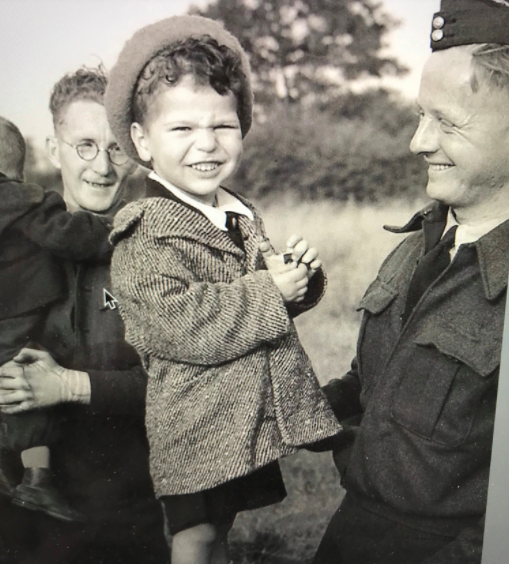
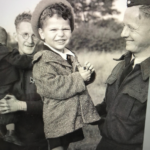
JY: With Sterling Bomber pilots on arriving from Prague
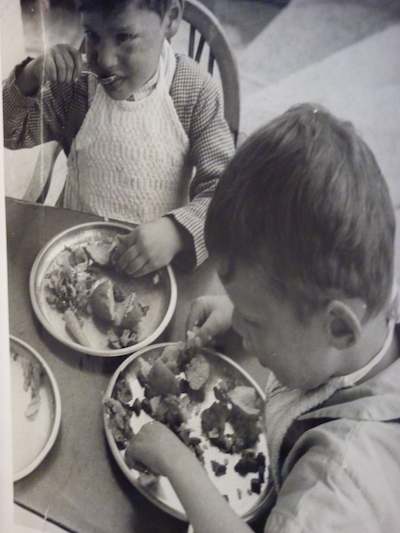
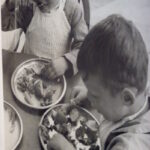
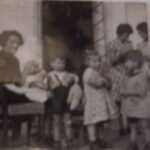
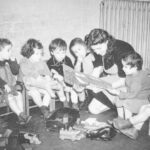
JY: Eating potatoes with sugar at Bulldog's Bank
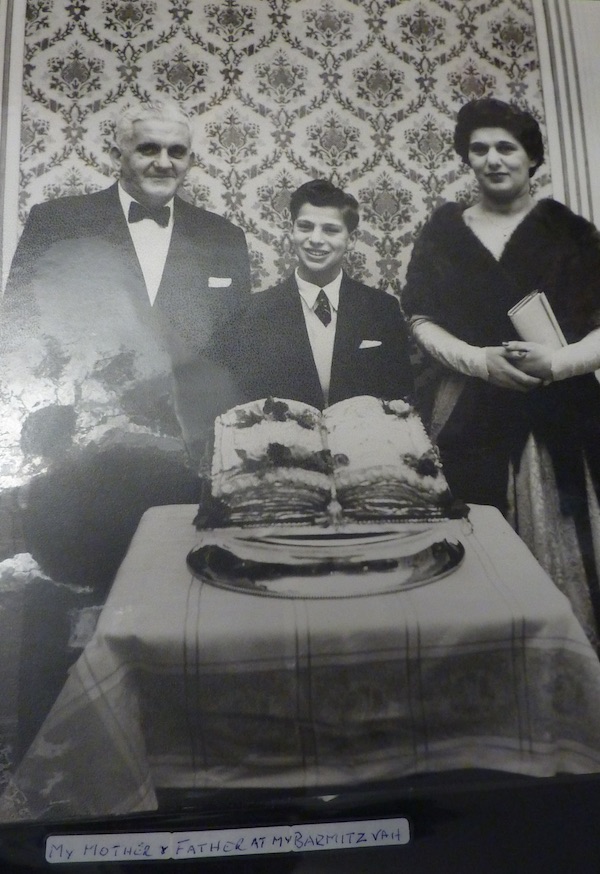
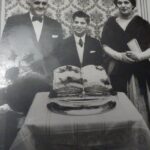
JY: Barmitzvah with adoptive parents
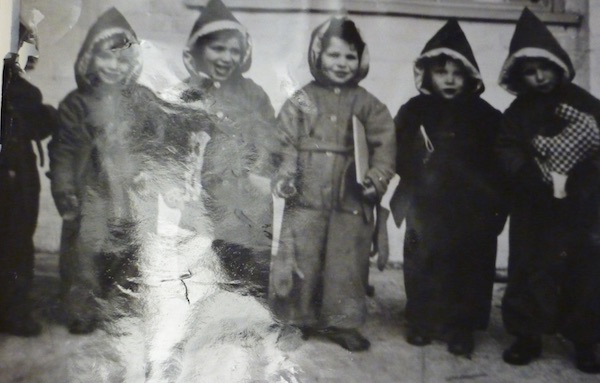
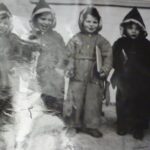
JY: Dressed to meet the queen on a cold day at Bulldog's Bank
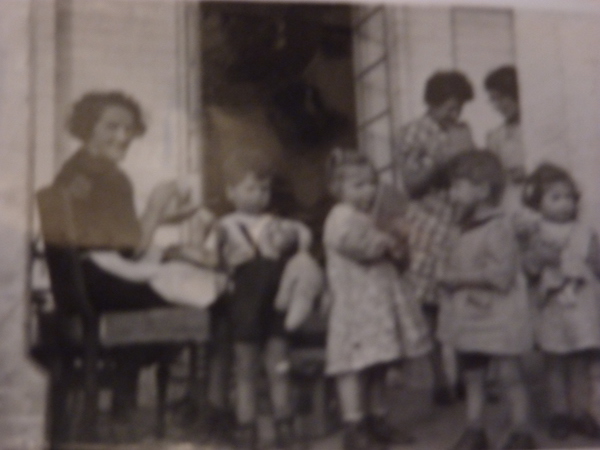
JY: Bulldog's Bank. Woman on left is Lady Clark
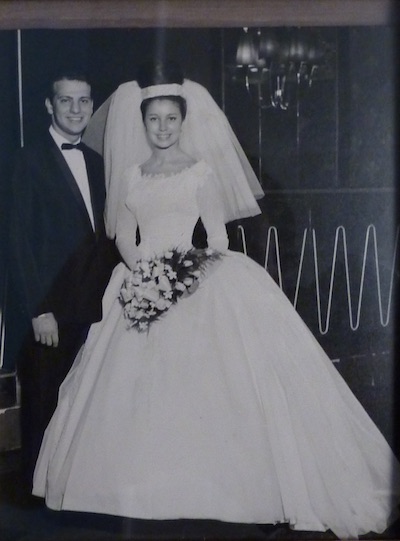
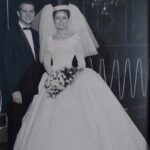
JY: Wedding day to Lita
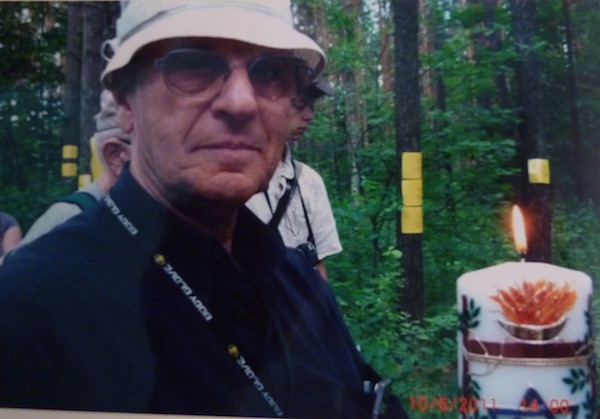
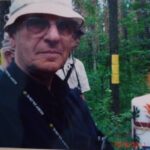
JY: In Maly Trostenets
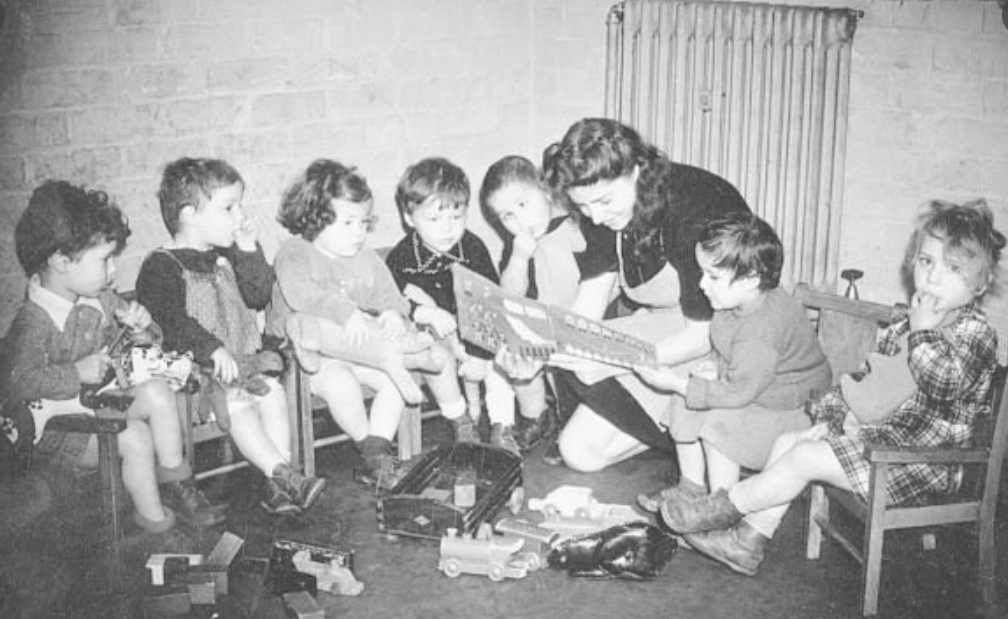
JY: Child survivors at Bulldog's Bank
Jackie Young
Born: 1941
Place of Birth: Vienna
Arrived in Britain: 01/08/1945
Interview Number: RV152
Interview Summary
Date of interview: 29/07/2015
Jackie Young was born Jona Spiegel in Vienna on 18 December 1941. At the age of nine months, he was deported from a Jewish orphanage to Theresienstadt. After the liberation of Theresienstadt in May 1945, Jackie was brought with other young children (around ages 3 – 4) to Bulldogs Bank in Sussex. Jackie spent about a year at the house, which had been made available by Rebekah Clarke. Later on, he and other young children were accommodated at Weir Courtney, the home of Sir Benjamin and Lady Drage, in Lingfield, Surrey. The children were looked after by (among others) Alice Goldberger and Sophie and Gertrude Dann, whom Jackie later met and who showed him photos of himself as a little boy. In the subsequent years, Jackie reconnected with other Holocaust survivors who also stayed at Weir Courtney as children.
It was at Weir Courtney that Jackie’s adoptive parents met him. They were descendants from Russian and Polish Jewish immigrants. When Jackie was around 15 years old, his adoptive parents changed their name to Young. Jackie has no memories of the earliest parts of his childhood. He only found out the detail he recounts in his moving interview at the time he was about to marry his wife, Lita, in 1963. His adoptive parents had always been uncomfortable and reluctant to discuss his childhood out of fear of losing his affection and love, or even of losing him entirely. Jackie only learned that he was adopted when a schoolboy confronted him about it.
Prior to his marriage to Lita, Jackie was required to provide documents proving that he was Jewish. He learned about his birthplace, about his time in Theresienstadt, and about his biological mother—who had been murdered at the extermination camp Maly Trostenec. Jackie reveals that he had always felt unsettled by his unknown past, which to him was an incomplete picture he wanted to piece together. For example, Jackie felt drawn to places in London where Czech, Austrian and German refugees congregated. At first, his young family with Lita took all his time and energy, but his longing to find out more never abated. Finally, Jackie visited Vienna, Theresienstadt, Maly Trostenec, Prague and Yad Vashem to find clues about himself and his background. Although he has attended meetings worldwide with Holocaust survivors, the information Jackie was able to gather sadly remained limited. He managed to locate the grave of his grandmother in Vienna, and he learned that his grandfather, an uncle, and an aunt had also been murdered in concentration camps. Jackie has never learned his father’s name, which was not written on his birth certificate.
Despite carrying this lifelong burden of unanswered questions, Jackie is a man who has lived life to the fullest. He greatly enjoyed his work as a London black cab driver for 46 years. Most importantly, however, Jackie married the love of his life Lita and had two daughters, who have been very supportive of him in his search for answers. Jackie has shared his story with his grandchildren, who have also visited Vienna with him. Although Jackie believes that he has to accept the unanswered questions of his past, he acknowledges that the burden he has carried for his entire life would have been greatly lessened, had his adoptive parents been more understanding and supportive. But he bears them no grudge. Jackie is grateful for everything they sacrificed for him, and remembers them most lovingly.
Today, despite that Jackie observes with disbelief the pain that humans still inflict on one another—even on children—his message is always to reject hate, and to learn and remember the lessons of the past.
Keywords: Vienna. Terezin. Theresiensstadt Ghetto. Bulldocks Bank. Adoption. Cab Driver. Maly Trostenec. Child survivor.
Place of Birth
I say to myself, you know, how did I survive, with very little nurturing at all? I mean you see today with the children so overindulged with their toys, and their, how they're- protection and what have you, and for the first formative three years of my life we were- it was a danger zone!
How did I survive?
Cicero, a famous Roman philosopher said, ‘Memory is the treasury and guardian of all things.’ And I have no memories. And what I am doing today, is putting my past to rest. [I would like to thank everyone for being here with me today, and especially my wife, who has shared my problem with me.] It has taken me all my life finally to arrive at this place and close the search for my past, the lost family I never knew. These two stones are the names of Elsa, my Mother, and Leopold, my Grandfather being placed at this last address in Vienna, show that these people existed, and to know the cruel facts of what happened to my family.
not having memories
I think people realise now that protection is not really protecting. You've really got to tell the whole story and share the thing
You have to tell it all
Well… it’s - it’s strange. You just…you just really, you’re…you sort of feel your head’s messed up. You know, one minute you’re somebody, and then you’re somebody else. It’s…it’s…it’s- Again, it’s a very tough thing to - to come to terms with. …In part, probably I’ll never ever get over it.
Not knowing your past
Humans lost their humanity there, didn't they? How you can go into an orphanage and get ahold of a nine month old baby and put em on a train to Terezin is just... you think to yourself- and then the next day, or the next hour, you go round to your family and say, "How you doing?" and what have you. You just... - this terrible danger of humanity that they can lose- just so much lose it. And you find today people do- do the same things. Srebrenica and Rwanda, and how people can just get hurt and lose it.
losing your humanity
Some would even say, “Oh, you’re lucky you don’t remember”. I said, “Yes, your- you can probably from your point of view, you can say that, but you can’t say that from my point of view ‘cause, you know what you lost, and I don’t know what I lost."
On being a child survivor with no memory of Theresienstadt or his birth family
It’s strange. You just…you just really, you’re…you sort of feel your head’s messed up. You know, one minute you’re somebody, and then you’re somebody else.
Discovering you're someone else
Some would even say, "Oh, you're lucky you don't remember...I said, "Yes, your- you can probably from your point of view, you can say that, but you can't say that from my point of view because, you know what you lost, and I don't know what I lost.
Knowing vs not knowing your loss