BRITAIN’S HOLOCAUST REFUGEES MARK 80TH ANNIVERSARY OF VE DAY
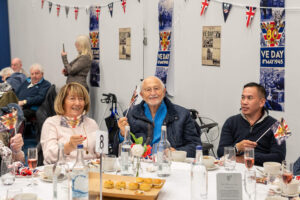
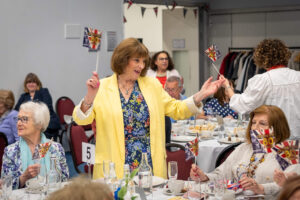
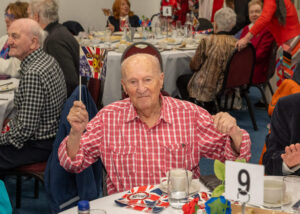
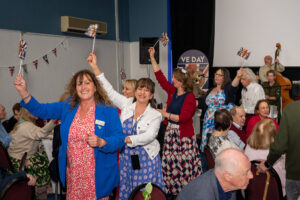
The Association of Jewish Refugees (AJR) held a special gathering of Holocaust refugees and survivors to mark the 80th anniversary of VE Day and the liberation of Europe, from Nazi tyranny.
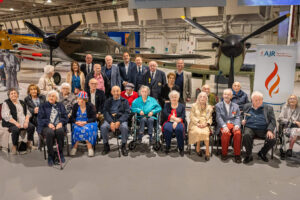
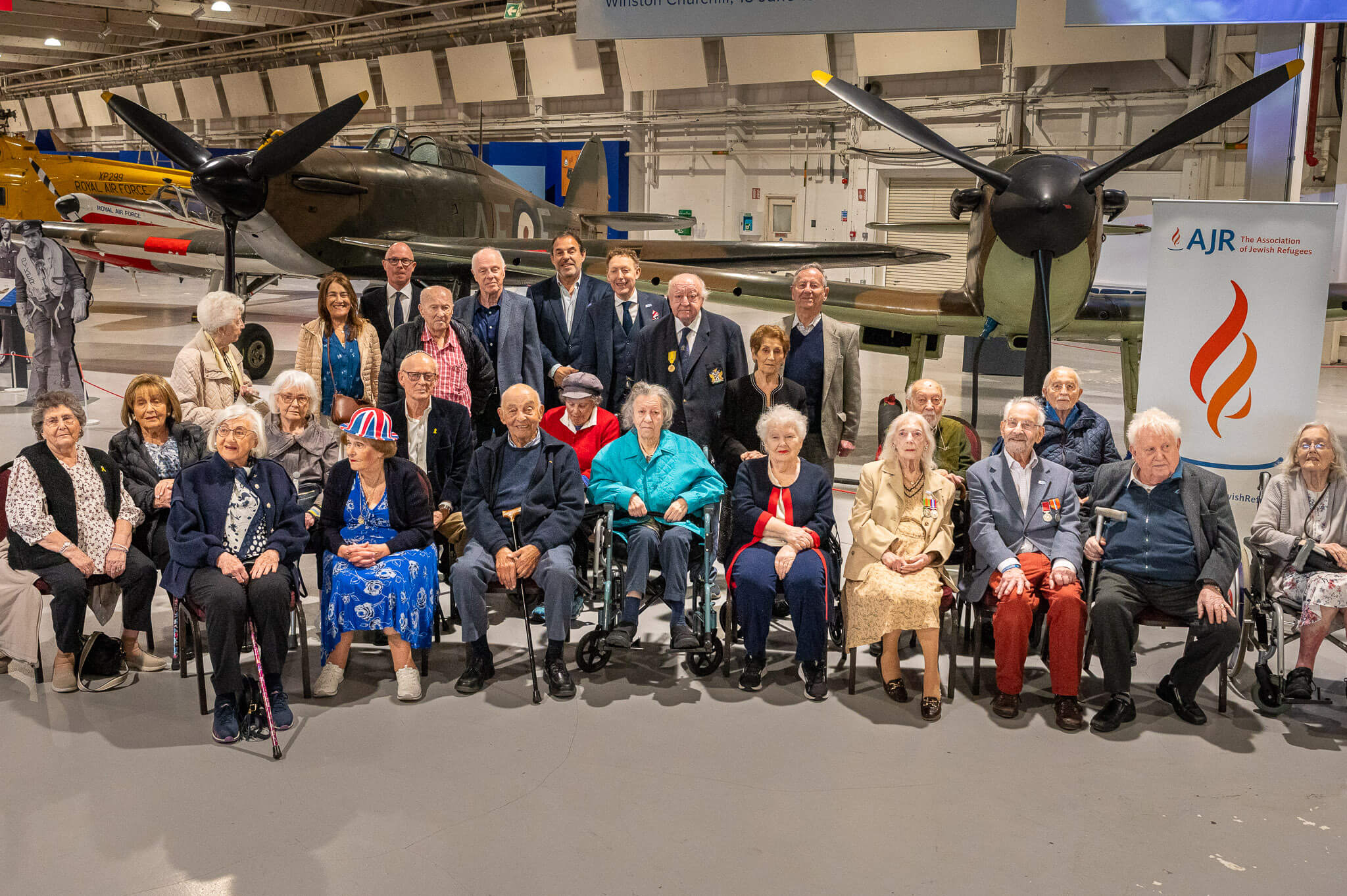
Taking place at the RAF Museum in London, Over 150 of the UK’s remaining Holocaust witnesses and their descendants came together, against the backdrop of iconic WW2 fighter aircrafts, such as the Spitfire, to honour and celebrate those who took up arms and who fought against their fellow countrymen and their countries of birth.
Many Jewish refugees who found refuge in Great Britain, were determined to fight back against those responsible for their flight and oppression, and a number joined the British armed forces in the battle against the Axis powers. Initially, refugees from Austria and Germany were not permitted to join the British armed forces. This was later relaxed, when some were allowed special dispensation to join the Auxiliary Military Pioneer Corps (renamed the Pioneer Corps in 1940), an unarmed unit that provided manual labour for British units. Tasks included trench digging, bridge building, and clearing roads. Some 4,000 male Jewish refugees enlisted in the Pioneer Corps during the course of the war. From 1942, Austrian and German refugees were permitted to enlist directly into technical units and the Special Forces, and eventually all restrictions on service were lifted. Refugees who served in the army were sometimes known as ‘The King’s Most Loyal Enemy Aliens’. In total, around 10,000 German and Austrian refugees joined the British armed forces from 1939 to 1945.
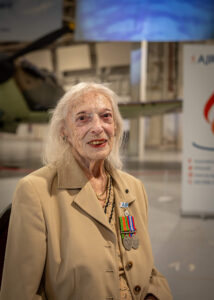
One of those inspirational brave hearts was veteran Henny Franks, an AJR member who turns 102 next month. In February 1939, Henny escaped to UK, via a Kindertransport, together with her younger sister. Her father was arrested and deported to Sobibor where he was murdered by the Nazis; thankfully her mother survived the Holocaust. Henny was taken in by a cousin in England. Aged 19 years-old, she was recruited by the British Army to the Auxiliary Territorial Service (ATS) and went to Nottingham for training and then worked as a driver transporting ammunition in Westcliff-on-Sea.
Asked about her reflections, Henny said:
“I love England very much. I felt so proud to be in the army. I did my bit. I was one of the lucky ones. I want people to know that Jewish people did their bit to fight back.”
Michael Newman OBE, Chief Executive of Association of Jewish Refugees (AJR) said in his remarks:
“Today we give special recognition to the brave endeavours of the Jewish refugees who escaped Central Europe and joined the British War effort having experienced the horror of Nazi terror first hand. Over the years, the AJR has been honoured to count many members as veterans, including those who worked at Bletchley cracking and deciphering Enigma codes or for the Listening Service, eavesdropping on conversations of German POWs, all of which helped shorten the war. For this community, VE Day was – and remains – a paradox of celebration and realisation. Of bunting and smiles, and of heart-wrenching desperation that the fate of loved ones was in stark contrast to their own.”
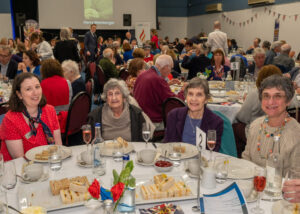
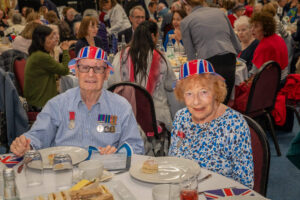
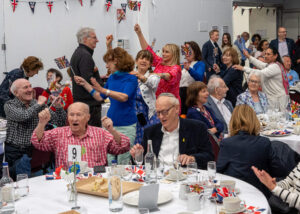
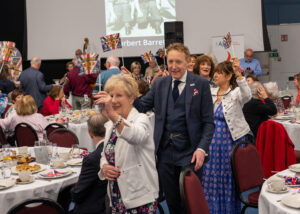
During the proceedings, members of the AJR were given a private tour of RAF WW2 fighter aircrafts, followed by entertainment from a swing band and traditional 1940s sandwiches and cakes – representing the new life in Britain Jewish refugees forged in the face of adversity.
Guests of honour included MP for Hendon, David Pinto-Duschinsky and Sally Sealey, Chief of Staff to the UK Envoy for Post-Holocaust Issues.