AJR Blue Plaques
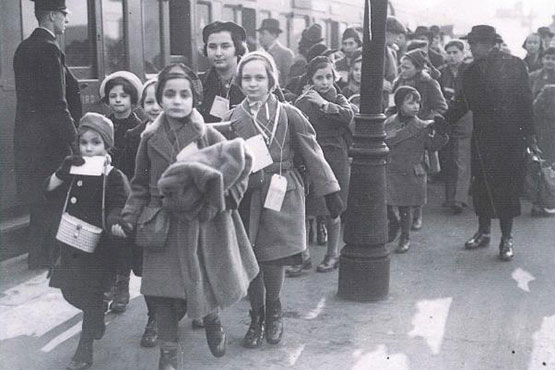
The AJR Blue Plaque Scheme stands as a national tribute to one of the most important waves of migration to Britain and to a generation whose contributions profoundly enriched British society, culture, science, education and public life.
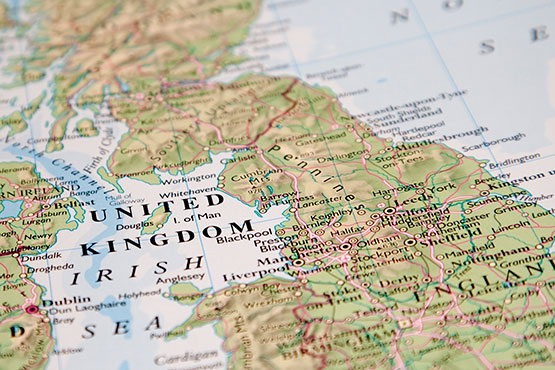
Explore the Map
The AJR Blue Plaque Scheme and accompanying interactive map create a tangible link between the extraordinary stories of Jewish refugees and the communities in which they lived, worked and contributed. As well as helping residents and visitors discover these historic sites, the plaques and map bring the past into the present, preserving and sharing the legacy of those being honoured for future generations.
Remembering the Refugees Who Enriched British Life
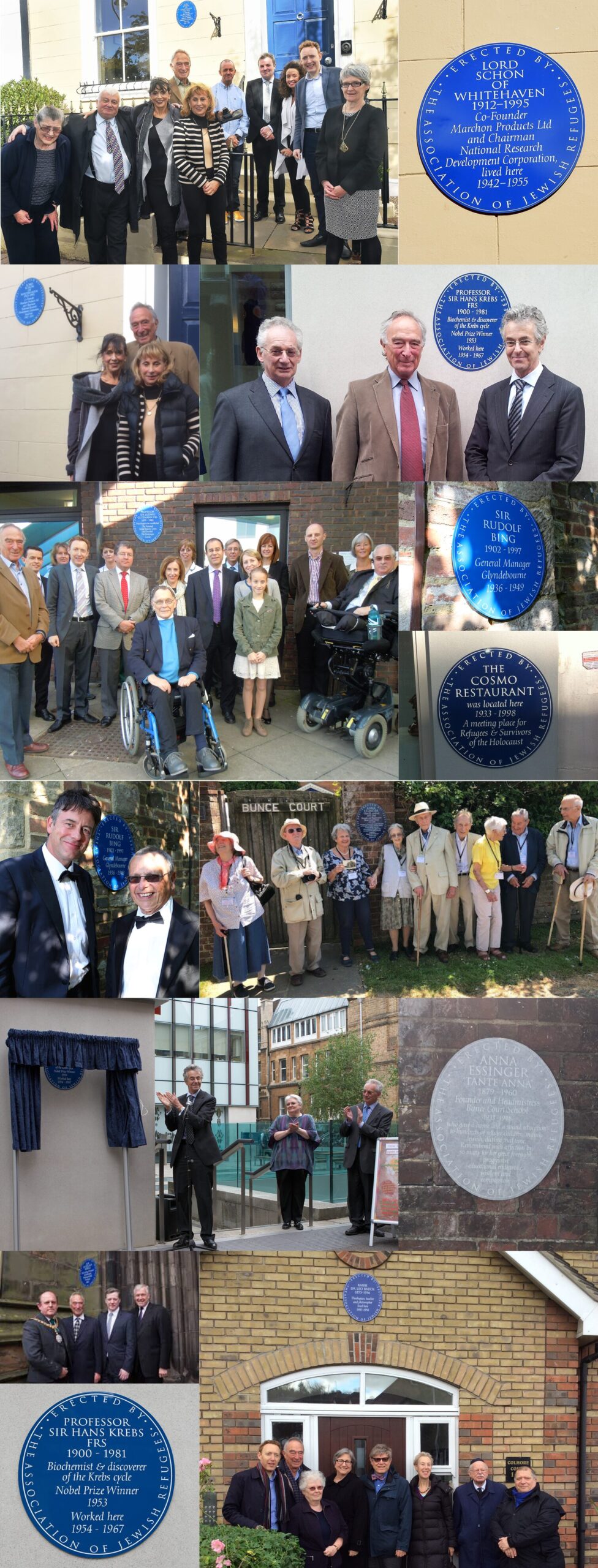
The AJR Blue Plaque Scheme honours and celebrates the remarkable contributions made by Jewish refugees to Britain. Through plaques mounted across the UK — and now internationally — the AJR commemorates distinguished individuals, organisations and locations that form part of the wider refugee experience and legacy.
The first AJR plaque, commemorating the pioneering biochemist Sir Hans Krebs, was unveiled at the Department of Biochemistry in Oxford in May 2013. Later that year, a plaque honouring the neurologist and founder of the Paralympics, Sir Ludwig Guttmann, was unveiled at the National Spinal Injuries Centre on the site of Stoke Mandeville Hospital. In November 2013, the AJR erected a plaque commemorating The Cosmo, the celebrated Finchley Road restaurant and meeting place for Jewish refugees.
Since then, the scheme has expanded significantly, reflecting the breadth and impact of the refugee contribution to British cultural, scientific, educational and public life.
In December 2015, a plaque was unveiled in honour of the theologian, scholar and teacher Leo Baeck at 283 Watford Way, London NW4, where Rabbi Baeck lived from 1945 until his death in 1956. In August 2016, the AJR erected a plaque at Glyndebourne to honour Sir Rudolf Bing, who served as General Manager of the renowned opera house between 1936 and 1949.
In September 2016, a plaque was unveiled in Whitehaven, Cumbria, commemorating Lord Frank Schon, the Chairman of the National Research Development Corporation, who championed improved conditions for industrial workers. In July 2017, the AJR honoured Otto Schiff at 14 Netherhall Gardens, Hampstead — the family home he transformed into offices to coordinate refugee rescue efforts during the 1930s refugee crisis.
To mark the 70th anniversary of the founding of the Edinburgh International Festival, the AJR unveiled a second plaque dedicated to Sir Rudolf Bing at The Hub in Edinburgh, recognising his role as one of the Festival’s founders.
In April 2019, a plaque was mounted at Imperial College London in honour of Professor Sir Ernst Chain, Nobel Prize-winning co-discoverer of penicillin and founder of the College’s Biochemistry Department. Later that year, in December 2019, the AJR installed a further plaque dedicated to Otto Schiff and the work of the Jewish Refugees Committee, which helped rescue and resettle thousands fleeing Nazi persecution.
The scheme has continued to grow across the country. Plaques have since been unveiled to honour Anna Essinger and Bunce Court School in Kent; Kurt Hahn at Gordonstoun School in Scotland; and the humanitarian efforts of British officials in Berlin and Vienna who issued visas enabling Jewish refugees to escape Nazi persecution.
Most recently, the AJR unveiled a plaque at Goodenough College in Bloomsbury commemorating the British Committee for Refugees from Czechoslovakia and the Czech Refugee Trust, organisations that played a vital role in rescuing refugees from the former Czechoslovakia before the outbreak of the Second World War. The unveiling highlighted the often-overlooked experiences of Czech and Slovak refugees, alongside the extraordinary efforts of figures such as Sir Nicholas Winton, Doreen Warriner and Trevor Chadwick, as well as countless unnamed volunteers who helped refugees reach safety.
The AJR is also delighted that Wigmore Hall has accepted a proposal for a future plaque honouring the Amadeus Quartet, three of whose members were Jewish refugees from Vienna.