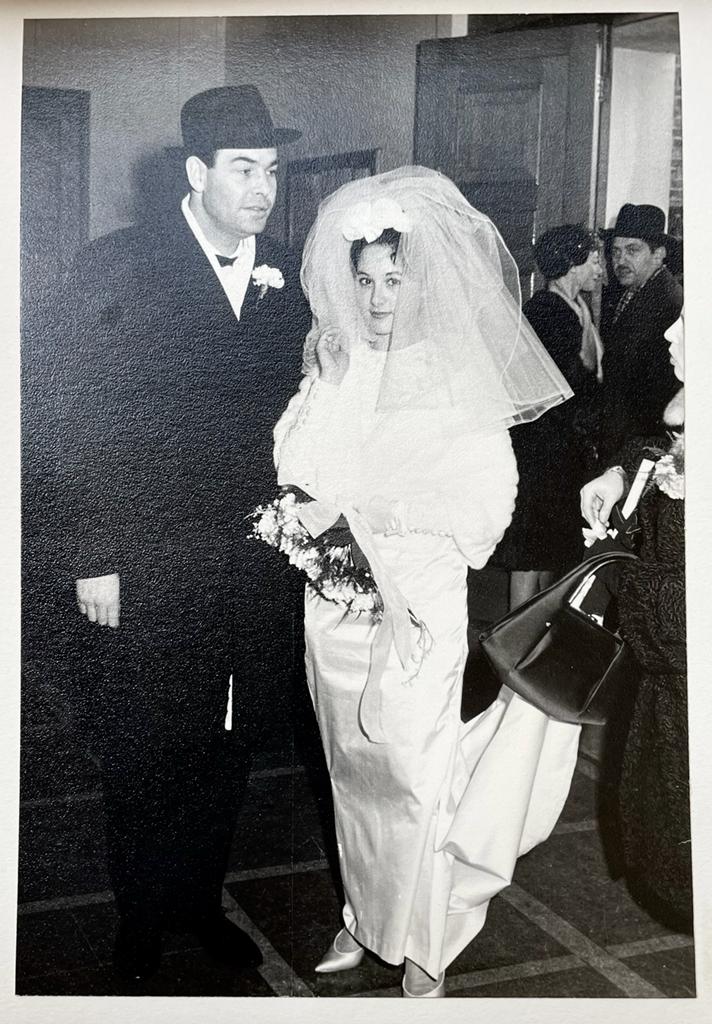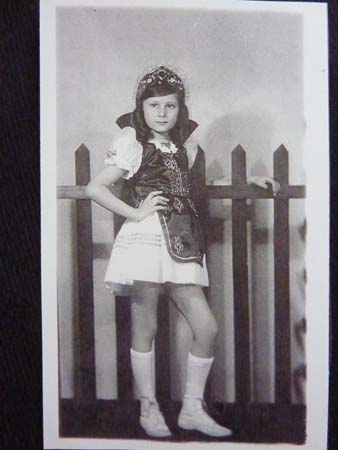
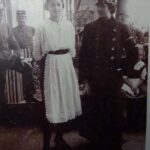
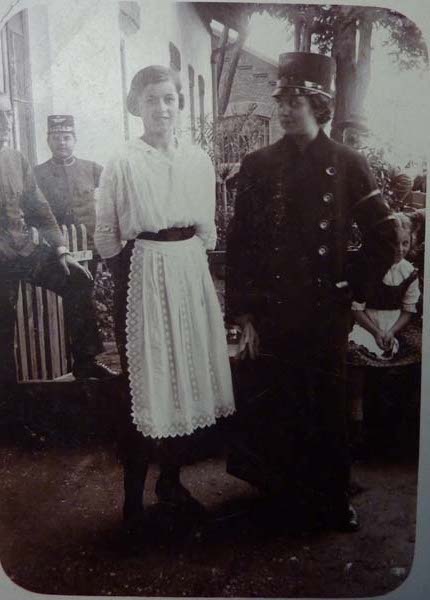
John Dobai: Mother wearing a decorative apron and her friend dressed up in JD’s grandfather's railway uniform
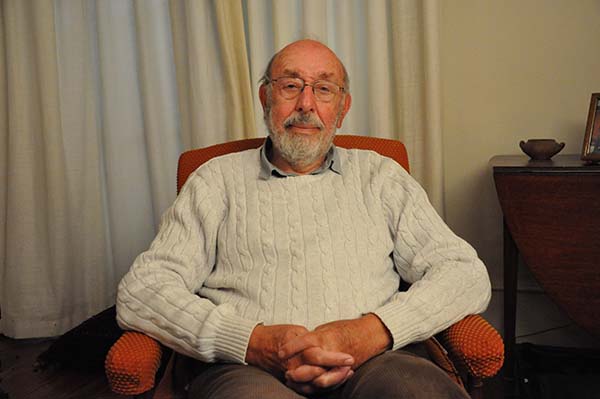
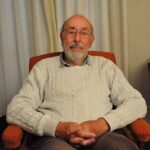
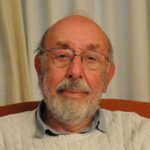
John Dobai: June 2017
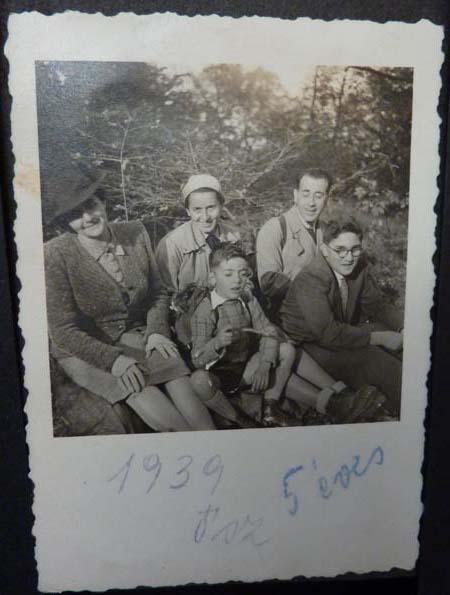
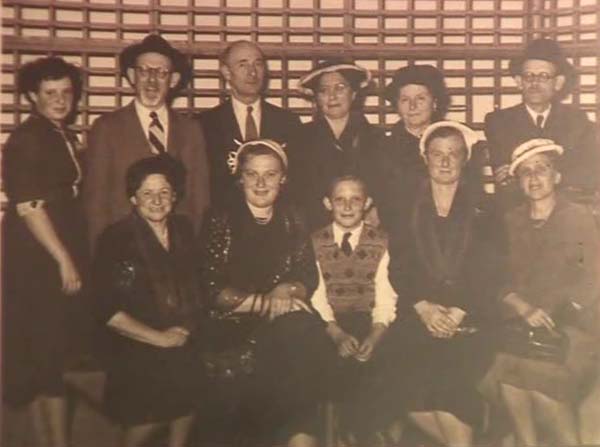
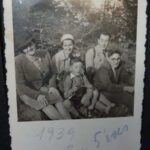
John Dobai: With friends who were about to emigrate to the UK
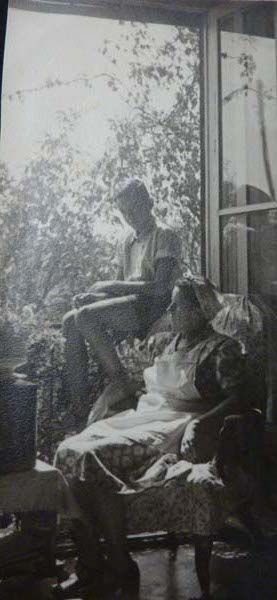
John Dobai: With mother at the window of the last flat they rented in Budapest, 2nd District, Kupeczky Utca het, 7 Kupeczky Street, a month before the family came to the UK, July 1948
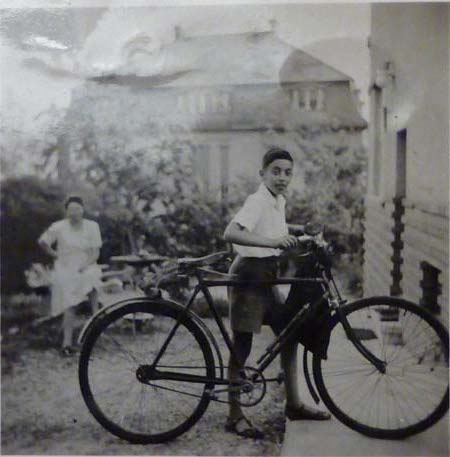
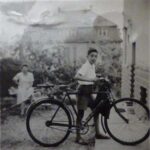
John Dobai: On his first grown-up bicycle
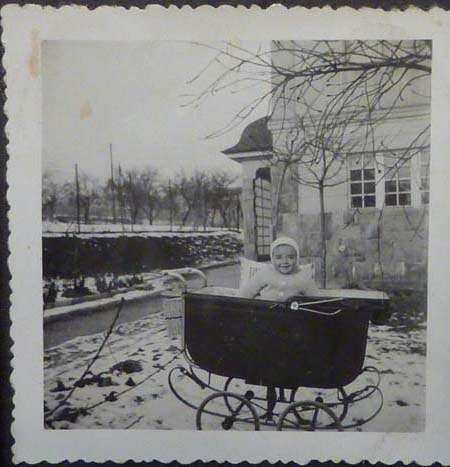
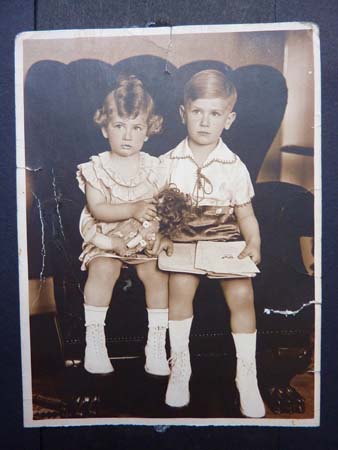
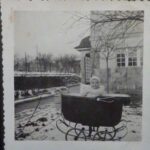
John Dobai: In his pram
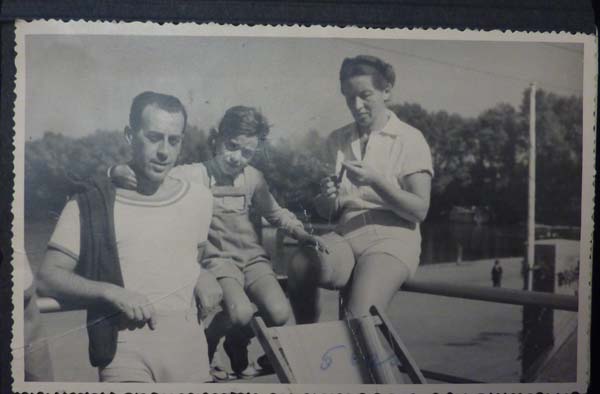
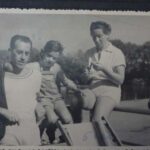
John Dobai: Parents Zoltan and Jonka Dobai on the terrace of a rowing club
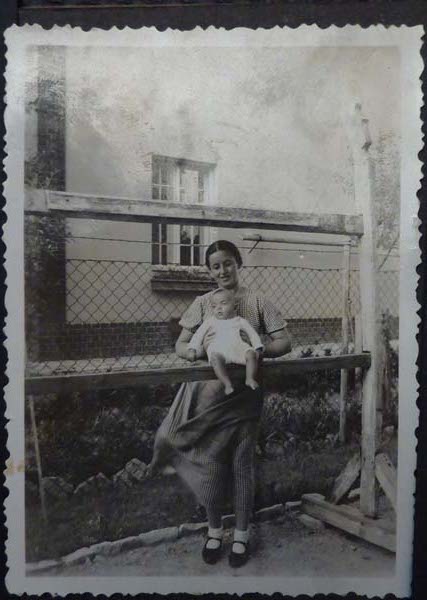
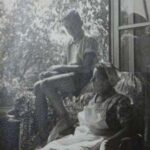
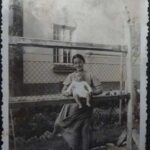
John Dobai: With mother in the backyard of their flat on the Roszadomb
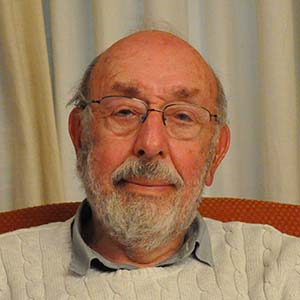
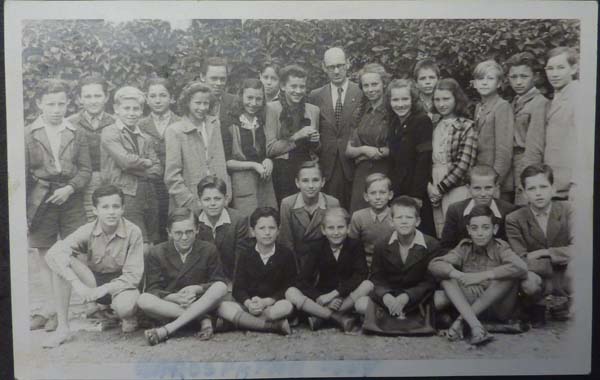
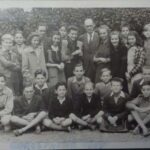
John Dobai: Sitting on the ground to the right in his English class at the Ancient School boarding school he was sent to post war, ca 1947
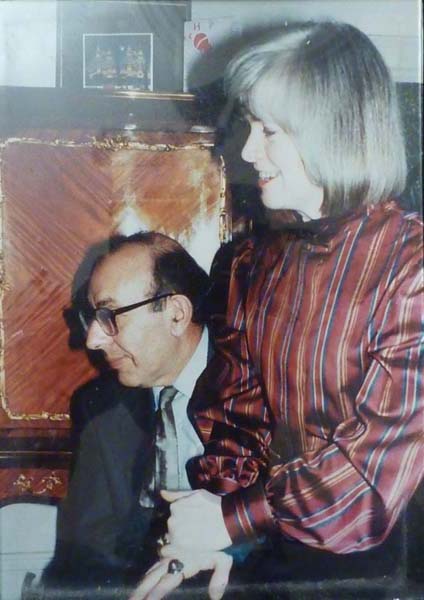
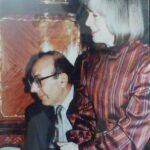
John Dobai: With wife
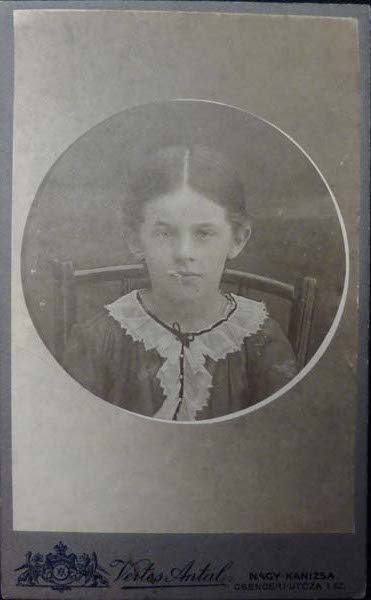
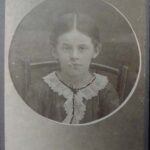
John Dobai: Mother
John Dobai
John Dobai was born 1934 in Budapest
Born: 1934
Place of Birth: Budapest
Arrived in Britain: 24/09/1948
Interview Number: RV206
Experiences: Given Swedish Consular Protection , In Hiding – Hungary , Siege of Budapest
Interview Summary
John Dobai was born 1934 in Budapest. Both parents – Zoltan and Jonka – came from Jewish families who had changed their Jewish names to Hungarian sounding names. But John grew up not knowing that he was Jewish as his family was very well assimilated and he was even baptised Roman Catholic and an altar boy. His parents who were passionate about sports met at a rowing club. His father had served in WW I and had been a prisoner of war in Russia. When he returned to Hungary he started working in a bank and benefited from his various language skills. In 1941 when Hungary declared war on the Soviet Union he was first called up but then demobilised because of being Jewish (similar race laws to Nuremberg laws were introduced) and detained at a labour camp. As the camp was run by Hungarian army John’s father described the conditions as sufferable.
When in March 1944 the German army invaded Hungary circumstances for the Hungarian Jews changed immediately. John and his mother had to leave their flat and move into a villa with many other Jewish families and wear the yellow star. And when correspondence with her siblings outside Budapest became impossible she understood that there was a serious imminent danger. She got false papers and took John into the countryside where it was organised for him to be hidden first with a peasant family and then in a children’s home. He had to return to his mother when he got sick but learnt later that a couples of days after his leaving the Jewish children had been shot by either Hungarians or Germans. However one day he and his mother with other Jews were marched to the station in Budapest but on the way some events made allowed them to escape and they started hiding in an abandoned block of flats. His father – when the labour camp was dissolved – found them there. Following a rumour he obtained papers placing him and his family under the protection of Sweden (organised by Raoul Wallenberg) and they hid in a Swedish owned house where they awaited the arrival of the Red Army (the siege of Budapest began in December 1944). They found another apartment to hide and waited for the end of the war and John remembers not being able to leave the house and the permanent suffering from hunger.
After life returning to normal John attended a famous boarding school in Sárospatak. Two of his father’s friends had emigrated to the UK before the war and helped the father to find work and organising the trip (via Prague and then plane to Northolt). The whole family adapted well to life in Tynemouth. John attended boarding school. His mother stayed in contact with her mother and siblings in Hungary and Yugoslavia. In 1953 the parents opened a boarding house in Tynemouth where people came to enjoy their holidays. When his father had to change jobs they moved to London. John studied chemistry at Durham university and became a technical manager in a paint factory. Later business travel brought him to Eastern European countries where he still feels a cultural connection. He has taken his daughters and grandchildren to Hungary for them to understand his background. He has not experienced anti-Semitism in the UK but thinks due his early experiences he is very sensitive to discrimination and unfairness in general. He identifies as British European and cultural Jewish and is speaks for the Holocaust Educational Trust. His message to future generations is to fight discrimination where you encounter it.
Place of Birth
My mother decided she must take action. She got false papers. Because I was rather fond of chattering she said 'You've got tooth-ache, so I've got to tie up your jaw.' So I won't talk when we go on the train. She took me into the country and handed me over to this organisation who handed me over to this peasant family. They lived in a semi-underground thatched cottage with tiny windows. They had pigs, sheep, geese & chickens. I said 'My mother knows best; if she says it's good for me that’s how it will be.' One day I was wearing short trousers & the woman looked at my leg, saw this this rash & declared it's typhoid. She went into to the local town & asked me to pack up my things. And she took me and then handed me back to this organisation who sent me back to Budapest. My mother found this children’s home & there I caught tapeworms, an awful condition. So I was sent back to my mother & I understand that 2 or 3 days afterwards, the Germans or the Hungarians came & took the children – the Jewish children - and shot them. From that home.
A number of non-Jewish people watched us. Some were crying because they knew us & were ashamed. Others were laughing: rather glad to be able to take over Jewish property, Jewish flats or workshops. One event that was quite serious for me: a man came & shouted at my mother & I: 'I hope you die.' I always felt up till then that anti-Semitism happened to somebody else." Instead of going to the railway station, John & his mother. were taken to an abandoned block of flats. "There must have been about 10 flats & there were 600 people. And the situation looked so bad, that a number of old people climbed up on to the roof & jumped off." INTERVIEWER: "Did you see that?" John Dobai: "Yes."
People behaved so harshly to each other, stole bread, a piece of sausage. It was really people... safeguarding their own family. My mother tried to make a campfire in the yard, make some soup. I was breaking up furniture so we could make a bonfire. There was bombing & shelling, house-to-house fighting. We were starving, really. On Christmas Eve a horse was killed just outside the house. It was carved up very quickly. I got a piece of horse... as a Christmas present.
So, it was a school holiday around that time. And a few days after Eichmann arrived, I went- I met a classmate, and I said to him, “I'm looking forward to going back to school.” And he said, well, he was going to go back to school but I'm not, because his father told him that I'm a dirty stinking Jew. So although I was ten, I started to cry. And I rushed back to my mother. And that was when she told me that we, in fact, come from a Jewish family. And, and a few days later there came out vast... posters, detailing the anti-Jewish legislation. You had to hand in your bank accounts, and your precious stones, and any gold, and hand over motor cars, and cameras, radios, carpets - anything of value. And of course we couldn't go to school.
REFUGEE VOICES is the AJR’s groundbreaking Holocaust testimony collection of filmed interviews with Jewish survivors and refugees from Nazi Europe who rebuilt their lives in Great Britain.
The copyright of personal photos and documents on the site is held by each interviewee and may not be reproduced without their permission. Please contact the AJR if you would like to use any of the images and documents.