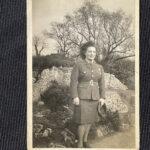
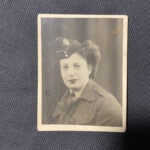
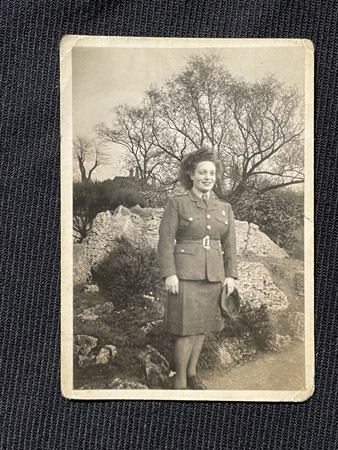
HF Henny with the A.T.S. Transport Control
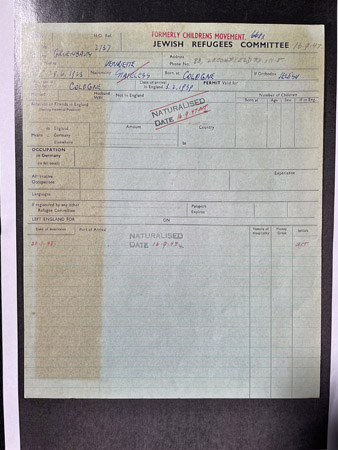
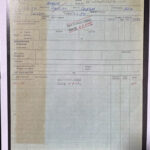
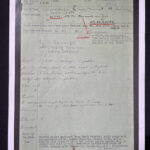
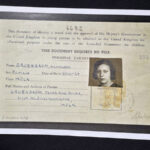
Henny Franks: Document from the Jewish Refugees Committee
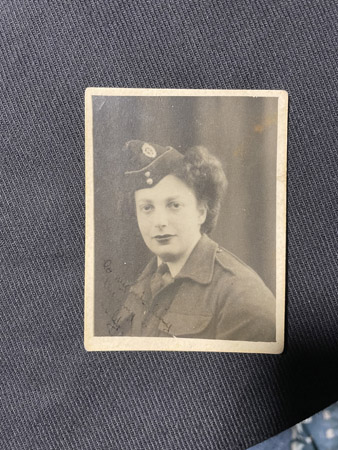
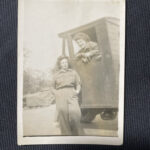
Henny Franks: Henny with the A.T.S. Transport Control
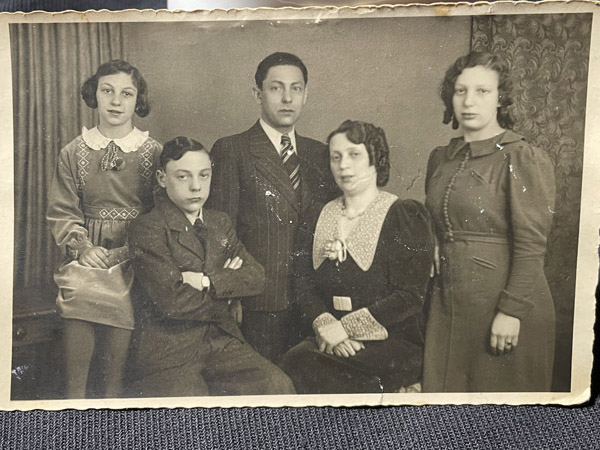
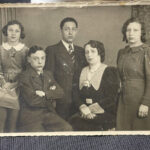
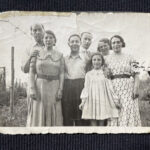
Henny Franks: Last family photo
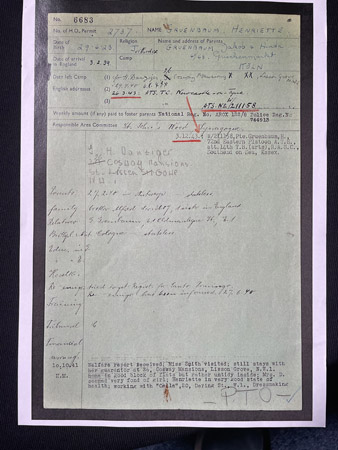
Henny Franks: Document from World Jewish Relief Archives
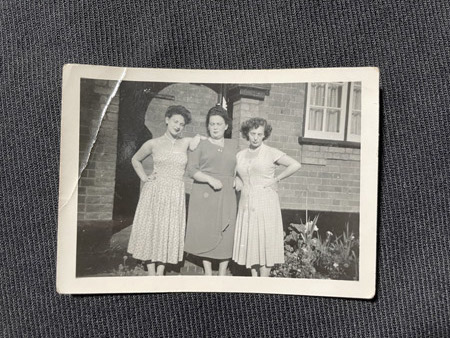
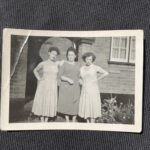
Henny Franks: Henny with her sister and her mother in London
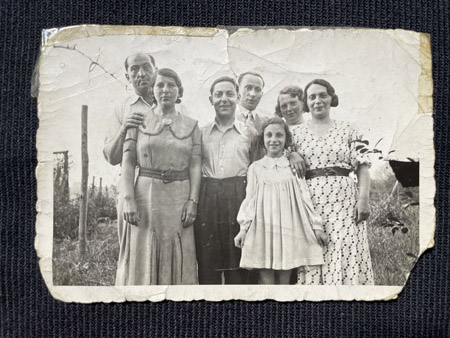
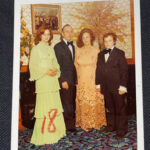
Henny Franks: Family and friends: on the left Sender Lewkowitz and his wife
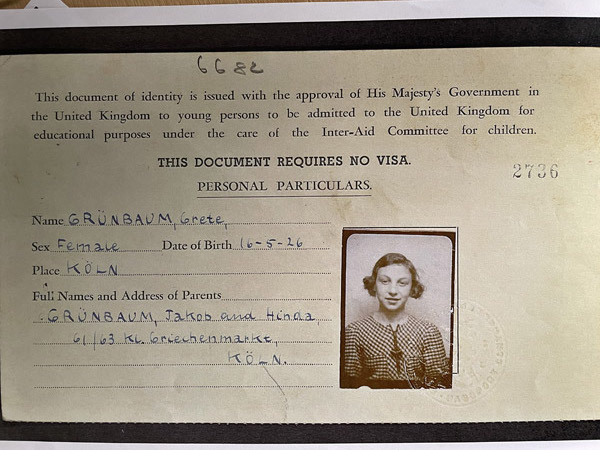
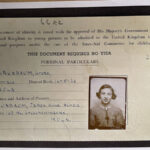
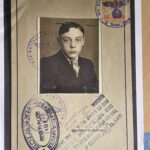
Henny Franks: Henny's ID for the Kindertransport
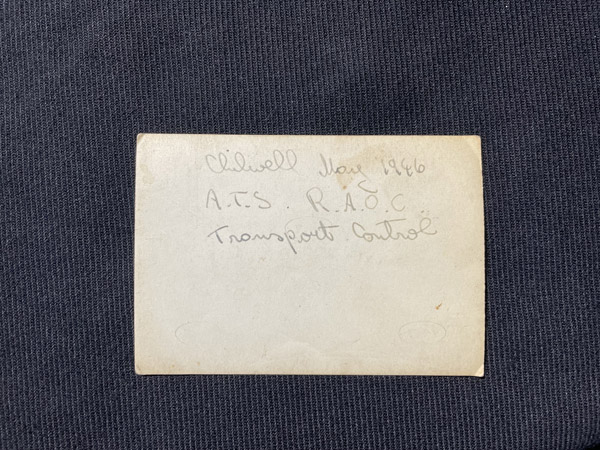
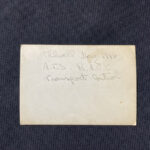
Henny Franks: Back of a photo that shows Henny when she was with the A.T.S. R.A.O.C. Transport Control
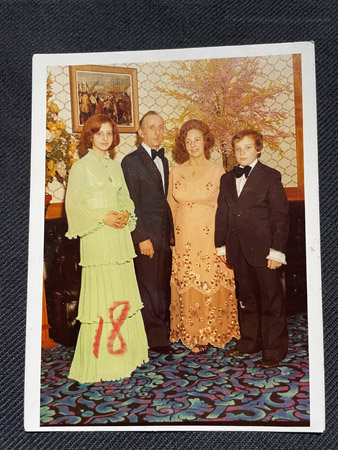
Henny Franks: Her son David's bar mitzvah
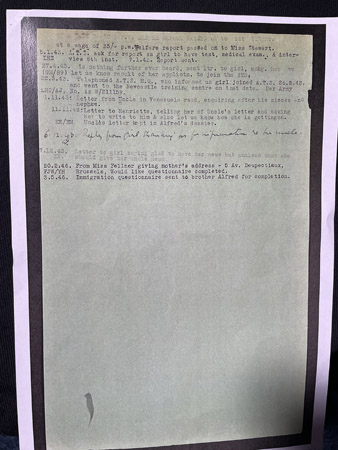
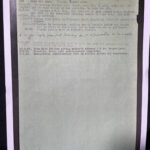
Henny Franks: Second page of the document from World Jewish Relief
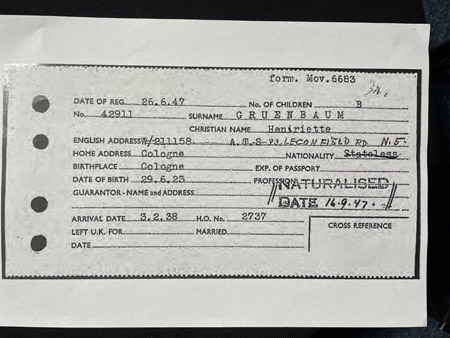
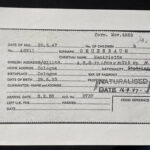
Henny Franks: Registration card (wrong arrival date)
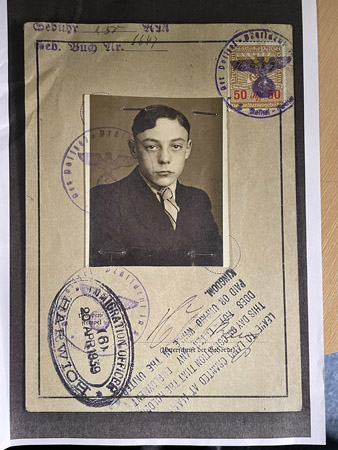
Henny Franks: Page of Henny's brother's German passport
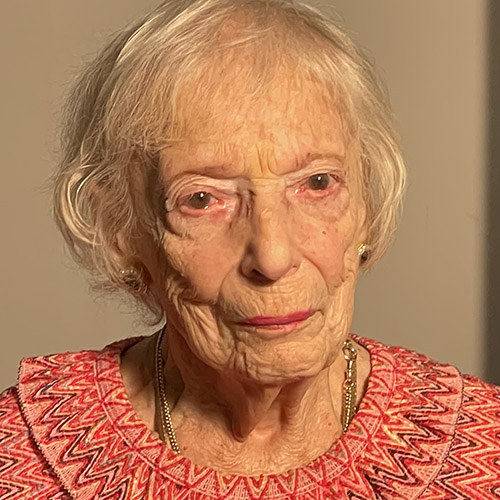
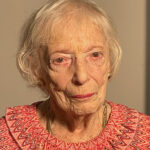
Henny Franks: 2022
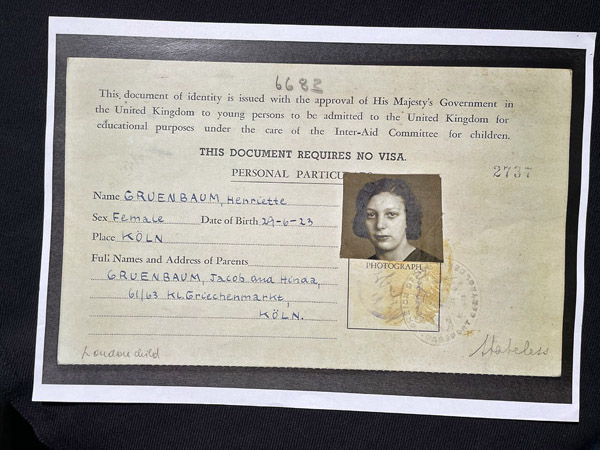
Henny Franks: Her younger sister Grete's ID for the Kindertransport
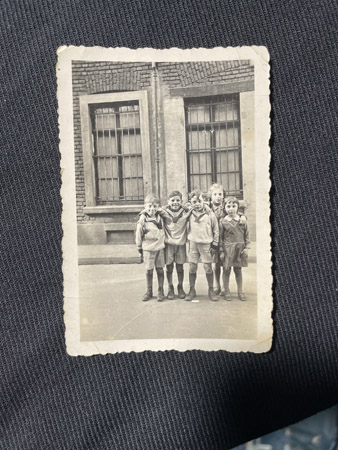
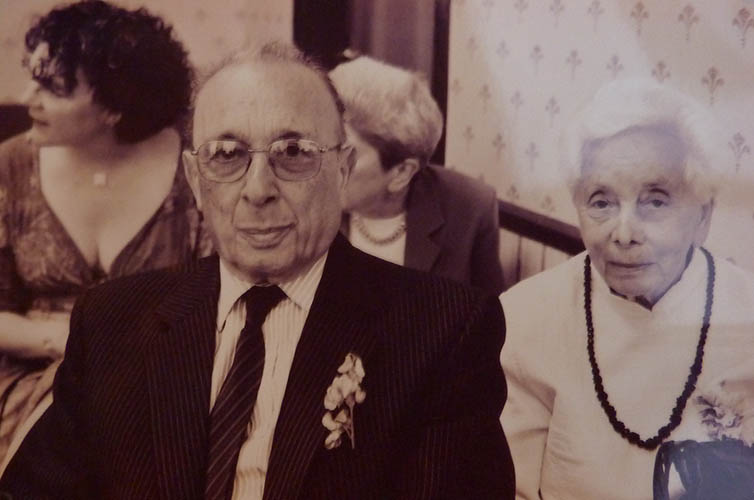
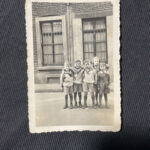
Henny Franks: From the right: Henny's younger sister Grete
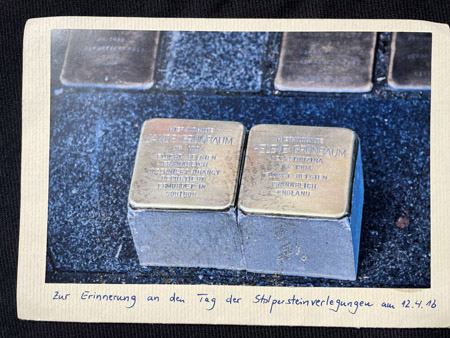
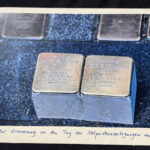
Henny Franks: Stolpersteine for her parents Moritz and Helene Grünbaum
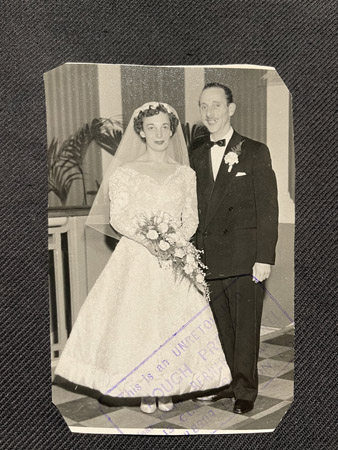
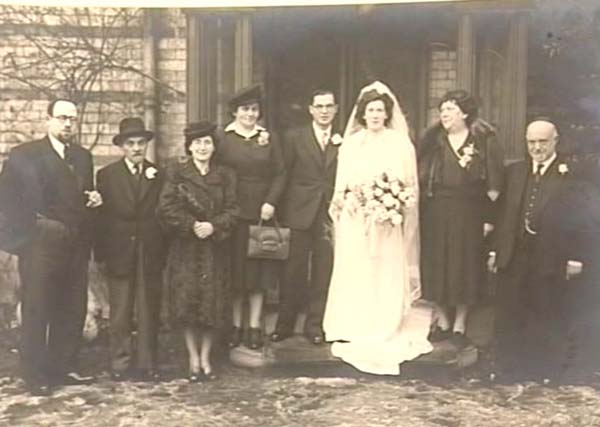
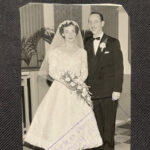
Henny Franks: Henny on her wedding day 1957 with her husband Morris
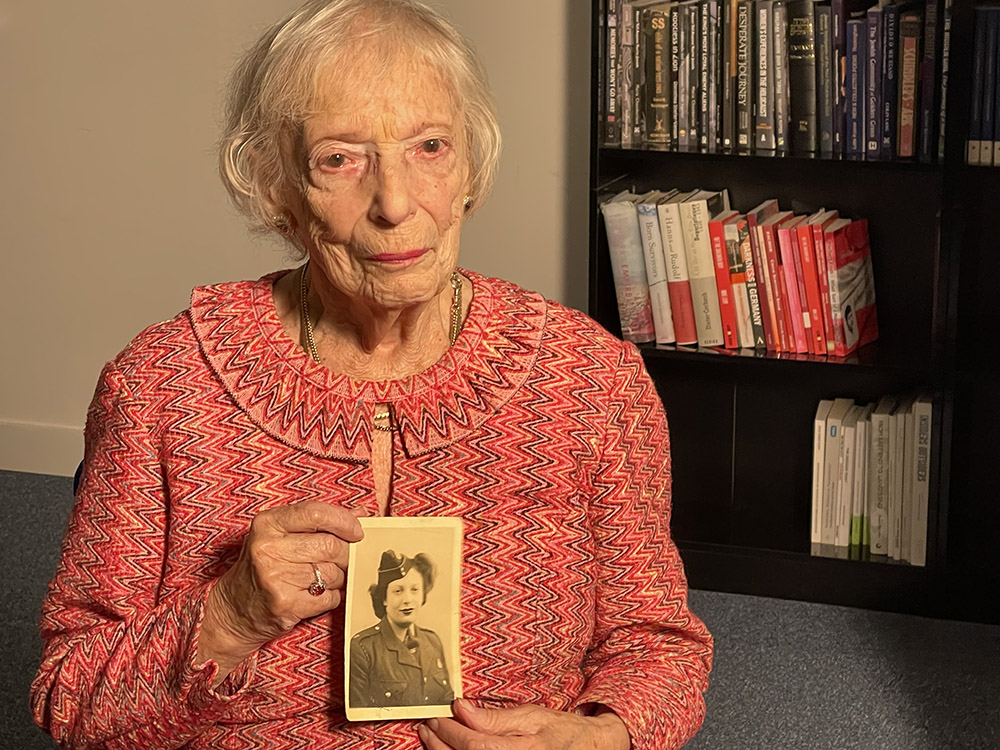
Henny Franks: 2022
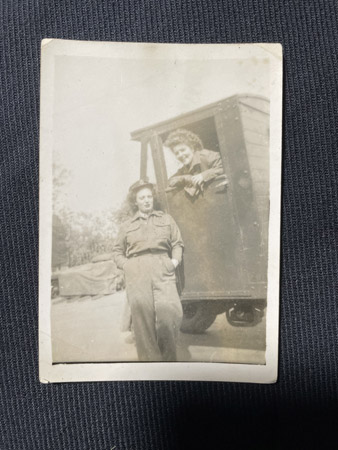
Henny Franks: Henny with the A.T.S. Transport Control
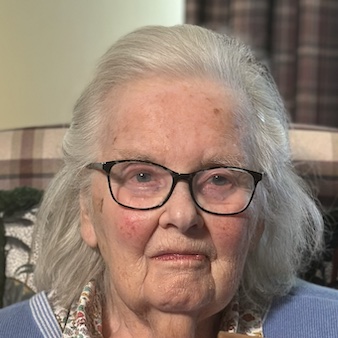
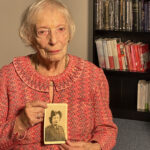
Henny Franks
Henny Franks was born Henriette Grünbaum in Cologne in June 1923
Born: 1923
Place of Birth: Cologne
Arrived in Britain: 04/02/1939
Experiences: Kindertransport , Polenaktion
Interview Summary
Henny Franks was born Henriette Grünbaum in Cologne in June 1923. She was the eldest child of Jacob and Helene Grünbaum. Together with her parents, her sister Grete, her brother Alfred and her grandparents, she lived at Kleiner Griechenmarkt in the centre of Cologne. She recalls playing with the children in the neighbourhood and celebrating the high holidays with the family.
Henny went to the Lützowstraße Jewish municipal ‘Volksschule’ in Cologne and afterwards wanted to do a course at a Textile Design school. Being Jewish, she was not admitted and had to start an apprenticeship as a dressmaker.
In February 1939 Henny reached England with a Kindertransport together with her younger sister. By contacting Dr Erich Klibansky, the principal of the Jawne Jewish Grammar School, her mother had managed to arrange for the two girls to leave the country with a Jawne Kindertransport. In London, Henny stayed with her uncle’s family. For some years she worked as a dressmaker. When she was 19, she was joined the British army and was given work as a driver.
Whilst Henny’s younger siblings also emigrated to England, Henny’s parents first fled to Belgium at the outbreak of war and then to the south of France where her father Jacob Grünbaum was arrested, deported to Sobibor and murdered there. Her mother joined her children in London after the war.
Henny Franks married her husband Morris in 1957 and they had a son and a daughter. She has three grandchildren and lives in London. She was invited by the mayor of Cologne to visit the city of her birth and has been back many times to tell school children and young people about her life.
Key words:
Grünbaum. Cologne. Jüdische Volksschule Lützowstraße. Jawne Schule Kindertransport. British Army. Synagoge in der Glockengasse. Synagoge in der Roonstraße. Yiddish.
Place of Birth
My grandfather and all the Grünbaums family, they all thought they were being clever and had Polish passports. And they thought that they wouldn’t do anything to them, but they were wrong because Hitler sent them all back to Poland. Even young – even some young children. They went to Lützowstraße, the ones younger than me. There’s a story there. So, they all went back. I remember them going to the station in Cologne and I remember all the people go through our street, walking to the station. I can see it now. And all my family with their Polish passports, they all sent them back. I don’t remember the date. But I know I was there, because I remember them, seeing… And – but most of them went to Auschwitz anyway, from Poland.
REFUGEE VOICES is the AJR’s groundbreaking Holocaust testimony collection of filmed interviews with Jewish survivors and refugees from Nazi Europe who rebuilt their lives in Great Britain.
The copyright of personal photos and documents on the site is held by each interviewee and may not be reproduced without their permission. Please contact the AJR if you would like to use any of the images and documents.