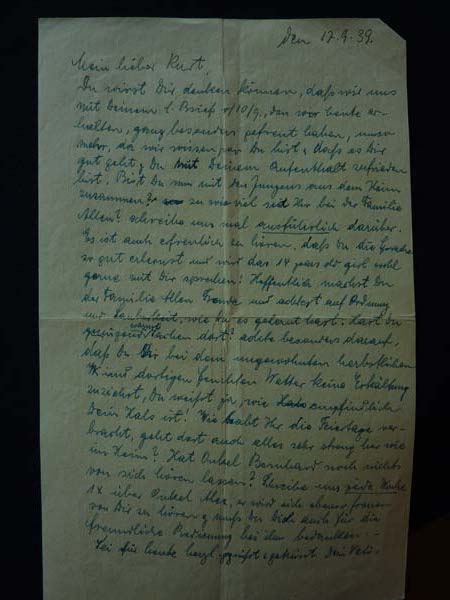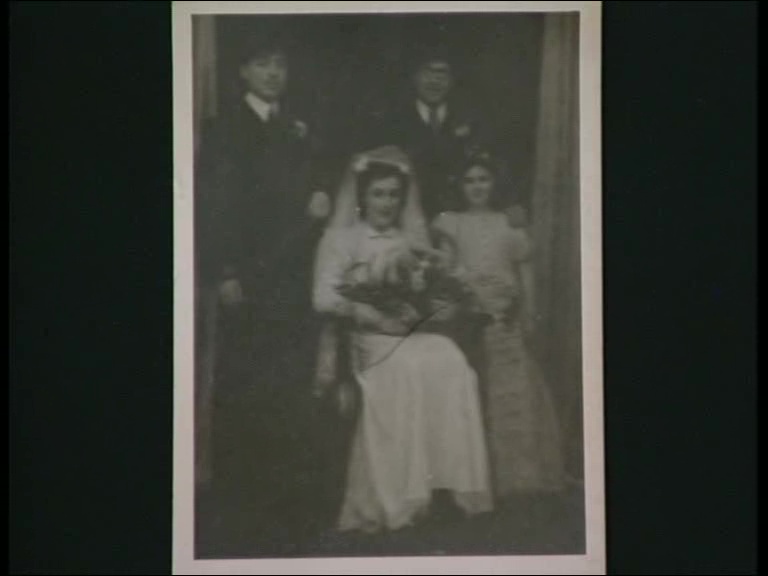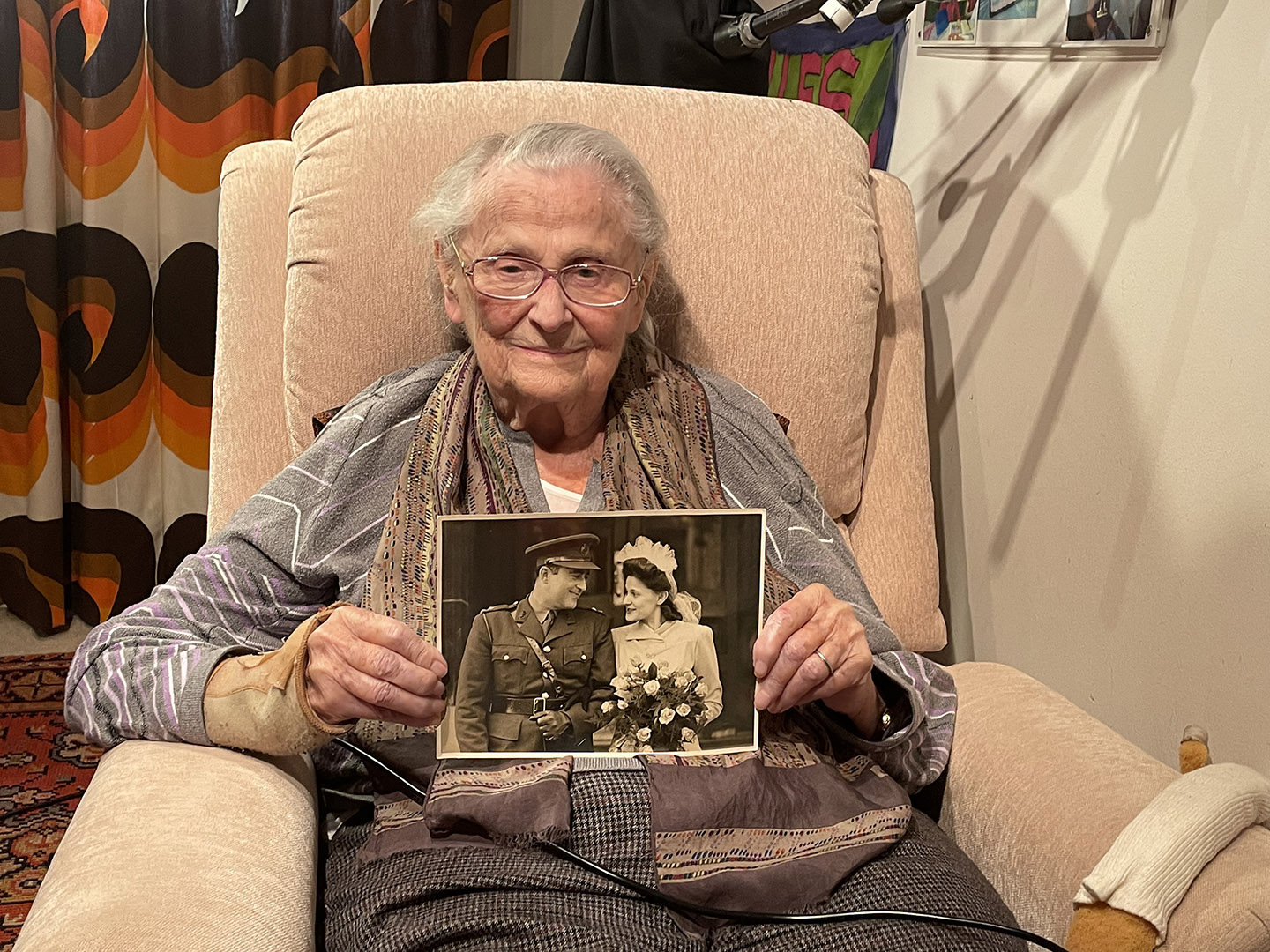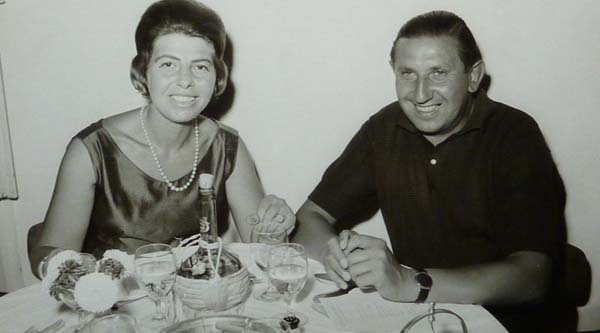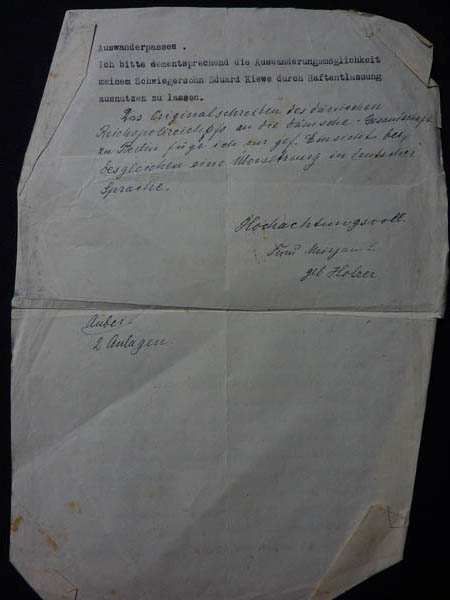
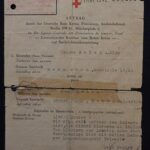

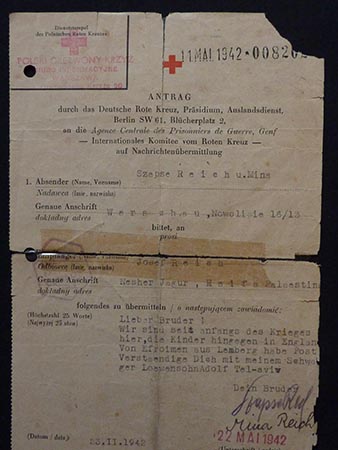
Sir Erich Reich: Only communication from parents, already in the Warsaw ghetto, 22 May 1942. "And they do say here that we, the three boys, are now in England. We’ve never heard from them again."
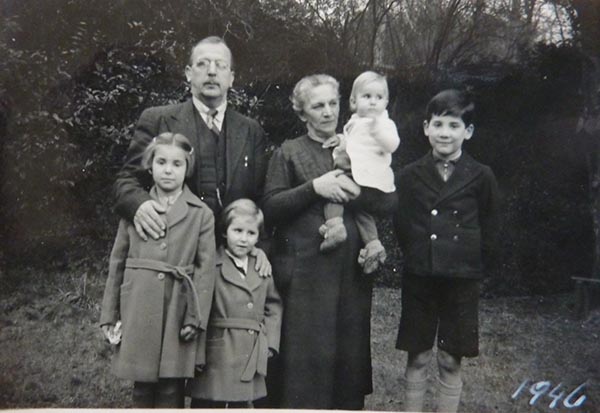
Sir Erich Reich: At 11
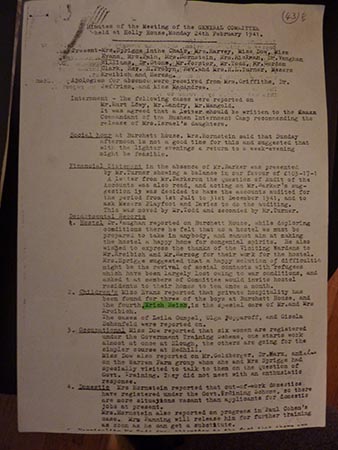
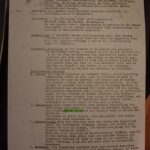
Sir Erich Reich: Minutes of the Dorking Refugee Committee
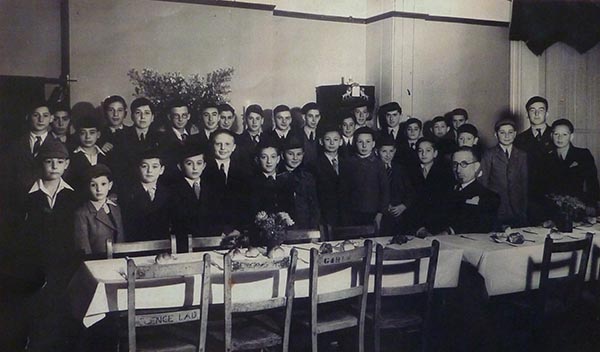
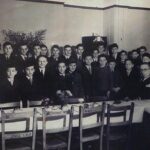
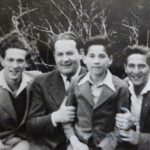
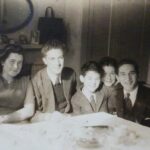
Sir Erich Reich: Brother Ossie fourth from the left
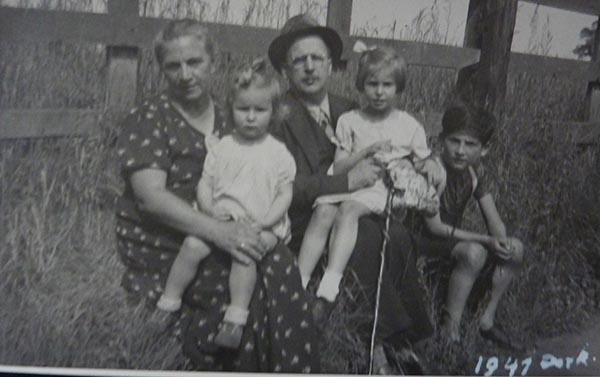
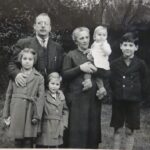
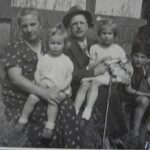
Sir Erich Reich: With foster parents and their granddaughters Sonia and Silvia on his sixth birthday
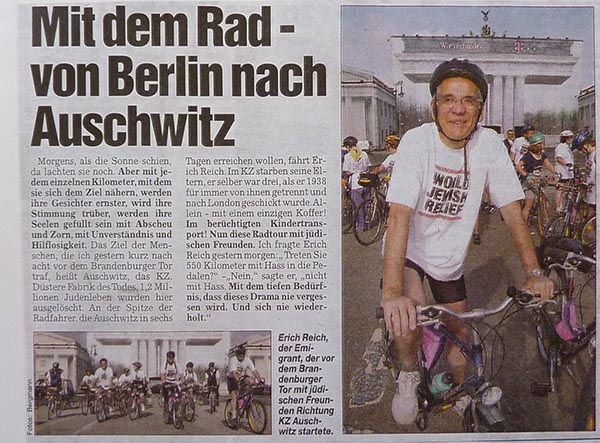
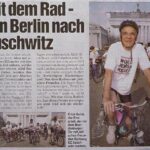
Sir Erich Reich: Bike-ride from the Brandenburg Gate to the gates of Auschwitz, to raise funds for World Jewish Relief, 2009. “It’s quite a long ride; believe you me.”
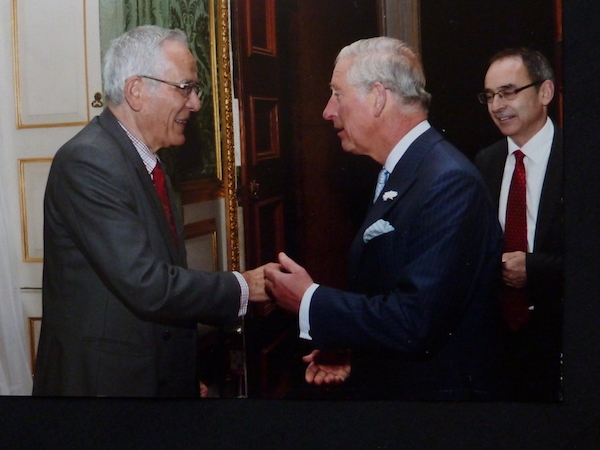
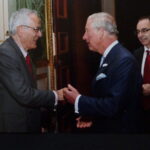
Sir Erich Reich: With Prince Charles when he invited the Kinder to come to Buckingham Palace, 2014
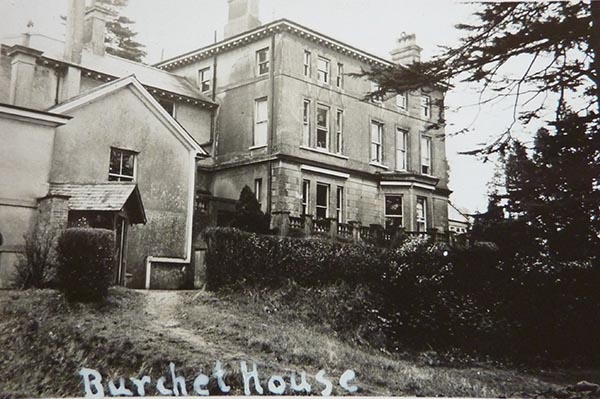
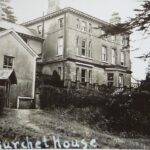
Sir Erich Reich: Burchett House
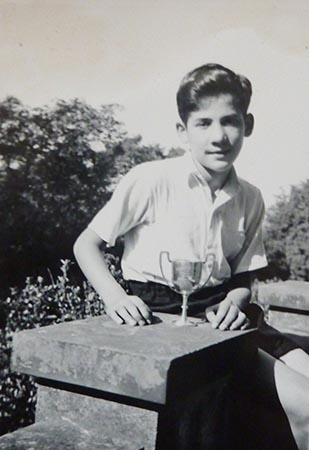
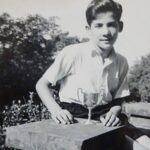
Sir Erich Reich: With his cup for winning the Junior Cross Country at the Dorking Grammar School, 1947
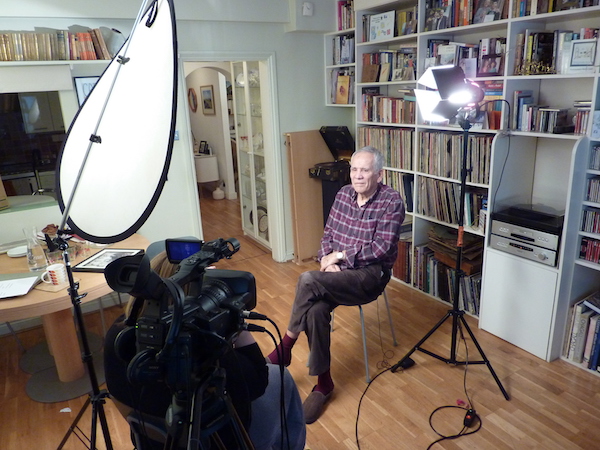
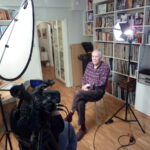
Sir Eric Reich interviewed by Dr Bea Lewkowicz

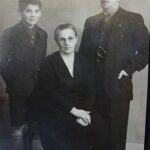
Sir Erich Reich: With mother’s brother
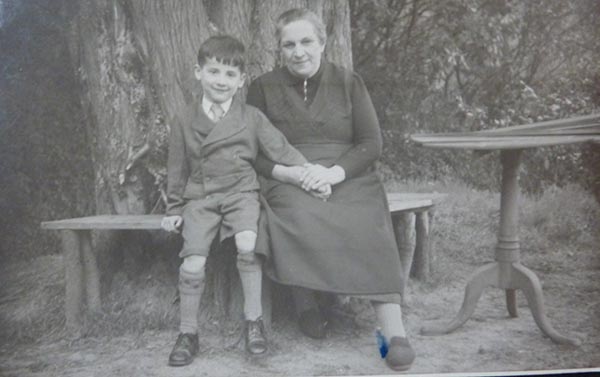
Sir Erich Reich: With foster mother
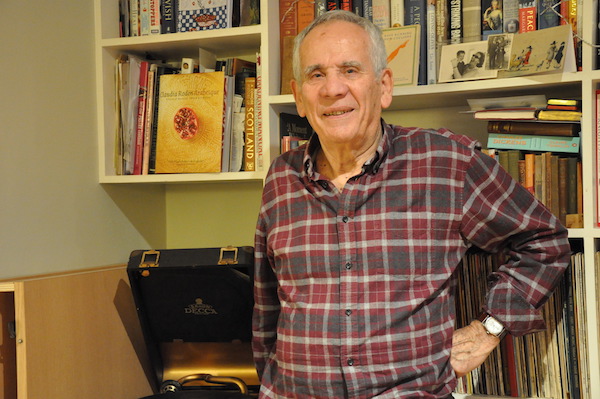
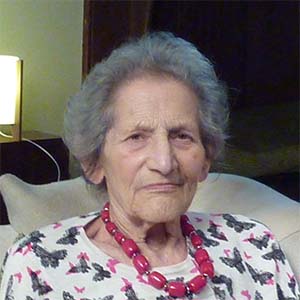
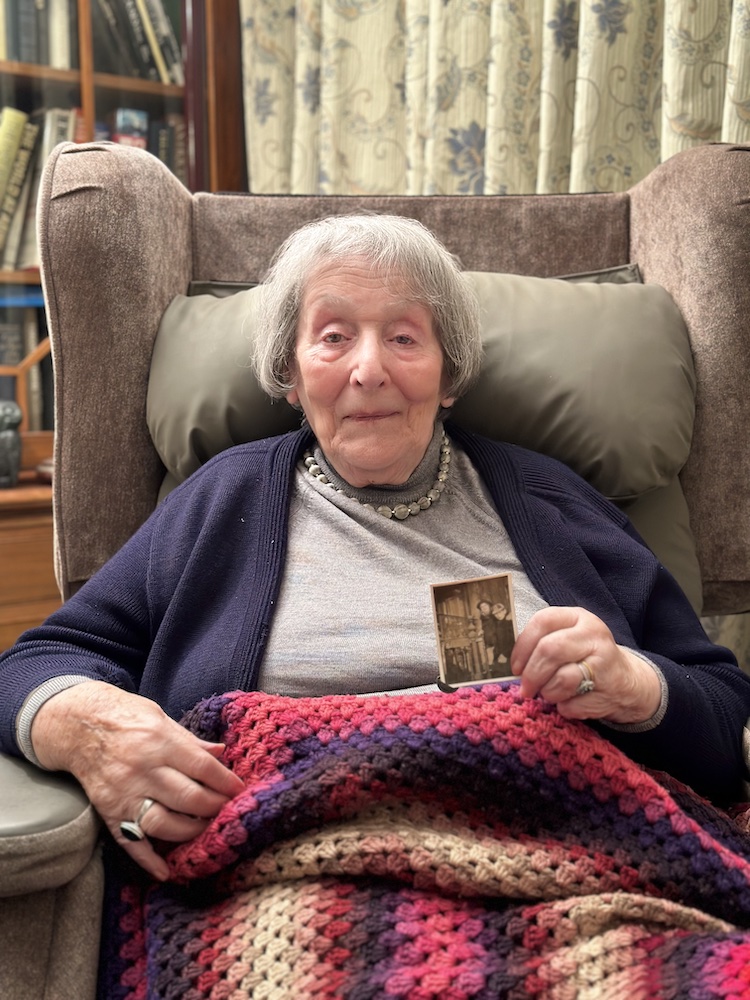
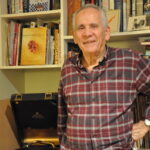
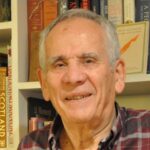
Sir Erich Reich: 2015
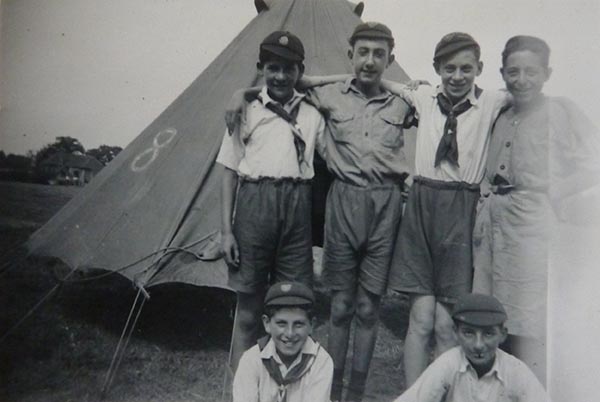
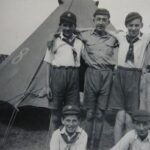
Sir Erich Reich: At the Bnei Akiva camp
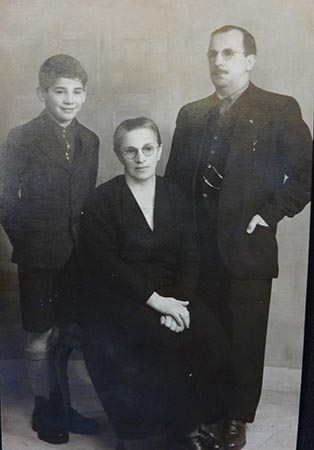
Sir Erich Reich: At 11
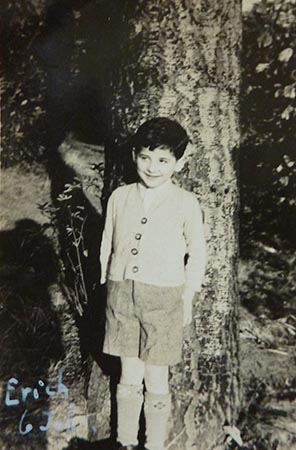
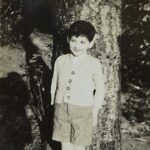
Sir Erich Reich: On his sixth birthday
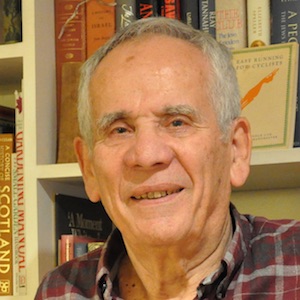
Sir Erich Reich: 2015
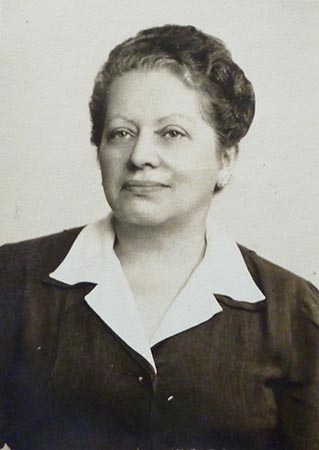
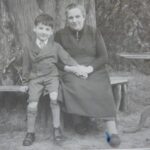
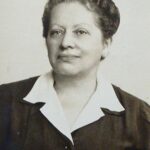
Sir Erich Reich: His grandmother
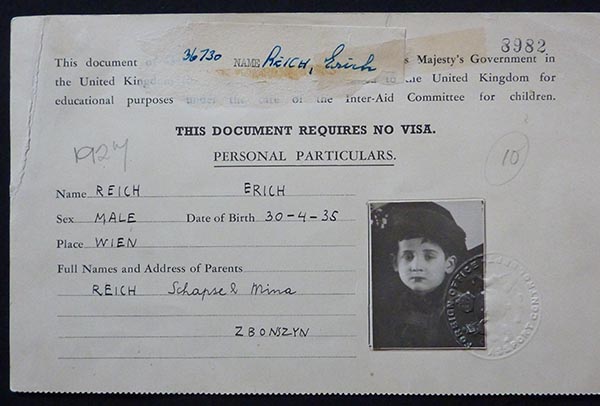
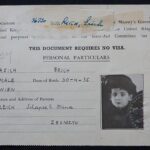
Sir Erich Reich: UK entry visa
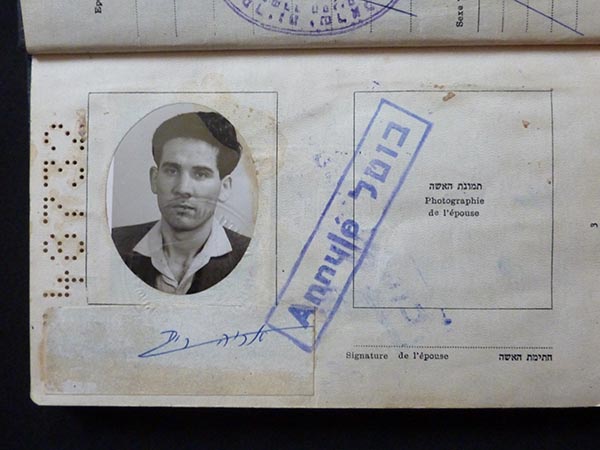
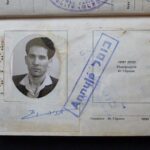
Sir Erich Reich: Cancelled Israeli passport

Sir Erich Reich: At uncle’s flat with brother’s wife Jean
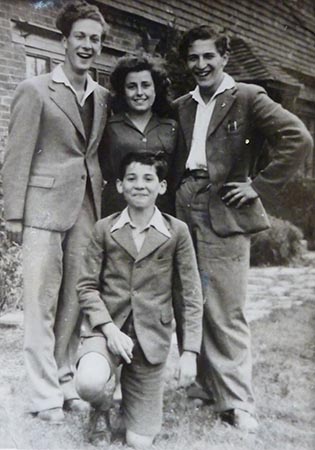
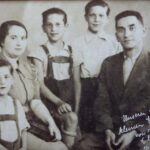
Sir Erich Reich: With brother Jacques
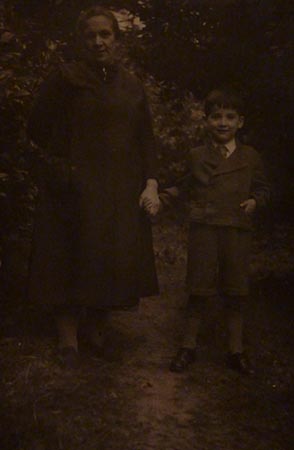
Sir Erich Reich: With foster mother
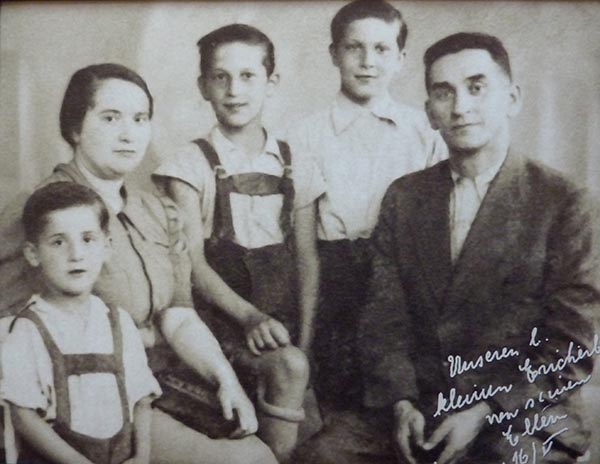
Sir Erich Reich: Father Schapse
Sir Erich Reich
Erich Reich was born in 1935 in Vienna
Born: 1935
Place of Birth: Vienna
Arrived in Britain: 29/08/1939
Interview Number: RV163
Experiences: Kindertransport , Polenaktion , With Foster Family
Interview Summary
Erich Reich was born in 1935 in Vienna. His parents had come to Vienna from the Poland and his father was a sales man and chazzan. As the family did not have Austrian papers, the family was transported to Zbaszyn on the Polish/ German border. From there, his older brother went first on a Kindertransport to Britain and he and his brother followed in August 1939. He arrived by boat in the London Docks and does not know how he spent the first months in the UK.
He has no memory of his parents and emigration (in contrast to his brother who were older). He eventually was placed in the care of the Dorking Refugee Committee (chaired by composer Vaughan Williams) and was given in the care of an elderly German (Protestant/Socialist) couple, Joseph and Emily Kreibich, who came from the Sudetenland. They had emigrated in 1938 with their daughter and left behind a son. Erich was very happy with the foster parents and went first to local primary school and then to Dorking Grammar school. His brother made contact with him after the war and he also had an uncle who lived in London. His foster father passed away and there was some concern that he was not raised in a Jewish environment and he therefore was moved to Hasmonean Secondary in London. After staying at Hasmonean for a few months, Erich decided to go on Youth Aliyah to Israel in 1949.
In Israel he first stayed with an aunt in Haifa but soon joined some cousins in the Kibbutz Merchavia. After completing school and the army, Erich returned to the UK as a ‘shaliach’ for the Youth Movement ‘Hashomer Hatzair’. He settled permanently in the UK in the late sixties, where he started to work in the travel business. He founded his own company called ‘Classic Tours’, specialising on organizing fundraising trips (bike rides or hikes) for charity organisations.
After the first Kindertransport Reunion, he became involved with the Kindertransport Committee and is today its chairman. In 2010 he was knighted in honour of his work for the charitable sector and the Kindertransport. He lives in North London with his fourth wife and has five children. In the interview he stresses that while it is important to remember one also needs to look forward.
Additional Comments:
Erich has very interesting documents of the meetings of the Dorking Refugee Committee, which discuss him regularly.
Key words:
Vienna. Zbaszyn. Kindertransport. Dorking. Dorking Refugee Committee. Vaughan Williams. Youth Aliyah. Kibbutz Merchavia. Classic Tours. Kindertransport Commemoration. AJR.
Place of Birth
People need to remember, The Kindertransport is something quite unique. It didn’t happen before. There were Spanish, 3,000, but they went back most of them. But…remember what the British- They saved nearly 10,000 children. They, in my view, yeah? Contributed an enormous amount to making sure that some of the children got out. On the other hand, you’ve always got to remember that the children contributed back.
I was playing on a scooter outside. I remember this very well. And a young man with his bicycle comes up, and says, “Where do Mr and Mrs Kreibich live?” My foster parents. I took him up. I went down to continue playing with my scooter. And my foster mother Emilie rushed down and said, “Come up! That was your brother.” So he didn’t recognise me, I didn’t recognise him.
For my eightieth birthday, my two youngest sons bought me tickets, for them and me, to go for a weekend in Vienna. They feel that’s – that’s where I was born. And whilst the people, I didn’t talk to them very much. But we went to the cemetery, we went to Riesenrad you know, we went all over the place. I didn’t think about it. If you think about it too much, you don’t progress, in my view. And I, I – I strongly believe you need to progress. You’re seventy years, eighty years later; you’ve got to remember, always remember, so it shouldn’t happen again. But you’ve also got to progress. That’s the view I have anyway.
REFUGEE VOICES is the AJR’s groundbreaking Holocaust testimony collection of filmed interviews with Jewish survivors and refugees from Nazi Europe who rebuilt their lives in Great Britain.
The copyright of personal photos and documents on the site is held by each interviewee and may not be reproduced without their permission. Please contact the AJR if you would like to use any of the images and documents.