Culture and Identity
The assimilated, German-speaking Jews brought their culture with them to Britain, enriching their new homeland immeasurably. In the immediate post-war years, the refugees from Central Europe were almost the only recognisable immigrant group in Britain, which was still a largely homogeneous, monocultural society. Their accents, dress, tastes and customs became part of public life in North-West London.
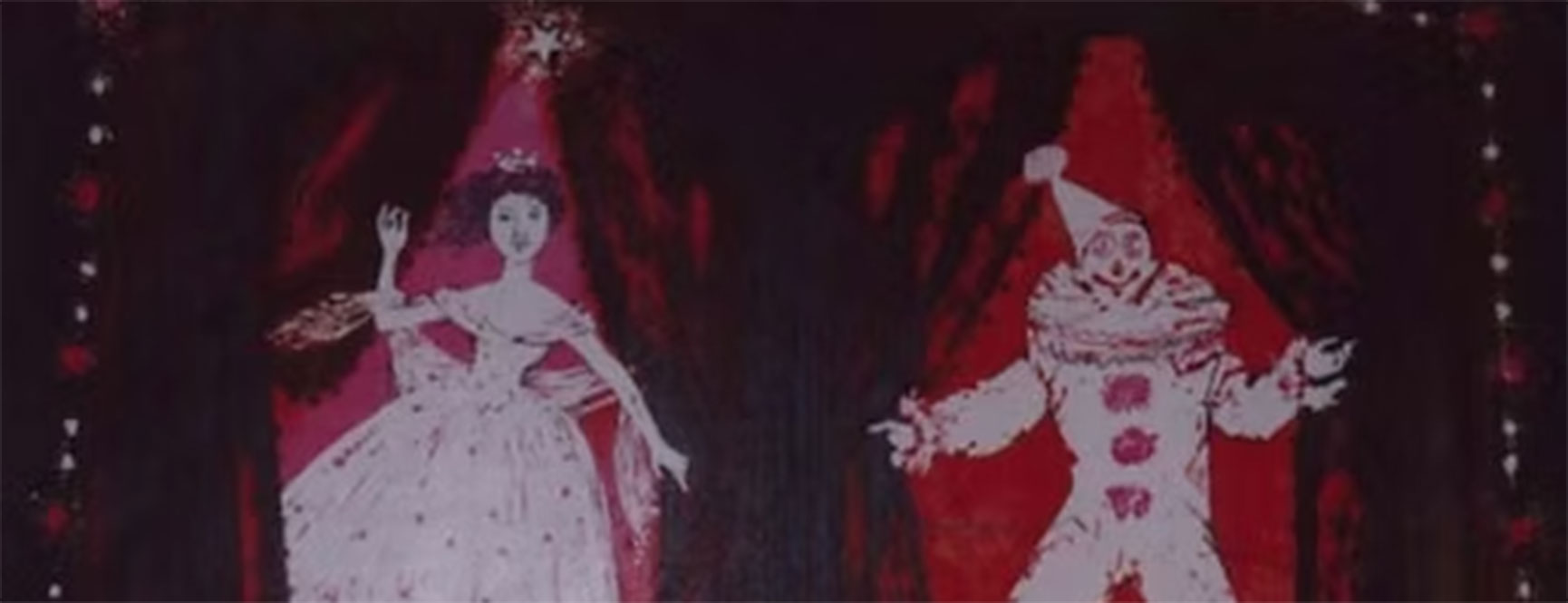
The refugees transformed the British arts scene. In music, refugees created Glyndebourne and played a key part in establishing the Edinburgh Festival, while the Amadeus Quartet became the leading string quartet in the land and refugees thronged the Wigmore Hall.
Famous artists from Central Europe included the writers Arthur Koestler and Elias Canetti, the painter Lucian Freud, the actor Anton Walbrook and the singer Richard Tauber. The philosophers Ludwig Wittgenstein and Karl Popper, the historian Geoffrey Elton, the sociologists Karl Mannheim and Norbert Elias and the art historians Ernst Gombrich and Nikolaus Pevsner added lustre to British intellectual life.
Paul Hamlyn, Weidenfeld & Nicolson, André Deutsch, Thames & Hudson and Phaidon Press reinvigorated British publishing. There were refugee art galleries, bookshops and music publishers. Stefan Lorant created a new dimension to British journalism with Picture Post, and Vicky was the outstanding political cartoonist of his day. Hans Keller and Martin Esslin became arbiters of culture at the BBC.
In the 1950s the modernising, cosmopolitan impact of the refugees on British culture was unmistakable. The old insularity had gone forever.
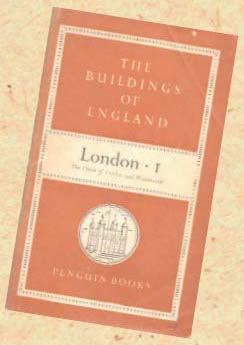
The London edition of Nikolaus Pevsner's Architectural Guides, 1957
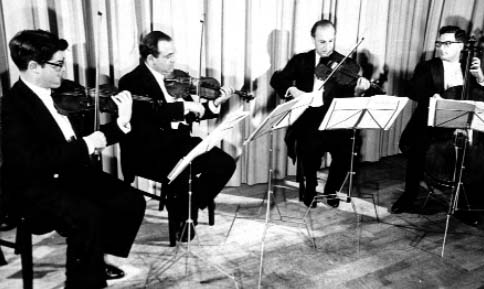
The Amadeus Quartet in the 1950s. Three of the four members were originally from Vienna
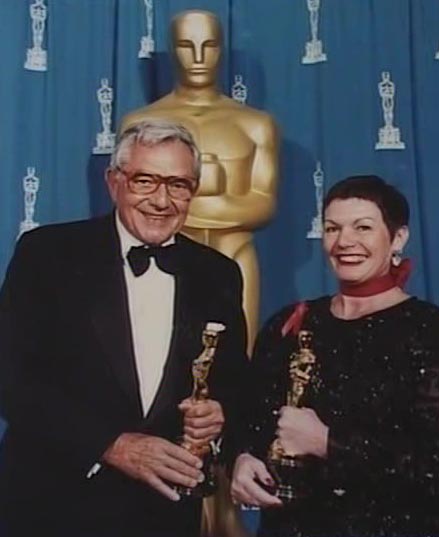
KA: Kenneth and his set decorator Carole, receiving his second Oscar for his set design of the film ‘The Madness of King George’, 1995
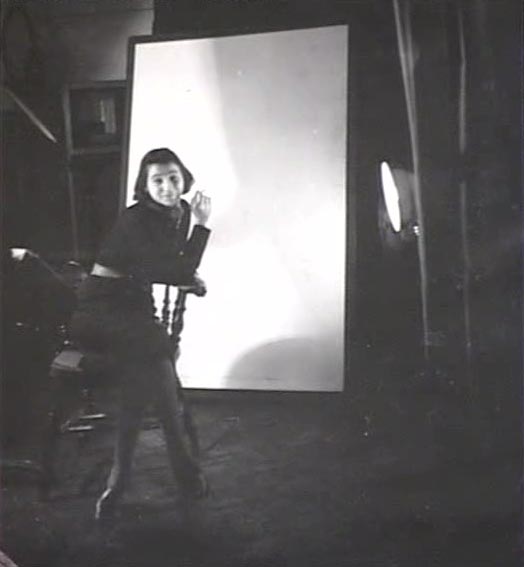
DB: Self-portrait, November 1945
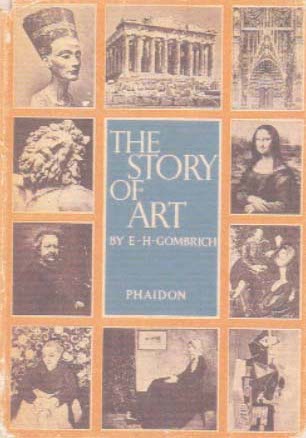
The first edition of Sir Ernst Gombrich's hugely successful book The Story of Art. Both the author and the founders of the publishing house, Phaidon Press, were refugees
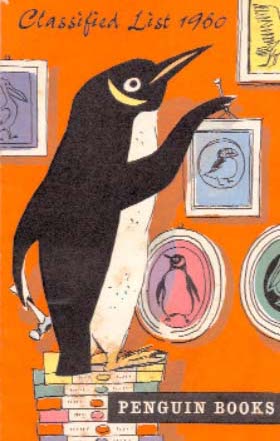
Penguin Classified List, designed by George Him, 1960
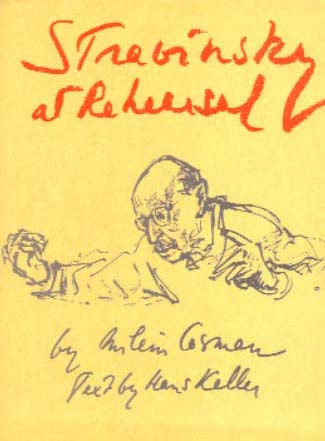
Stravinsky at Rehearsal, a collection of drawings published in 1952 by Milein Cosman
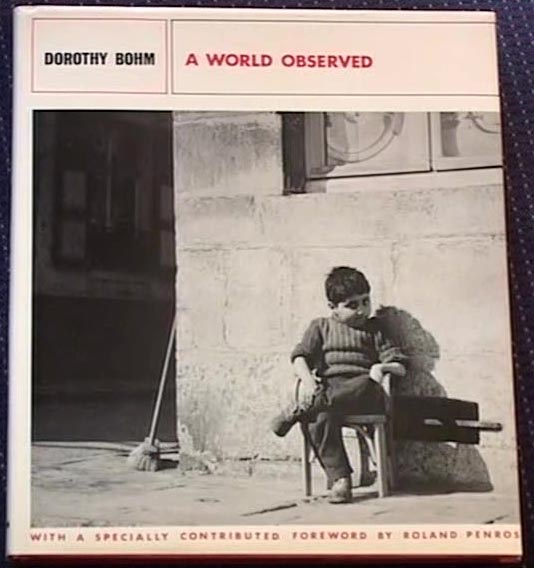
DB: A World Observed, first edition, Philip Wilson Publishers?, October 1970. The first book of photographs published, with introduction by Sir Roland Penrose.
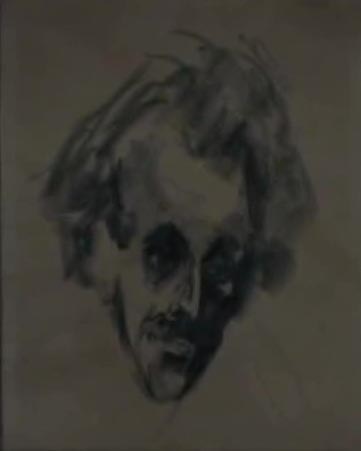
MC: Portrait of her husband Hans Keller
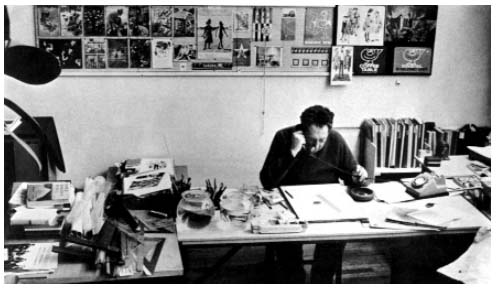
George Him, an outstanding designer, at work in his studio, 1966
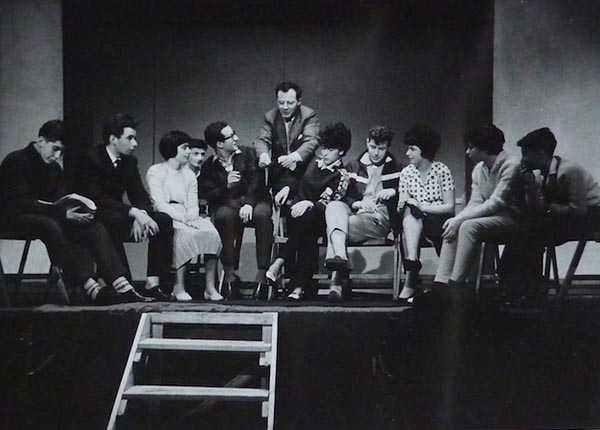
LL: The Phoenix Youth Group performing a play LL's husband Herbert co-authored, Herbert in the middle, 1960
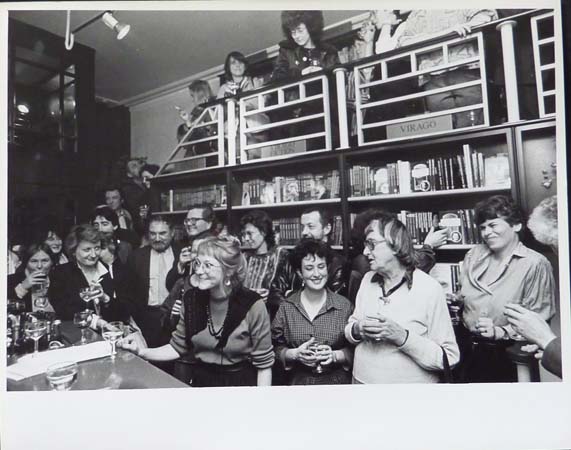
UO: The opening of the Virago Bookshop, Rosamund Lehman cutting the ribbon, Southampton Row, Covent Garden, London, date unknown
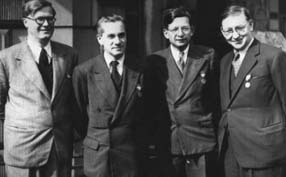
The investiture of Sir Rudolf Peierls, (2nd from right) with colleagues, 1946
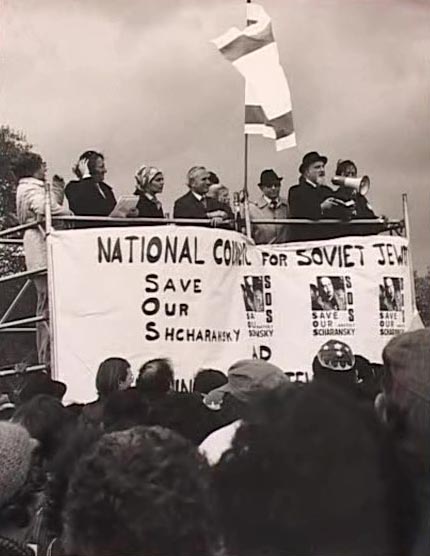
AH: Function at Hyde Park for the release of Natan Sharansky from the Soviet Union
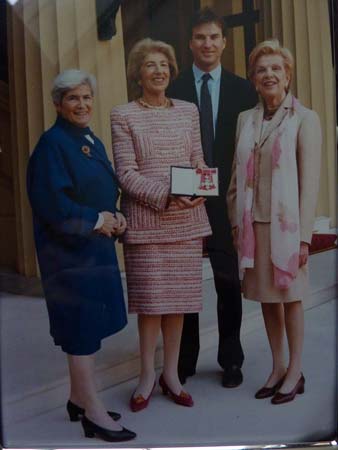
HP: Getting her CBE at Buckingham Palace, 2000
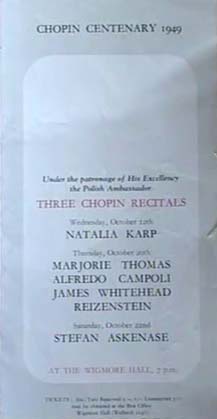
NK: Chopin centenary recital programme, 1949
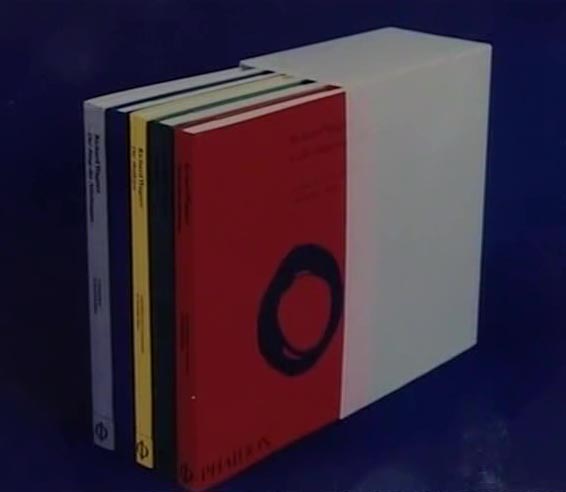
RS: Companion to Wagner's Ring Cycle
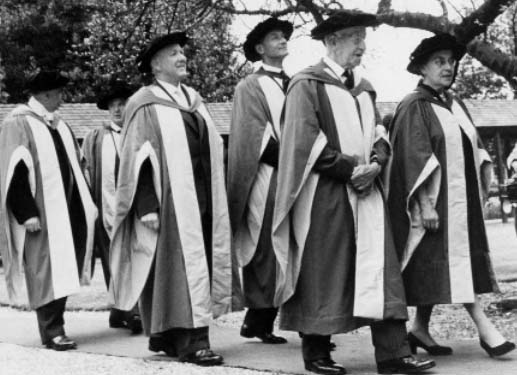
Gertrude Bing of the Warburg Institute receives her doctorate from the University of Reading
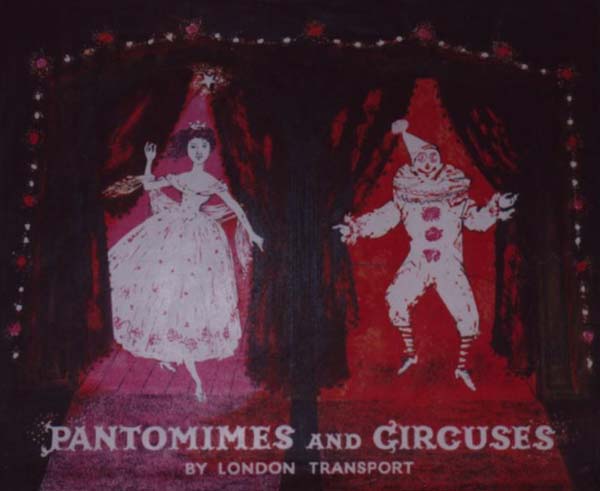
SE: Poster made for London Transport
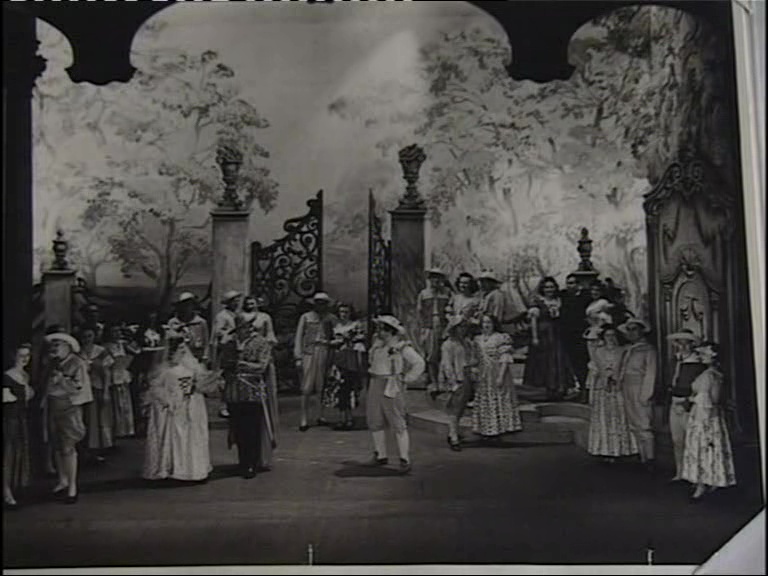
CD: In Don Giovanni, Glyndebourne Festival, 1948
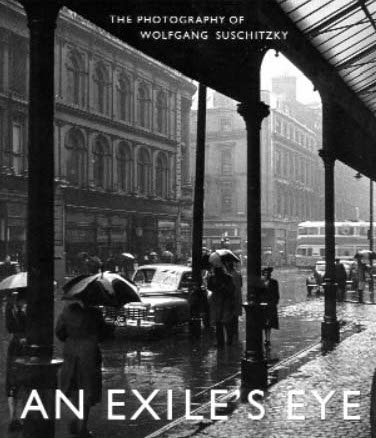
Catalogue for exhibition of work by photographer Wolf Suschitsky , National Portrait Gallery, Scotland, 2002
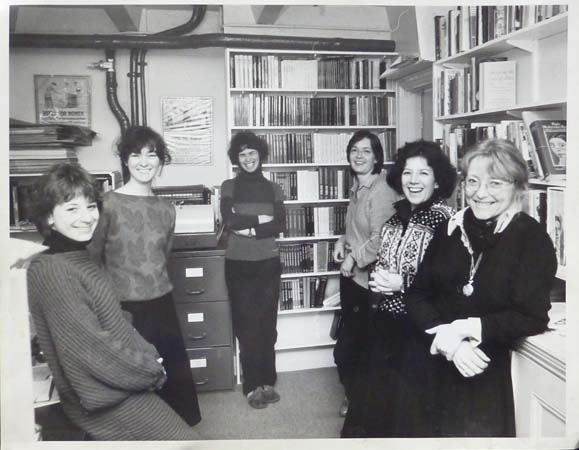
UO: In the Virago offices, Dover Street, London, late 70s/early 80s. From left to right: Lynn Knight, Virago Modern Classics. Kate Griffin, sales. UO, Editorial Director. Harriet Spicer, Production Director. Carmen Callil, Managing Director. Lennie Goodings, Publicity Director
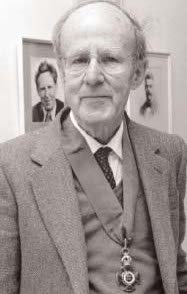
Max Perutz, winner of the Nobel Prize for Chemistry, 1962
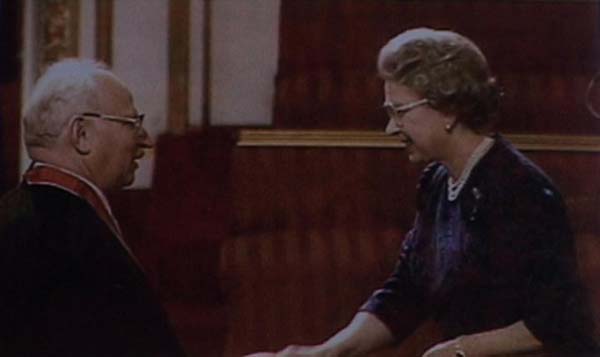
JSS: Getting CBE from the Queen
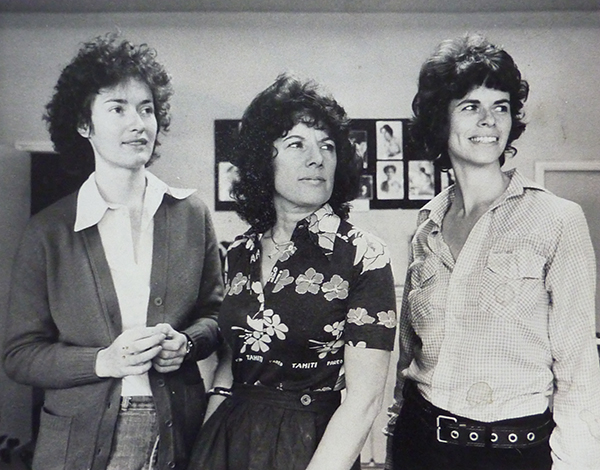
UO: The team at Virago from left to right: Harriet Spicer (joint MD), Carmen Callil (founder), UO (joint MD), taken by the Guardian when Virago published its first list, Wardour Street, London, 1975
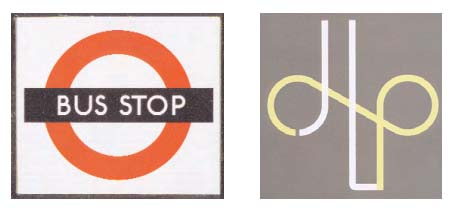
Hans Schleger was responsible for many of the best known corporate designs of the post-war years
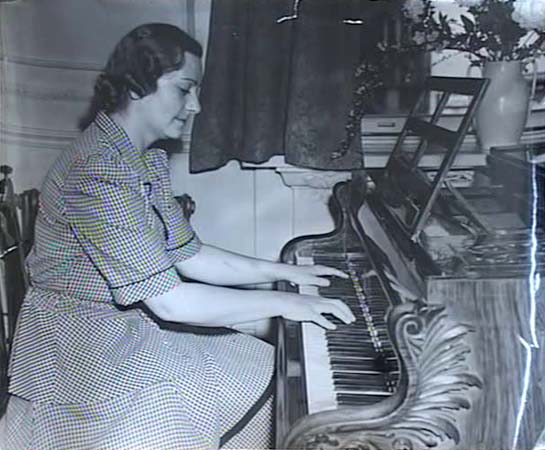
NK: Playing at Chopin's address, Eaton Place, London, 1949
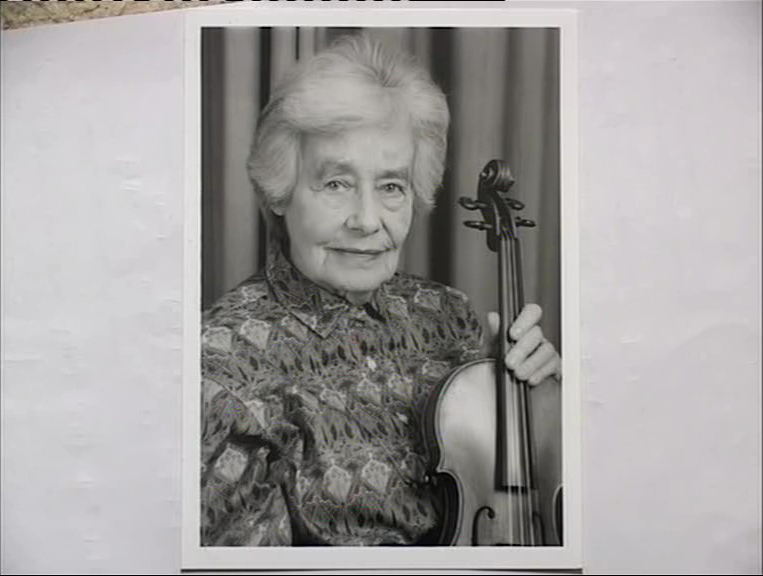
ML:"Picture of me here in my music room. My violin is an Amati"
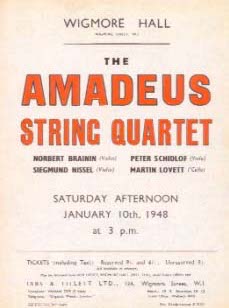
The debut concert of the Amadeus Quartet at the Wigmore Hall, the first of many around the world
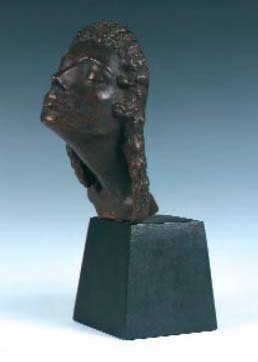
Sculpture of Salome by Fred Kormis
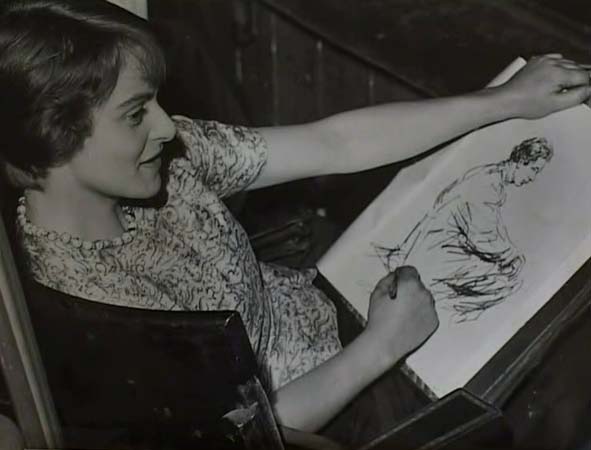
MC: Drawing Peter Ustinov, Edinburgh Festival, 1949
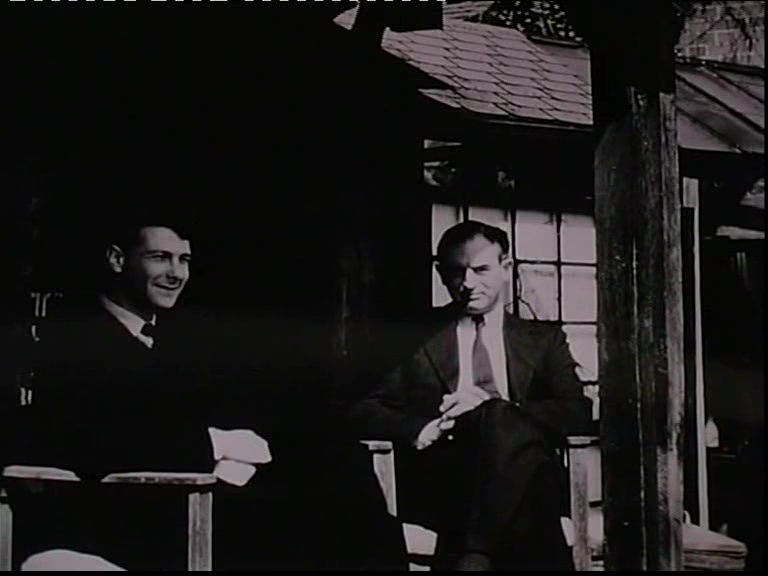
LB: With Prof. Sir Peter Medawar, Southampton, 1956
Yes, always [had her German doll, Erika]. I also had an English doll, which I called Margaret Rose. Shows how English I’d become. I didn't like her as much though. Erika was the one. [Did they get on?] We had dolls’ tea parties. I know that!
Eventually I got a fellowship of the Royal College of Surgeons. It was very hard to get. After that I did a further examination in Liverpool University to be a Master of orthopaedic surgery. I was very proud to get it and I got the first prize.
Yes, well I certainly would say that being an outsider has huge advantages, so long as you can get over the- the anxiety about it.
You’re stateless forever because... I mean I have this loyalty to the... to the British. But... you don't really... I don’t know where I belong. [half laughs] It’s... it’s...I’m alright here, really. I mean I wouldn't know where else... you know... Yeah, I mean... I’m, I’m- I’m at home here, really. I'm not sure if anybody who's, who's- is not born and who went through this ever can ...totally identify with this... with you know- with the country that- with their ‘host country’ if you like... I still have this very strong affinity feeling with Germany. With Berlin. Whether I like it or not. So...
I was German but it’s an accident of birth, as everything is. I say to people, I am British by choice and I am proud of that.
They [their two sons] knew we had come as children from Germany. We didn't talk to them at all until the first time we talked at Northwood Synagogue, when David was in the audience, and people asked him afterwards, “Did you know that?” And he said, “No.” We knew they’d come from Germany as children, and we knew we were different because when we went to birthday parties, there were uncles, aunts, cousins. When we went, and we had our own birthday parties, there were just the aunts.
By all means, assimilate and contribute as much as to the society and the country where you live. And do it. But just be aware that if you look at history, Jewish communities have settled for hundreds of years in countries only to find that from one day to the next they are not wanted. Just, therefore, concentrate on education that you can take with yourself. You know what I mean?
And I felt- I know in London during the war, there was the London Zoo. And I remember we went there once, and that American bison. And there in front it said, “Extinct in the free range”. And that’s how I felt in Vienna. Because my background wasn’t there. It was a Vienna, but it was a different Vienna...
In Vienna, there was... ten percent Jews, and that was gone. The culture, it was gone. It was all... it, it- The language was slightly different as well. It was all so... And I felt sort of “extinct in the free range”. There is no- it’s...it’s... So I’m... a Vienna Jew, but... that Vienna isn’t there.
I went to Sadler’s Wells, where I met Clive Carey, whom I knew from College… he produced operas. I was in the opera class there and he said, “Oh, this is Lawrence Collingwood, this is Charles Danson. Charlie boy, would you like to sing something for us, from the stage?” I went on stage and sang Ricordita harmonia from Tosca. I came down again from the stage… And Collingwood said “… Give him the part!” And the part was… an opera by Vaughan Williams, Sir John in Love … I was given the part of Master Slender…and of course Vaughan Williams came to all the rehearsals. I’ve got the programme here… And one day he said to me, “Would you like to do Messiah for me, at my Dorking Festival?” I said, “I’d love to.” So I think it was after the - we did about fifteen or twenty performances of it…
Well, I know who I am. And I wouldn’t deny it. I’ve suffered for it and with it. It’s part of me! It’s part of me, I mean, my- even my Jewish jewellery. They’ve made jewellery for centuries haven’t they, Jewish people, because they weren’t allowed to do anything else. So I’ve taken it up anyhow. So I can’t deny…can’t deny my hair, my nose.
I had a lot of friends. One very good friend who lived opposite me. She wasn’t Jewish and after Hitler came she was told she mustn’t see me anymore. In school I had other friends as well. They were Jewish most of them. When we went to the Judenschule, one day they came in from a paper called the Stürmer, and they pulled one girl out by the hair who looked very Jewish and photographed her. And one of them called out, ‘Aber wir sind doch Kinder.’ ‘We are children.’ He said, ‘Shut your mouth or I’ll take you too.’ These are the memories I’m trying not to remember.
It didn’t really mean much [visiting Vienna after the war]. It didn’t mean really much. What I liked was the theatre and it’s a beautiful town as you know probably, but I always thought what did you do during the War? You know, especially people my age sort of thing – no, people a bit older than me. When I looked at them, I thought, you know, what did you do? What did you do to my family? And that persisted for a long time. I know I couldn’t blame the new generation ‘cos they had nothing to do with it, but I would never want to live there again.
My father went to the synagogue. And I don't know which one it was, whether it was Prinzregentenstraße or Oranienburger Straße. And he picked up some pages from a prayer book. And they're in the shape, almost like, like the tablets of the Ten Commandments! Just pure chance.
[First reunion after the war with his parents] I picked them up in Liverpool Street. They came over by boat, of course. It was a very odd feeling, obviously. These are my parents. You know? There was no rush of emotion; it was a very odd feeling. I- I had to laugh, because in those days, everything was on ration and points. And my mother tipped the porter with a tin of sardines for which he was jolly grateful because they had no money. And they came- they came and my landlady was very pleased, and she put them up in the- in- Stoke Newington. And I remember we had our first lunch. And Mrs. Weitz, who’d never done this before, laid a table in her living room. And she brought out her best cholent or whatever, and made them very welcome. It was very sweet. And I remember my first lunch with them. And- I won't say I was embarrassed, but my father took my mother's hand and kissed it and said, “I wish you a good appetite, my love.” And she said, “Thank you, Leo.” And I got this, you know, the slight embarrassment having been used to the English ways of no emotion, nor nothing, you know.
My mother destroyed all documents that involved her Jewish background. She said after the war that “I don’t want to be Jewish. I don’t want to have anything to do with it. And I have no- I have no papers left at all.” She destroyed her background - completely. And when my daughter got married, Erika had a tremendous amount of difficulties to find the Ketubah.
In fact, it's one of those problems, because we never spoke German to them. We never spoke German to each other. We never talked about our history to them… under the possibly mistaken view that we didn’t want to burden them. We wanted them to have as normal a childhood as possible. But of course, they knew we'd come from Germany as children. And they knew we were different. I mean, they had a birthday party, there's just us, and the two aunts - and maybe a cousin. When they went to other children's cele- birthday celebrations, there were the grandparents, and the aunts, and the uncles and the cousins. They didn't have that. So, of course they found out what was going on, but not from us. And in fact, the first time we spoke, which was at Northwood here at the invitation of Rabbi Andrew Goldstein for Kristallnacht service, David our elder son was in- in the audience. And a friend turned around to him after and said, “Of course you knew all that.” He said, “No.” And it- it may have been a mistake, but that was our choice. Our decision.
Well, the fact that I didn't have a family, a near, close family of my own, to support me… That would be probably- I mean you need that, even if they're not always the best. You know, where you belong. I was always sort of floating a bit you know, not well-grounded… You, you have to know your heritage if you like, your inheritance. And I think that's- that's a great loss if you don't have that from the word go.
We were advised- everyone was advised not to speak German in public in the war. And so I was ashamed of having German-speaking parents. I'm sure this is a very common story that you've heard from lots of people. And I forgot my German because I wasn't living with my parents, I heard English all day at school and at home. My parents, obeying the rules, spoke to me in English - very accented English, but still English. And then, and for many years, I just wanted to be normal. I wanted to be English. I didn't want to have anything to do with being somebody who was different, despised - what have you. I’m a bit ashamed of that, but that's how it was.
I found out for a start, my sister and I always wondered how we got to Ijmuiden, the port, and I found out that there were three – there’s either three or five bus coaches from Amsterdam that went to IJmuiden, and it was all arranged by Truus Wijsmuller who was a friend of the children of the orphanage there. All I know how we got these buses is, my uncle coming to my parents’ shop and saying he could get my sister Selma and me away. They were coming back in an hour’s time for a decision. When he came back he said, ‘There’s room for you as well.’
When I was at school- I didn’t know I was Jewish at that time, and I thought I was different because I wasn’t born here [UK], in the junior school that was. Where I got to senior school, I felt different. I did feel different then, and then it was – as I said before, I didn’t know we were Jewish, and it wasn’t until I was about fourteen or fifteen that I knew that I was Jewish.
I got a bit of teaching at Camberwell School of Art. There I met a man who had a huge influence on my life, John Minton. And because England was so isolated during the war that it turned in on itself and the young artists who came up, went back for their influence to William Blake, Samuel Palmer and Englishness. I became very involved with the whole bohemian scene in Soho in the 40s and 50s.
I became a fully-fledged actress- Used to go to these interviews, and, ‘yes dear, we’ll get in touch’- Until somehow or other it came up that I was bilingual. They took a greater interest in me and I ended up doing quite a lot of work for the BBC as a foreign actress. I had to relearn my accent… Playing an Austrian refugee in a play called Pussy Cat, Pussy Cat, my leading man was no less than Michael Hordern.
I wanted them [her children] to be able to adjust. Wherever they were, to do the thing that they enjoyed doing and to adjust. And… I guess that’s what I did achieve. I didn’t want them to be either very Czech, or very Jewish or very anything.
And the Pinkerton was Tudor Davis, a very well-known tenor. He said, “Charlie-boy, don’t you worry, I’ve seen this opera perhaps 250 times and I know every part. If you should feel that you are going to dry up, turn your back to the audience- No, I will turn my back to the audience, and I’ll sing it for you.” But I went through it alright, and that was the beginning of me doing the Goro. And from that then I later graduated to the main role. I did Pinkerton, and Rodolfo in Bohème, Camillo ...
Nobody talked about anything after the war. My adoptive parents took the attitude that they didn’t want to remind me of bad things and of hard times. And they didn’t ask anything at all. And I was and is okay about that really, but I did want to know what had happened. I didn’t want to tell my memories; I wanted to have my memories fleshed out.
There was a silence which lasted many years until- until, my children became old enough to be told about it. They kept asking certain questions, you know, “Why do you talk with a funny accent?” and, “Why don’t we have grandparents and family like the other children?” So we had to tell them something.
[About her father, Rabbi Dr. Georg Salzberger, his new congregation in London] He could speak to them in German. Preach in German which was his language and always remained the German of his poetry. Poetic language. It felt very much like home. Very stressed people in hard circumstances with little to live on. And so had we - very little to live on. But it felt like a bit of home with a lot of tragedy hanging around us and a lot of worry. But [a] feeling of closeness and warmth and connectedness to the past.
they kept bringing literature in. British National Party literature in. And I was objecting. Now, the majority of the English National Opera were not thinking like that, but they also couldn’t be bothered. So when I was objecting, then I was the troublemaker! Because nobody minds who does what and I was doing the protesting. And then there was a cellist – sweet little thing - who kept telling me that “Oh…” - is it ok if I use a rude word?” It’s not OK- not OK. But she was using a very rude word about these foreigners who take away English people’s jobs. And that was going on continuously. And- One day I hit her. And I was dismissed. The fact that I had to go through this [all her life experiences e.g. second generation Holocaust survivor], didn’t matter.
Well we went to Hertz all the time obviously. You know Hertz, the cabaret, the Jewish cabaret. Hertz, he had a cabaret in Finchley Road, by refugees, mostly. And that was the only entertainment we had really during the war. It was in Finchley Road. He was Viennese; he was a producer, or owner or God knows what. And he made a very good job there, yes. It was always quite interesting and quite lively and quite nice and pleasant, you know. It was the only entertainment we really had. But we went to Dorice quite a lot, the coffee shop, and the Cosmo, more the Dorice than the Cosmo.
My room [postwar in Reading] was tiny. Their room had a double bed, our eating table, their trunks. Our 'everything else' room. We stayed 8 years. My mother had to fit in with the owner: cooking when the owner wasn't cooking–dreadful for them. I'd sit in the shed in the garden mostly. I organised a couple of metal bars, so if somebody banged them, I'd know. I made it my little den. It was only a tiny little shed. I would sit & read. My mother would leave me a tea in a little round tin. That Gollancz leaflet? 'Nowhere to hide their heads' that was published at the end of the war, which my parents hid. This yellow pamphlet about concentration camps. I found it & I read it & I- absolutely terrified.
Because Martin and I had to go and meet her [their mother] at the station. I can't remember which station but... I remember... just not knowing what to do. And Martin telling me that – that… she was our mother, and we should be happy to go and see her. And then I remember that he couldn't face her either. But he looked away and... He was ill at ease once she arrived off the train. And- it was an impossible situation. She didn't speak any English, and I didn't know any German. Martin I think had retained some German. But it was an absolutely impossible situation. Very, very painful for everyone... And as soon as she got back to Germany, my father served a court order on my foster parents. And my foster mother, who'd said I was one of the family, had to take me to Germany and leave me there. And that was the final betrayal. That the one person I thought was really there for me... had to leave me. I mean, up here I knew that she had to. I- I- at fourteen I knew what a court order was. But in my guts it was the final betrayal.
When you get into this country like I did, you don’t look around and say ‘will I like it? Do I like it?‘ No. I have to be here, that’s it. I took things as they came. I have to be satisfied.
I applied for (UK) naturalisation and I had to appear in front of three judges, and one of them said “Mr Henderson, you have been interned.” “Yes.” “Tell me why were you interned?” I said, “In all fairness sir, would you please tell me why I was interned?” He said “Thank you very much Mr Henderson. Granted.”
I remember throwing a tantrum at the station when we were setting off to go to England on the Kindertransport. And I connected that in my mind with being a very, very naughty girl and that's why I was sent away. And if only I could be good, my parents would have me back home. And I never succeeded in being good, because I could never understand what adults wanted of me. I was always getting into trouble, particularly in the first foster family.
We didn’t know where my father was, we had no idea. My father came to England in June or July of 1939. When we arrived, we were put into a hostel, and the first thing my mother did was to go round the men’s hostels to see if anybody knew. She went with a photograph, if anybody had seen him, heard of him, knew of him, knew what had happened to him. ‘Cause I mean that’s what people did. And she knocked on this door, in this Highams [Lane] hostel. And my father opened it. And that was- That is quite remarkable, isn’t it? And that’s how they found each other.
I found myself in a boarding house in Finsbury Park and a couple of people, older than I was took me to a cinema. My first visit to an English cinema was amazing. Half way between the two main programmes, the cinema organ came up from the floor and words appeared on the screen and people sang along with the cinema organ. I had never seen anything like this before and I thought I’d landed in a lunatic asylum. It was the strangest thing that I had seen.
It was a horror. I mean, you can imagine. All of a sudden I'm with an elderly couple who don't know a single word of German. I don't know a single word of English. I'm six years old and I don't know what's happening to me. And… they- I think they thought they would have to return me somewhere, because I just could not stop crying. And eventually they put me to bed and… …I eventually went to sleep. I distinctly remember the next morning… By then I’d obviously stopped crying. And I don’t know whether there was some sort of innate… response in me to all this that was happening, and I realised that there was nothing I could do about anything. And crying wasn't going to get me anywhere. And… I think this is a philosophy I've now had for the rest of my life, that bad things happen and getting oneself into an absolute tizz… doesn’t make it any better. It just makes it worse.
My mother was in charge. She was very capable, even though she was so young. Any money that we had, you had to leave behind. So she decided that we were going to fly to England and spend the money on an expensive air ticket. It was February the 4th, I vaguely remember this, 1939. We went to Berlin by train and from Berlin to Amsterdam, from Amsterdam to Croydon. And then we went straight to Manchester.
I think my life in particular—I’m not sure about all our lives—seems to have been punctuated by tragedies that turned into… good luck in a variety of ways.
I don’t remember much of the [Kindertransport] journey. I have this feeling I had a lack of feeling.I wasn’t scared, I wasn’t particularly pleased. Apparently I said to my sister 'I bet the people who receive us have a car.' They had a Rolls Bentley. I was very pleased with that. They lived in a house. The house is listed & quite famous. An architect called Walter Gropius came to England at that time & this was the only house that he designed for private residence–ever. A Gropius & Fry design: 66 Old Church Street. I slept there through the Blitz. There’s one vivid memory of the Blitz. I slept next to a curved bit of glass which was a house feature. I’d got up. There was a lot of noise. Looked out through another window at searchlights & then went to visit the lavatory, at which time a landmine exploded not very far away. It blew in that window, that curved window. I came back & there it was on my pillow. That was my only near-miss of the Blitz. We had a shelter in the bottom of the house which nobody ever used.
I will tell you what I thought of Manchester. When I lived in Broom Lane I used to walk down Bury New Road, that far down there used to be the Assize Court, where the prison is now, and there were all Jewish shops, and every Jewish shop used to have a name in, and I used to walk up and down and I used to read the names: Goldberg, Lehman, Jacobs, Cohen, and that was my idea of freedom, because in Germany, people still had businesses and they used to take the names off. And then of course the Jewish businesses were closed. And here were Jews, displaying their names, so openly, this is absolute freedom. I wouldn’t like to tell you how many times I walked up and down Bury New Road just to read the names. Strange isn’t it how people are affected differently, yes, freedom, absolute freedom, you can display your name and you don’t have to look over your shoulder, you don’t have to be afraid, what a wonderful feeling.
I had to take a job on Saturday afternoon. I saw an advertisement by a Cambridge professor for a gardener. I applied, and it turned out to be Professor Lauterpacht, a very famous international lawyer. I started gardening and he started talking to me and found out what my ambitions were. And he would tutor me for an hour and then insist on paying me for the gardening. So that was very good.
Caerau. It's a little mining village in Glamorgan. Very small, very friendly. We were all put in a local hall. They gave us orange juice and then people chose. “I'll have that child”, “I'll have that child”. And the family that took me, tell me- I was the last one chosen, because they thought I was mentally deficient. Because I didn't speak English. And I was really lucky. I mean, really lovely family.
My sister and I, we vowed to ourselves if, when the time comes, and we are lucky, we were to meet our parents again, we wouldn’t tell them how unhappy we were here, and we’d never write them that we were unhappy here. They didn’t give us… they didn’t feed us properly either, didn’t clothe us and didn’t feed us. We had no cardigan, my hands and my sister’s hands were chapped up to here, we had chill blains, and we didn’t have any winter clothing, and I don’t remember getting any shoes or stockings or anything, but we wore what we had.
They [the parents] tried not to show it [the struggle as a refugee] as far as we, we were concerned and so on. But it was a real struggle for them in a sense. But my mother showed her qualities in the sense because she could cope much more easily than my father. My father was a businessman, but she was an artist. And she made these- and she made these handbags. Brilliant things. She designed them… and… cut the cloth and, and so on. And then went out into the- into the fashion shops in, in, in Mayfair and in Regent Street and everywhere and showed them.
When I left on the Kindertransport train in Munich and my brother left a couple of months earlier, the feeling was: we’ll all be together again. We never thought we wouldn’t; that was inconceivable. I was then a little girl of 14 going on 10 by today’s standards. I went to Peru [at] 27. I had met my parents before, but I was able to spend two years with them and in a curious way, almost caught up with the childhood that I had missed out on.
[Internment] Probably Holloway, you know, or Pentonville. One- one of those ladies’ prisons. They dumped us there. And then I- well, we went in to the dining hall. And you were- well, it was a long, long room, and long benches, and long tables. And I was sitting there. And I thought, well, I’m going to try and find my sister. So we had a whistle. So I whistled. And a whistle came back! It was absolutely the other end. And then I- we stood up. You know, whistled. And so once we knew we are there, we would meet. And we did.…Only that one night, because we went from there to Liverpool, and- then from Liverpool we went all to Douglas, Isle of Man. And from there we- they split us up again. That’s why we ended up in Port Erin.
We were never separated. This, I think- People have said, many times to ask me about, “You know, you are refugees…” But my answer’s always been, you know, if you were on your own, and if you came as a child, then all sorts of things happen. You’ve lost your parents or… your siblings. You’re alone in a strange environment. Your language… isn’t what the one you’re used to. And many problems arise. But I think, the status and the sanity of those who came with parents and children, it’s a different story.
The journey should take 36 hours by train. It took us 4 days. We got to Cologne & the Germans caused us some problems. We were turfed off the train. It’s midnight, pitch dark, I remember Cologne as an absolutely empty station, just us sitting around not knowing what to do. We found a train the following morning & went to Holland. This time we were in a bigger train, about 200 refugees. Once again we were thrown off with quite a number of these other people, but by some miracle we got onto another train & managed to get through to Flushing. A funny recollection: in those days Dutch engines had a very unique feature, highly polished brass sort of round turrets on their engines. I can still see these polished dome things sitting on the engine. Anyway, we got to Flushing and then we went across to Harwich. We arrived at Liverpool Street Station. It’s always midnight, every time we arrive it’s midnight, I don’t know why. They threw the luggage out from the luggage van. My aunt had a huge duffel bag for the family shoes & this thing ripped & there on the platform were all the shoes. That’s my arrival at Liverpool Street Station.
I was very homesick for a while. But I soon got under the way of the school. I noticed the huge difference between the English schoolchildren and German school children. The English school children were all very kind. They’d been told who we were - there were about 3 children who arrived in the school, and they helped us all they could. Whereas in Germany you would have expected, if you were different in any way, you would have been bothered or discriminated against. In the English school it was the opposite; you were helped.
There was a little girl [on the Kindertransport] who was in absolutely frantic, because she'd lost a case of- it was clear [key] to her suitcase. I mean, whether she ever found it or not, remains one of the unanswered questions in my life. She was in a terrible state about that, and my sister was very good to her.
I remember that [leaving with the Kindertransport from Westbahnhof], and I remember, that was the last glimpse I got of my uncle- The family that was shot in Yugoslavia. Because they all came to the station. And I still- There were so many people milling around, you couldn’t find anybody. But when I looked out of the window when the train started moving, I saw them. And we waved, and that was the last I ever saw of them. Ja. I was sad, really.
My first day in Manchester? Do you really want me to tell you? They were very nice people but the first day we were having tea & I cut up the lettuce. I was told you don't eat lettuce cut up. It was London lettuce, you eat it with your hands. So I got tears in my eyes. That was my first day. I don’t want to… I should imagine it isn't easy taking on another child when you've got 3 but they saved my life. They were very good people, but maybe it was home-sickness? I don't know. What was strange was the fires—the black grate. In Germany we didn't have that. It was very strange. I was nearly 14. All of a sudden you were away from your parents. It was very difficult. I was very fortunate. It was a nice home. A kosher home. She was a wonderful cook. They thought they had a cheap help as well, you know. But they were good people. Maybe in those days—I wasn't 14 yet, 3 months before I was 14—maybe in those days people got girls to help them in the house at that age, you know. But it didn't matter. But I never went to school.
I had the domestic permit. We had to clean the rooms every day - although there was nobody in them. I also had to clear the grates, then the butler came after and laid the fire. The butler and the cook were the most important people. We were supposed to be in the servants’ hall with the others. So if I sat in the room, I had either the choice of sitting there in the cold or joining the others in the servants’ room.
We went to Lyon’s Corner House and had lunch, which was absolutely fantastic because we hadn’t, of course, been in a restaurant or anything like that in Germany for years.
I remember I had Erika, my doll. I remember we went on a boat. We must have had a cabin, because I remember a table, and you lifted the table up and it was a wash stand. I thought that was absolute magic. When I say I remember, I now remember remembering it but I haven't been told. These are not things I've been told. This I remember. I remember we arrived in a London station. I don't know which station it was. My uncle Alfons met us. And that's all I remember of the journey.
My mother took me to Woburn House and said: "my daughter is very clever with her hands." What was offered was a position in a big laundry. I can still see my mother: "What, my daughter a washerwoman? Out of the question."
[Leaving on the Kindertransport:] Only one parent was allowed to come to the station. It was another little Nazi thing. We sat in the waiting room. Our names were called. Gestapo everywhere. And you just went. You were escorted to the train and you got onto the train. And then the train went off. That was it.
And so in the course of two years I was with eight different families. Some were wonderful. Some had a Rolls Royce and a television in 1939. Amazing. And others were- dreadful. Where there was a spinster – no it couldn’t have been a spinster. She was a lady who had lost her husband in the First World War and still had a swagger stick. He was a sergeant in the British Army in the First World War and… she beat me with that swagger stick if I didn’t do exactly as she said. So there were good times and not so good times. And I wrote to my mother once a week. …And that- she wrote to me once a week and that’s how we kept in touch. I saw her at Christmas basically as twice only in that time.
When I first came to Manchester, my uncle said at fourteen years of age I wasn’t compelled to go to school. I would just have to educate myself and that is what I did. As soon as my English improved, I started reading some of the classics and so on, and I picked up English very quickly.
I loved my violin. But I wasn’t allowed to take it with me, and I was very sad about that. But what my mother did was to pack violin music in my suitcase, hoping when I got to England somebody would realise and give me a violin, which they did.
We were never separated. This, I think- People have said, many times to ask me about, “You know, you are refugees…” But my answer’s always been, you know, if you were on your own, and if you came as a child, then all sorts of things happen. You’ve lost your parents or… your siblings. You’re alone in a strange environment. Your language… isn’t what the one you’re used to. And many problems arise. But I think, the status and the sanity of those who came with parents and children, it’s a different story.
Well, I understood I was going to school. My mother always said, “If you do well in your chemistry, you will be able to work for Solly.” (My cousin was an analytical chemist - he had a laboratory in town). But I never went to school. Whatever I learned, I learned. Later on I went to live with an aunt. Then the Refugee Committee put me into a factory to learn to be a machinist. I was not very keen on that so I learned shorthand and typing at night... I worked in offices later on.
I seem to- I have a...a- a picture - whether it's made up or not – of being with lots of children. This train- I think I had actually a teddy bear thing and my parents - my mother I remember, I think on the station. I don’t know how they let me get there or anything, but it mean- it may be an imaginary thing. I don't know. What you- I think what you think you remember is probably more important than what actually happened. So... And I don't remember anything of the journey or at the other end, coming in here.
I was on the train and I saw my father crying. Of course that made me cry and my mother said "Perhaps she doesn't want to go." And I said, "Yes, I do want to go." I remember saying that but not in English of course and the next thing we were gone. It was a very quick goodbye. Nobody thought that we would never seem them again. I thought it would be a matter of six or seven months and we would be together again.
I remember as we left Prague with my mother’s parents on the platform, weeping. And …then my, Edith, my cousin, and my mother went out into the corridor …to weep. And then there was the great anxiety, of going across Germany. And the amazing relief which I as a small boy even, felt, as we entered Belgium. And… came to Ostend. And we were clear of the Germans. And of course all across Germany there were these guys clomping in with jackboots and …pistol holsters, looking at our papers. And how my parents, who had greater appreciation than me of the situation, must have been anxious is you know, mind boggling.
On the S.S. Washington we had orange juice. Oh that was delicious. Never had it before. In Germany it was guns before butter; you just couldn’t get that. I remember the orange juice; it was beautiful.
Mother must have just told us. I mean, never thinking that we wouldn’t see my mother again. I remember, sorting out what we could take. What can an eight-year-old carry? Just took a change of clothing and drawing books and pencils. I remember people coming to the house …And a lot of talking going on and they must have been the ones that arranged it all. I think the majority of Dr Schonfeld’s children went into Jewish homes. A lot of the Kindertransport children didn’t. They were only too pleased to find homes for them.
So my parents and Aulchen [the nanny] had taken us, and then we boarded the train. And you know this was, as I said Bahnhof Friedrichstraße, but everybody, all the parents or anybody who had accompanied children, rushed off to take the S-Bahn zum Bahnhof Zoo, because the train would come through Bahnhof Zoo - you know from Friedrichstraße to Bahnhof Zoo - to wave once more. Dreadful, huh? Dreadful!
I’ve often been asked about the St. Louis. Not so much about what happened to the passengers, but the fact that the world could not take in 900-odd people and save them from what would have been certain death if they’d been sent back to Germany. It shows that the world did not care sufficiently to save us, and in those days there was no such thing as illegal immigrants. Goebbels wrote in the papers to say “nobody else wants them either. At least we’re building camps for them.” For Hitler it gave him carte blanche to do what he wanted to do, because he knew the world wouldn’t do anything about it.
I used to cry a lot at night, I used to go to the room and just cry, because they didn’t know, I wanted to keep Shabbat and they didn’t know what that was all about, and then to ease the pain they thought they would buy me a pair of roller skates. I used to live on those roller skates, I used to go to school on them, come home on them, but of course that couldn’t go on, that wasn’t a life. Eventually I pleaded with … and I went back to Davidson.
It was the first time I saw television. The television was in the hall of that little hotel in Bloomsbury and all I could remember is it was a tiny screen, it must have been nine inches across, and it was standing in the hall and the pictures were blue and white. Not black and white but blue and white. I don’t know why. And it was flickering and I said to my father, I said, papa look, a film, a Kino, a cinema here in a room. And he said yes that’s a new invention and so on. This was 1938.
It was a doctor’s house with 23 rooms, including the surgeries. That’s what I had to do. That’s what I had to do. And, after seven weeks, my hands were shaking, then it was really-, I couldn’t do that. It was such hard work. It was from 8 o’clock in the morning to 11 o’clock at night, with one hour lunch-time and nothing else, so it was very, very hard going. And, I’m sorry to say, I don’t know if I should say it, I’m sorry to say, my brother phoned my employer to say that it’s such hard, long hours and so on, and she said: ‘Well, if it’s too much for her, I send her back to Hitler.’ True. And I left. I had to leave. My next job was as a nanny with a little child. And there we were friends, they were so kind, they were really friends to me and to my brother, he came to visit, and they helped me to bring my parents over.
Everybody had to have some kind of either job or somebody who could vouch for them in England. So, in August 1939 we had permission to go to America, see? England was only a transit. But being so close to the war, I’m not so sure we weren’t the last boat out- we landed up at Harwich. And then war broke out, so that was the end of that. We couldn’t go to America.
It was called- it had two names. Chestnuts because of the- obviously the... trees. And also a misnomer if there ever was one: Shalom House, right? Which... it was anything but. And I was there for six years. There were other refugee children there- at the end probably about forty children altogether- something like that. We- we did most of the housework, cleaning, make beds and that before we went to school. Or also you know they, they used us pretty well for- for all their domestic needs. And it was- it was a very bad place and, and punishments and... and hitting. And was really- it was very bad.
But all I remember is, sitting in a train, travelling northwards across Poland, with my parents, sitting on wooden train seats and the four of us almost frozen with fear. Sitting in that train, not speaking and just sitting there praying we'd get to the port of Gdynia, to get on that boat. As far as I know, I think it was the last time that boat actually left Gdynia, to put to sea, to go to England. And that was in middle of June ‘39.
And I had three suitcases and a pair of skis when I came to England. [laughs]...Well I’d had one skiing holiday with the school and this skis- this pair of skis had actually been given to me by somebody who no longer wanted them. But [laughs] it does seem rather ridiculous that there I came with- and in those days you could arrange for luggage to be sent… on my train. And so these three suitcases and my skis did arrive in London, much to my surprise.
King George the Sixth I think it was called. It was a coal-carrying ship. That is all it had on board… and all the sailors smelt of tea, which was a new smell to us, tea … They were very, very nice to us, but of course they had no facilities for refugees.
I was lying in bed trying to think which ways could I escape? Going on a train, underneath the train, on top of the train, in the toilet maybe? I decided that I’m going to go across and find my way into Belgium. When I mentioned this to my parents, they were aghast, ‘No you can’t do that. What made you think of doing this?’ I explained that though 14, I looked only like 12. ‘The Germans won’t do me any harm. They’ll probably let me through and then I’ll find my way.’
We were all put into hotels round Bloomsbury Square and we spent some time in the hotel and then they had to decide what to do with us subsequently, because as you know, there was no social security in those days, and you weren’t allowed to do any work except cleaning, and so one of the girls on the boat and I were sent to a Jewish convalescent home in Broadstairs to do the cleaning there. I was fifteen then.
And I sat there just minding my own business for most of the journey, and… was terrified. As we stopped at the border, at [Bad] Bentheim, as the train- the border police came on board - came through checking, mainly checking- checking luggage. I mean, there wasn’t much in the way of paperwork, because after all we were on a group visa. But a number of things got confiscated, including my stamp collection. I didn't have an export licence for it, so I couldn’t argue.
We got a connection to a domestic science training college for teachers. It was called National Societies; it was in a Protestant church. It was very nice & I was very happy. Everything was new to me. You put in your hand in the letterbox to fetch the key to get into the house. We only had one bath a week. And the English system: in your bed the upper sheet became the lower sheet and you had a clean sheet once a week.
[It was] wonderful, wonderful. The Lyons Corner House made a great impression on me. No, I was free, you know, the feeling of freedom. I stayed with family friends. It was a sort of a different – I could feel it was a different atmosphere.
On the train through Germany there was another girl who came from, Leipzig I think, I don’t know, who was a furrier’s daughter, she was older than I was, and she had a fur coat with her, and when we got to Germany they took a knife and they cut through it, and she was quite stern faced about it, and when we were on our own again I said, “Are you not upset about this”.
And she said, “It can be mended quite easily.” That was her capital if you see what I mean, she could sell that.
The train eased itself over to the Dutch Border where the Dutch came in, and the cry for joy that arose from everybody there, such a sense of release, was spontaneous, overwhelming, I will never forget it, I mean … that was.
Had we known that we were, when you lived in a dictatorship like Germany, we grow up there, things become normal, you know you took it for granted that you mustn’t do this, and mustn’t do that. The minute the shackles come off, when you feel released, it was fantastic, I mean at the age of fifteen and a half I was certainly conscious of it, and most of the people that were in our group were about the same age.
So, quite suddenly, I was told I was going to be taken to London. Packed a little suitcase, was taken to the Hauptbahnhof, the main station in Berlin. And I remember my carers, an uncle and a grandparent, walking up and down the platform, saying to the people who were going on that train, “Fahren Sie nach London? Fahren Sie nach London? Fahren Sie nach London?” And in the end, they found a couple who not only were travelling to London, but were willing to take me with them. And so I said to my family, on the platform of the Hauptbahnhof, and of course, I never saw them again
As we know, whatever criticism one might make of the attitudes of the British government, there was no doubt that the private and voluntary efforts to aid refugees in Britain were second to none. And, in the end, through the good offices of a clergyman’s family in Hertfordshire, we were able to come out in February 1939.
I was trying to get Claire over. And I thought she would have made a wonderful domestic servant. And I tried, I pleaded with the people you know to find a sponsor for her. To find somebody who would employ here. And I assured her that she would be a treasure, unlike me. [half-laughs] And she did find somebody. But the Home Office wouldn’t have her because she was two years too old. She was fifty-seven, and they said the age limit was fifty-five. But although I know people who were older and got over. My aunt was older, and she got over, because the Quakers got her over. I suppose it depended on the sort of clout you have. And, and I couldn’t get- And I never got over that, you know, that I... I couldn’t save her.
I stayed the night in London. Again, my auntie's cousin was in London who called for me at the station. She took me to her home and let me sleep the night there. Took me the next day to what I presume was Euston and put me on the train for Piccadilly. All I had was Auntie Lena's address on a piece of paper. I got on the train and I got to Piccadilly. I knew there would be nobody waiting for me. I took a taxi. I showed the taxi driver this address and I got there.
When I was sent to that Jewish convalescent home in Broadstairs, I must say it was not the hard work that made us unhappy, but the fact that we got so little to eat. The matron wasn’t very kind to us and we were always hungry and then we walked along the beach in Broadstairs and we met Czech soldiers, Jewish Czech soldiers, that had come from Czechoslovakia and they took us to their canteen and the cook fed us, so that was quite good.
People need to remember, The Kindertransport is something quite unique. It didn’t happen before. There were Spanish, 3,000, but they went back most of them. But…remember what the British- They saved nearly 10,000 children. They, in my view, yeah? Contributed an enormous amount to making sure that some of the children got out. On the other hand, you’ve always got to remember that the children contributed back.
I was evacuated with the Westminster Jewish Faith School, we were sent to Wiltshire. My headmaster was Mr Silverstone. It was a large school so we were divided, I think, into three villages, and every, he was a very kind man, understanding man, but he had an impossible situation, because he had English Jewish children and continental Jewish children and the village people didn’t accept us very well. As far as they were concerned we were Germans, or we were Austrians, so we were the enemy, and I think there were 16 of us from Austria and Germany and we used to get together and gabble away in German until the headmaster separated us and put us into English speaking families, and we soon learned English. We were going to a village school. I was there for two years.
All I wanted to be was an English schoolgirl. I had no regrets, I didn’t feel homesick, and I didn’t want to speak German. All I wanted to be was an English schoolgirl, in my school uniform, riding my bicycle.
I was so surrounded by everything new. I was in a different world and all I did was write, write, write to tell them everything. I used to write sixteen or seventeen letters in a week. All my family I used to write to, friends and family. That is all I did in the evenings - just write letters.
We had meetings with the YCL, you know, the ‘Young Communist League’. And the rambles we went on with the ‘Young Communist League’. And so much so I became so... enthusiastic... that I had a very good job in the early 40s. I worked in a lovely, very elegant shop in Piccadilly. And I earned a lot of money. And suddenly the... the ‘Young Austria’ authorities said, “Everybody has to work in munitions work.” You know, ‘nobody can work privately’. And my mother begged me not to leave, but I did. And I worked in the munitions factory, where I earned next to nothing. The war effort.