Becoming British
In the post-war years most refugees took British nationality, and many took new British names. They settled down, married and had families, and created a recognisable refugee environment.
Refugee organisations like Club 1943 and the AJR Club flourished, and landmarks like the Cosmo Restaurant and the Dorice became refugee meeting-places. The AJR Information commenced publication in 1946 as the mouthpiece of the community.
The refugees became integrated into British economic life. Life was hard for many in the post-war years, especially those who had to start with little or nothing. Nevertheless, a disproportionate number of the refugees made their way in middle-class commercial and professional occupations, achieving a distinct degree of prosperity and success.
The refugees had an impact out of all proportion to their numbers in a wide range of occupational areas, such as science and medicine, psychoanalysis, art history and publishing. Scientists like Francis Simon, Hans Krebs, Ernst Chain, Rudolf Peierls and Max Perutz were of inestimable value to Britain. Institutions like the Wiener Library, the Warburg Institute, the Freud Museum and the Leo Baeck Institute are living evidence of the creative impulse that the refugees injected into British cultural and intellectual life.
Refugees began to receive restitution payments from West Germany in the 1950s. Though these could never compensate for the human losses suffered by the Jews, they did alleviate the position of many refugees and enabled the AJR to provide essential social services to its members.
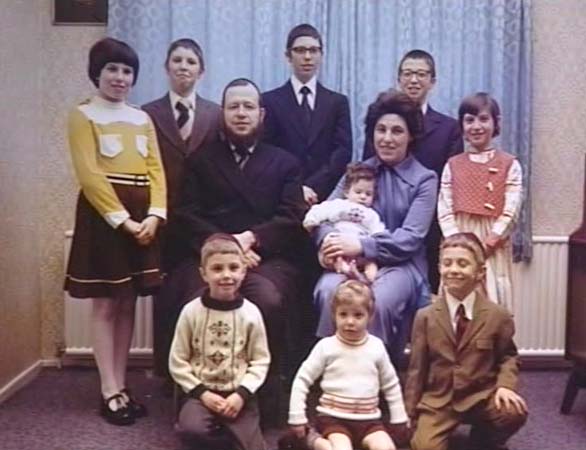
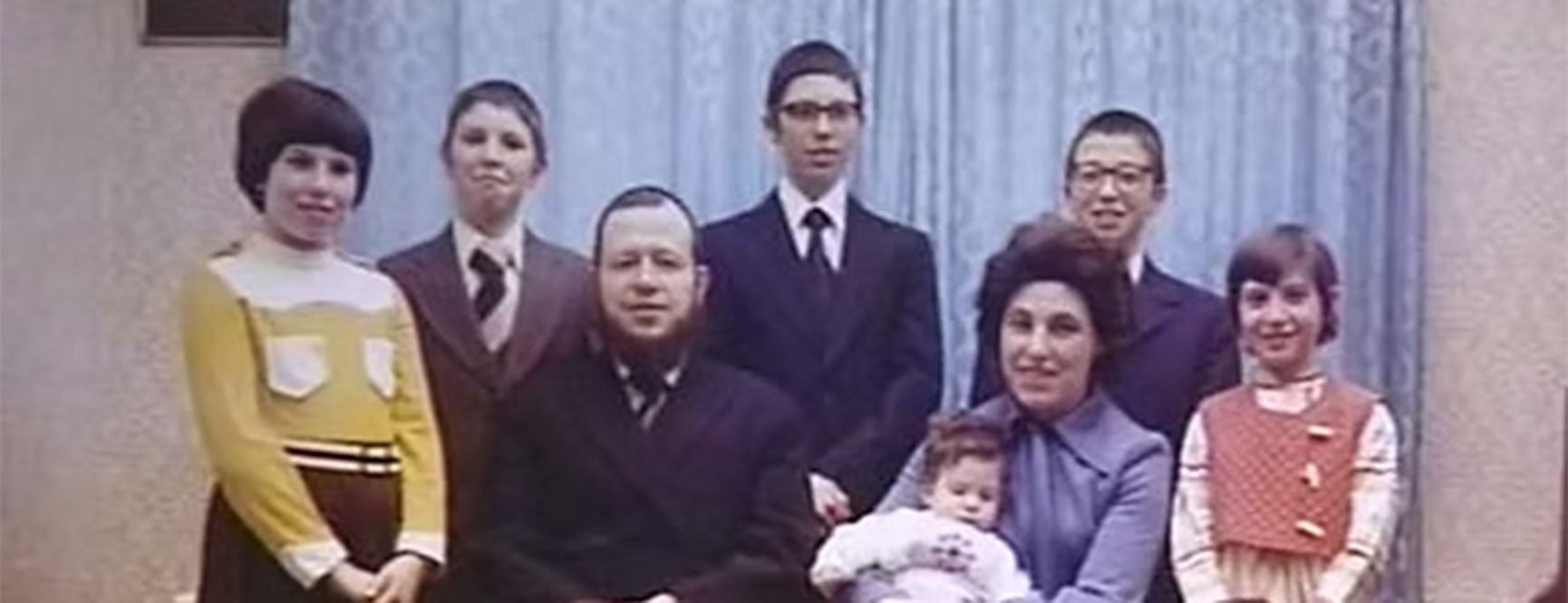
BK: The family in Manchester, 1976
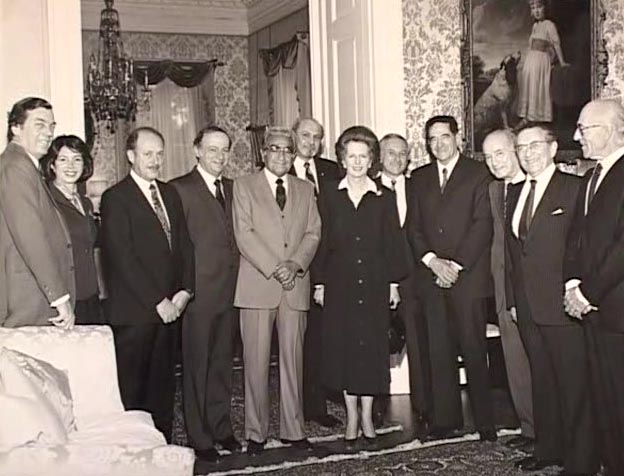
AH: Jewish leaders meeting Margaret Thatcher, on the far left Edgar Bronfman, President of the World Jewish Congress
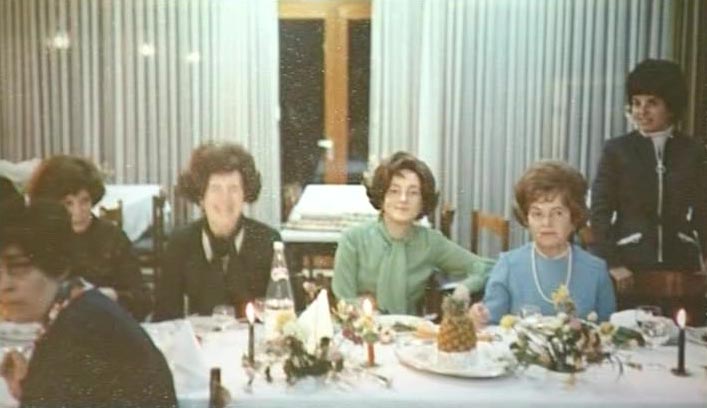
RR: At the Sheva brochas for sister, Tzirel sitting in the middle in green, Lugano, 1974
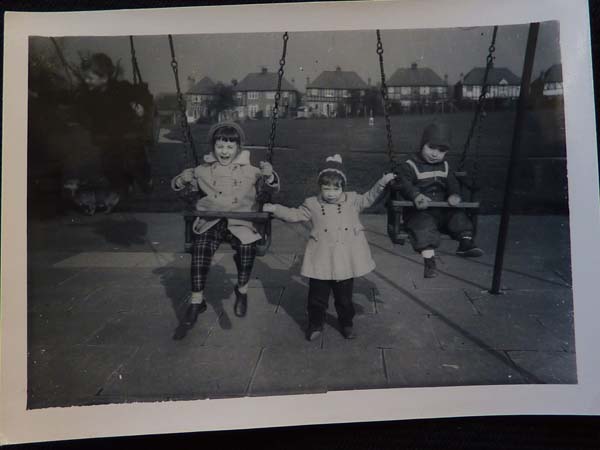
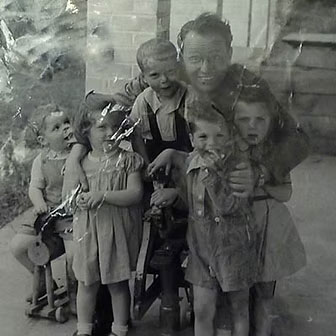
VK: "This is all my three children in Preston Park. About 1960."
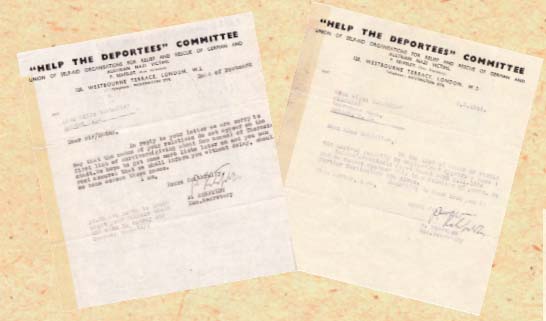
After the war, there was a desperate search for relatives and friends who had not been able to escape from Nazi-controlled countries
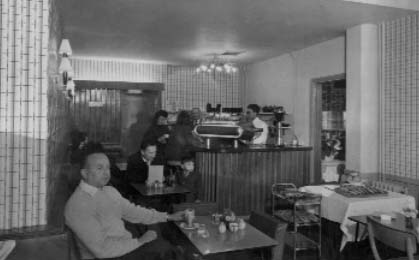
The interior of the Cosmo Restaurant in the Finchley Road
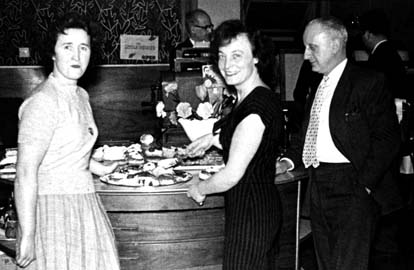
Doris Balacs (centre), with her husband George, both refugees, in their restaurant the Dorice
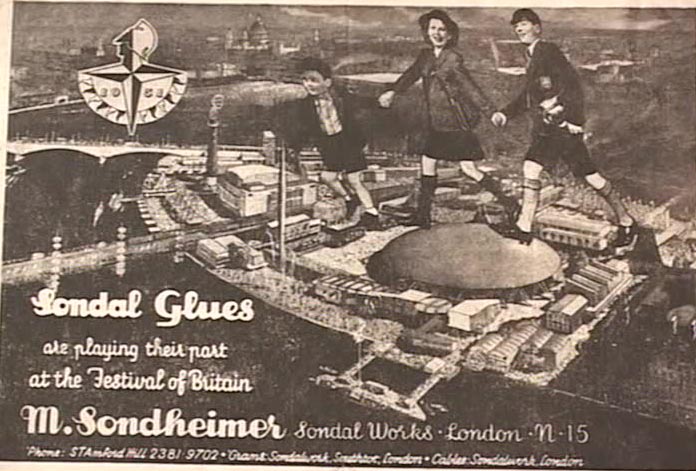
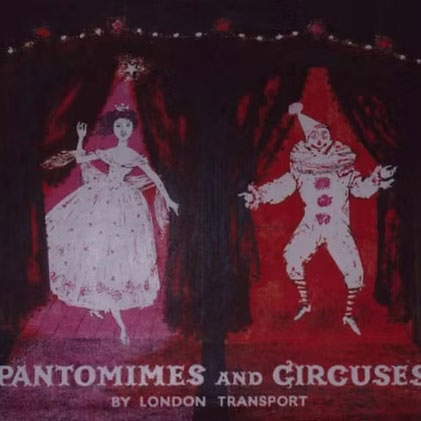
ES: Advertisement poster for father’s business ‘Sondal Glues’, at the time of the Festival of Britain in the Exhibition, 1951
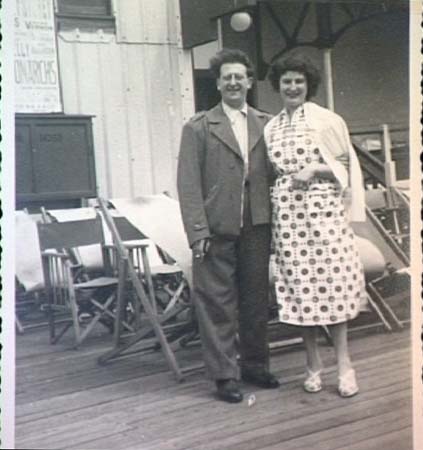
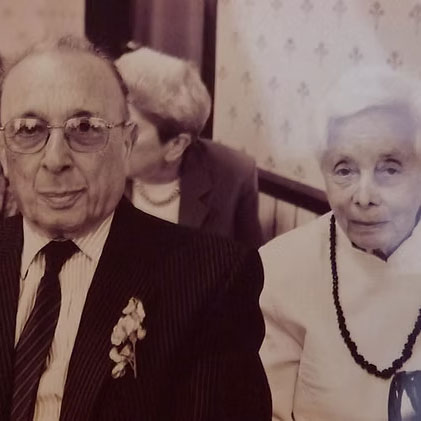
ED: Honeymoon, Blackpool, 1953
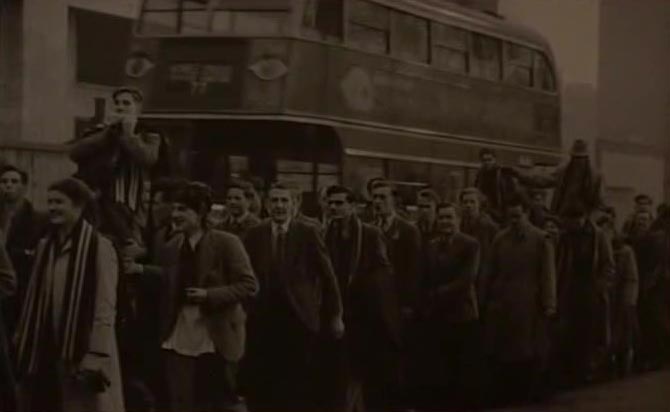
LF: At International Students Day, London, 1948
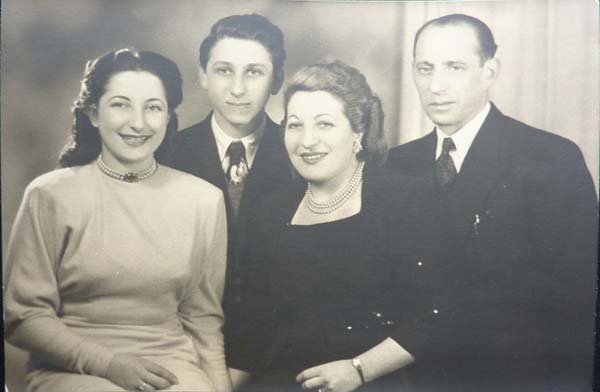
BS: At the time of his barmitzvah, sister, BS, mother, father, Ealing Synagogue, 1948
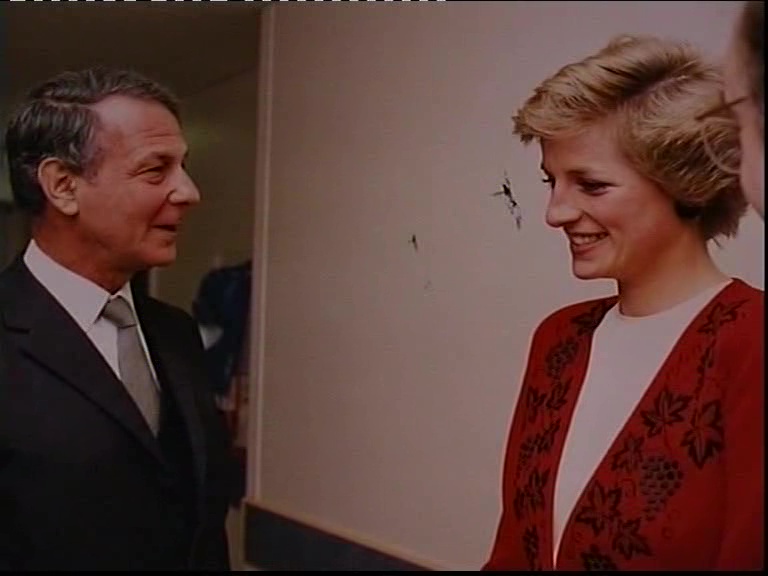
LB: With Princess Diana, St Mary’s Hospital, early 1980s
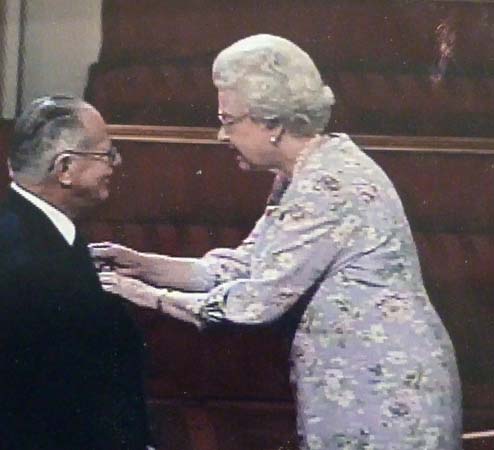
HJ: Receiving his MBE from the Queen at Buckingham Palace, 2006
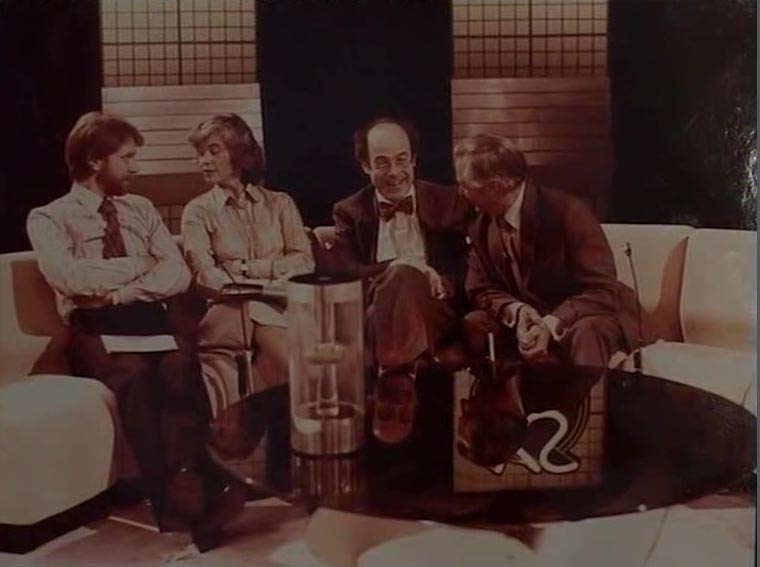
HW: TV series called Young Scientist of the Year, ca. 1981, Sir George Porter first on the right (Director of the Royal Institution) and HW (others are unknown).
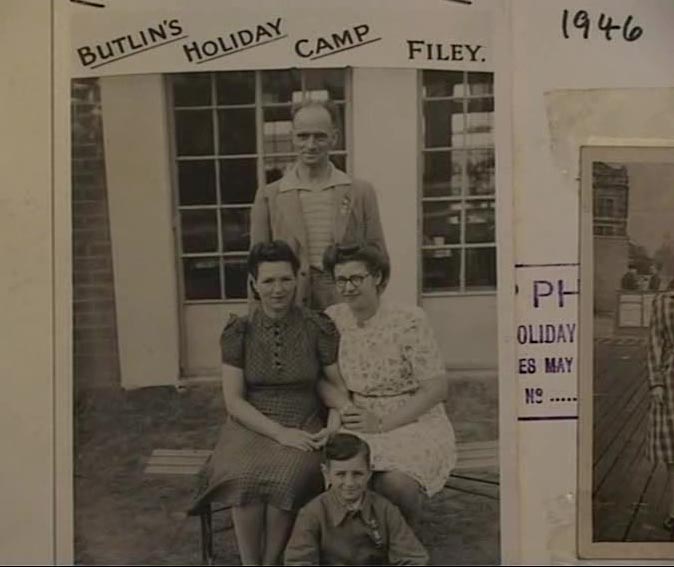
HS: In a white floral dress, first holiday at Butlins Holiday Camp, 1946. "we had great fun!"
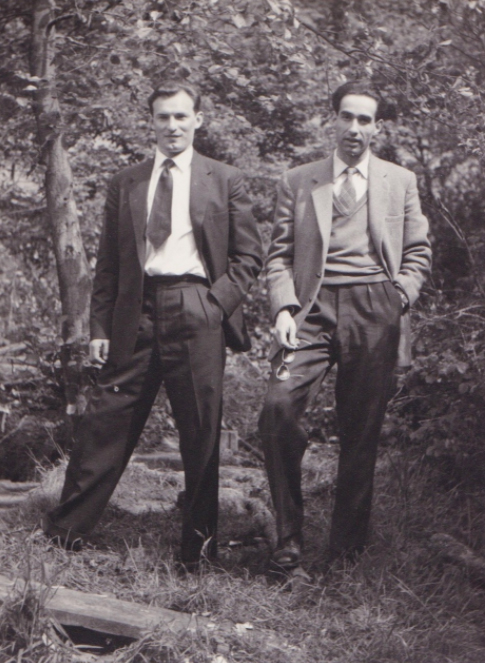
HE: Henry on the right, with school friend Edek Shannon (Szajnzicht), mid 1950s
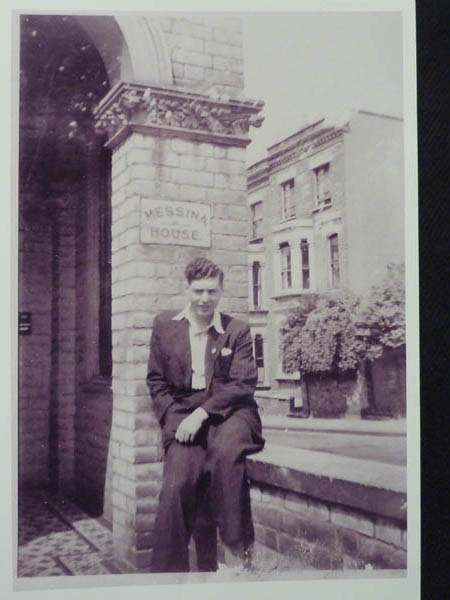
FB: London, 1948. "A dapper looking young man outside the house where we lived on the corner of West End Lane and Messina Avenue in West Hampstead. I really thought I was the cat’s whiskers then."
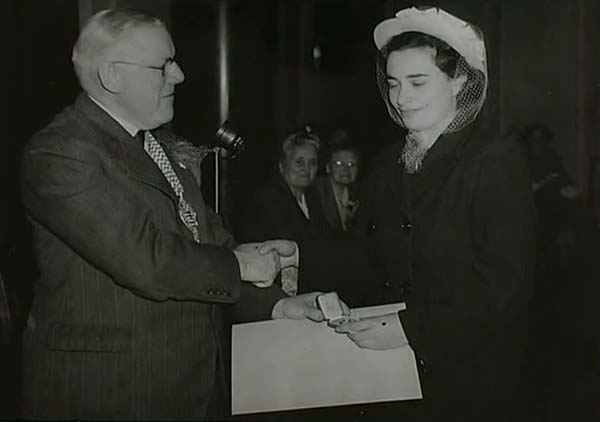
HG: Receiving her Gold Medal as best nurse in the London County Council Hospitals, County Hall, London, 1947. "It was a very exciting moment."
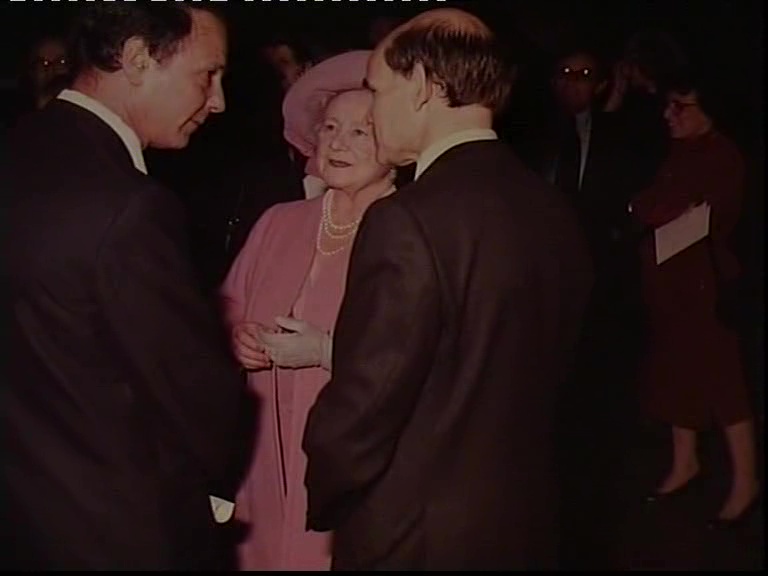
LB: With Queen Mother and the Dean, St Mary’s Hospital Medical School, 1982
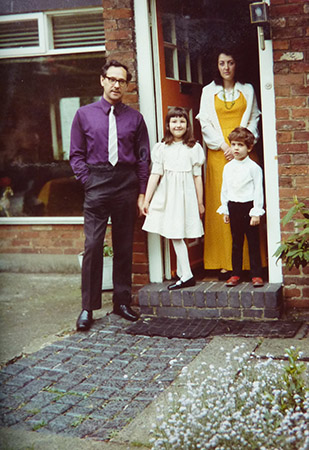
FK: With family, June 1972
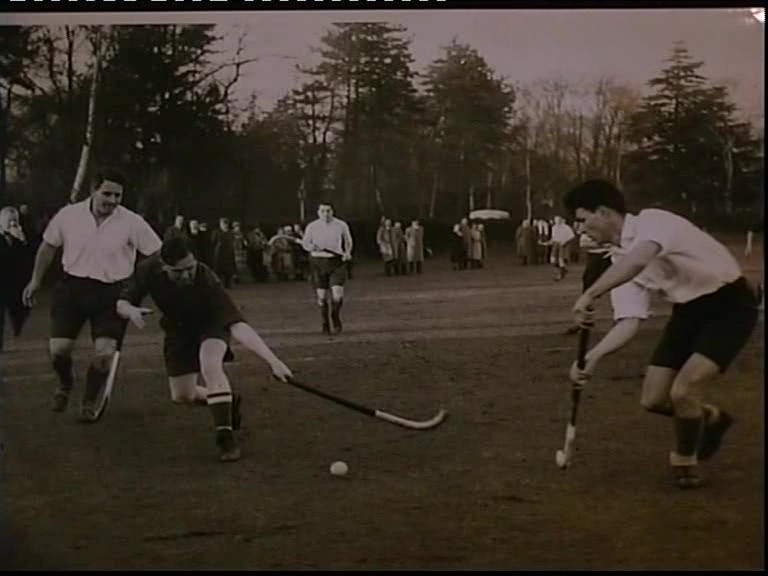
LB: With field hockey team, Staffordshire, 1950
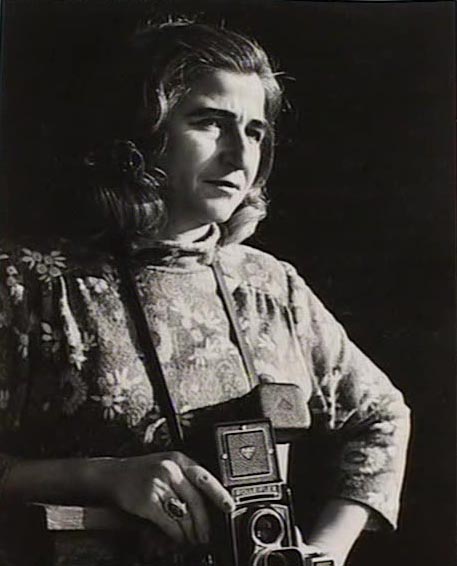
DB: With her Rolleiflex, 1950s/1960s
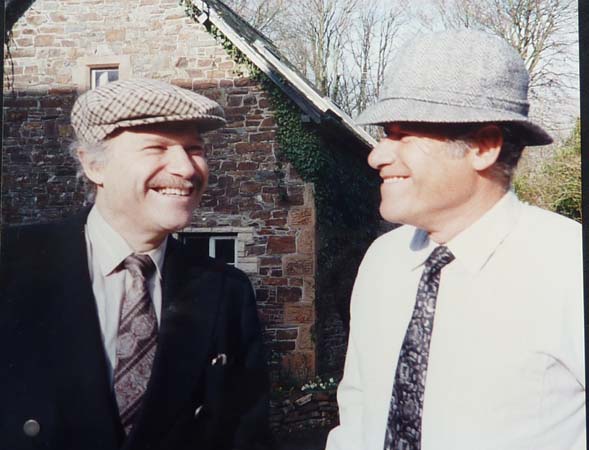
FL: With his twin brother Ralph (on the left)
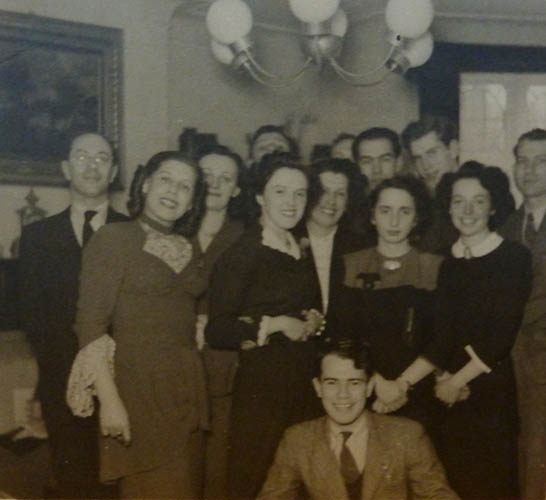
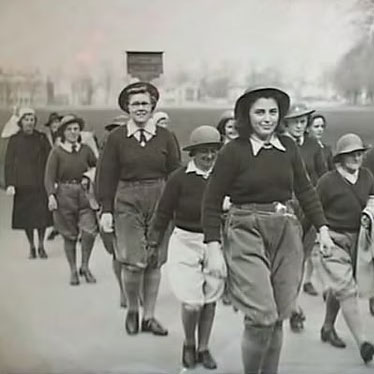
DH: With friends in London, early 1940s
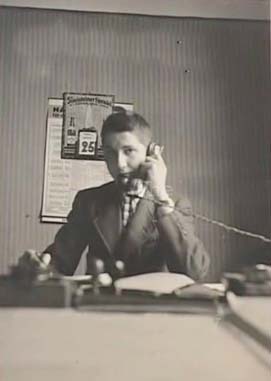
WF: WF at work after he came out of the concentration camp, Dachau, 1939
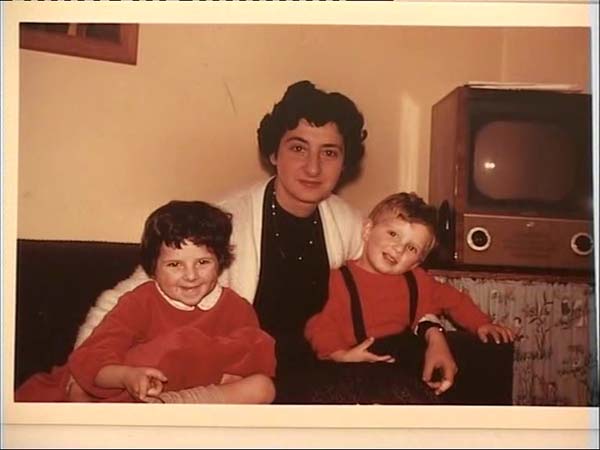
BM: "This is in 1959 just before we left our flat in Richmond to move to Somerset Road. On the left is Tessa, 3 and Oliver 1. "
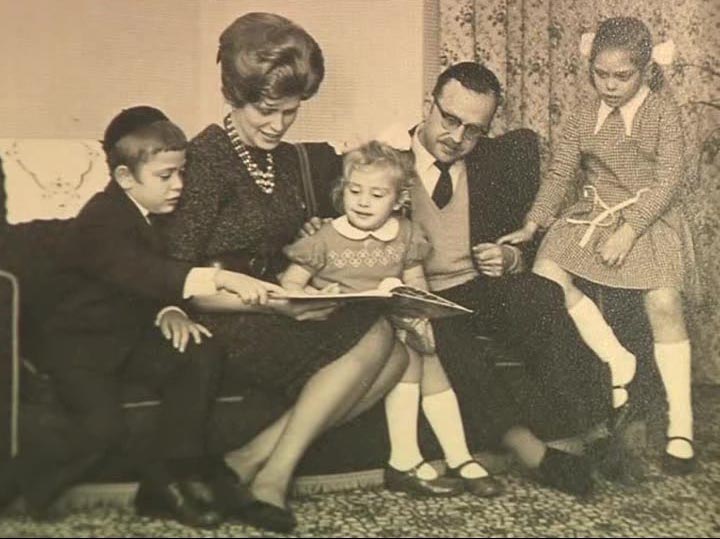
SK: With her husband Yaakov Kraus and her children Channah, Gitty and Joseph. London, 1965
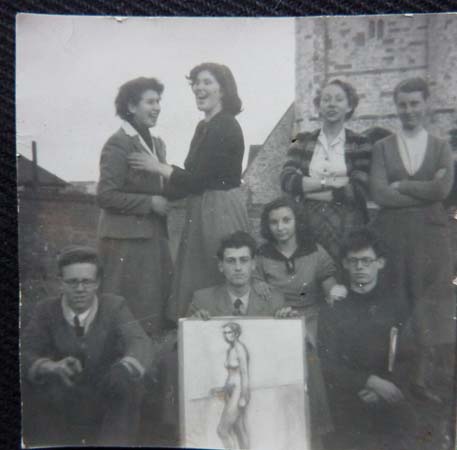
HW: At Farnham Art School, HW on the left, ca 1946
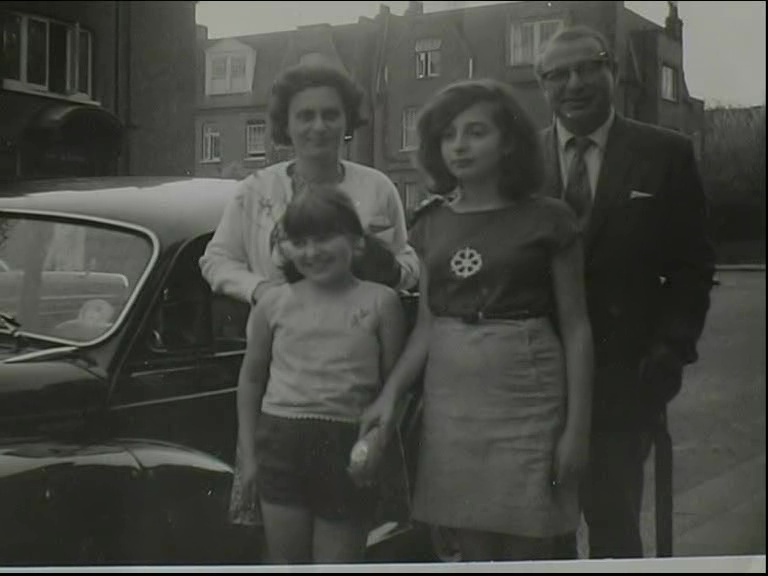
HG: With husband and daughters Yvonne and Monica in front of their first car, a Morris Minor, London, 1966
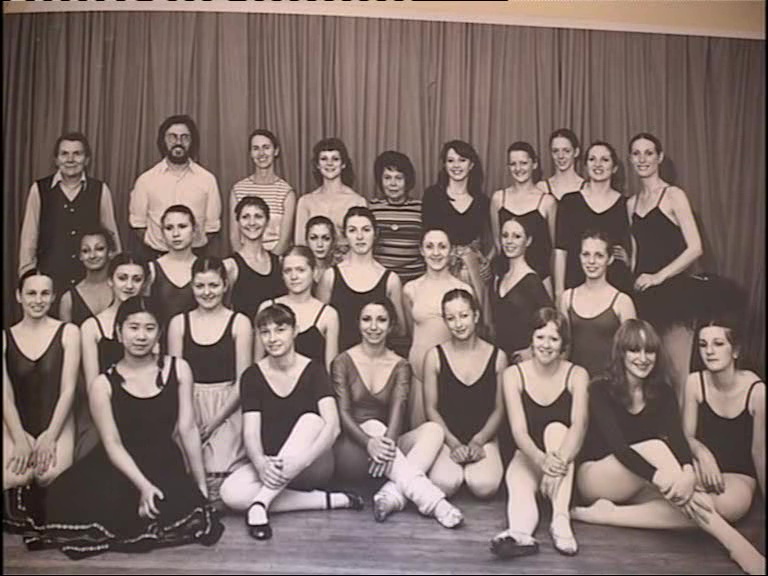
SM: An end of term photograph of the Stella Mann School of Dancing. London, 1979
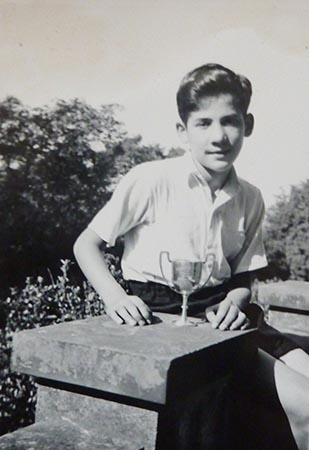
ER: With his cup for winning the Junior Cross Country at the Dorking Grammar School, 1947
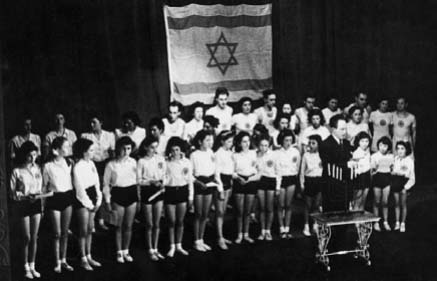
Chanucah show by the Bar Kochba Habonim at the Embassy Theatre, Swiss Cottage
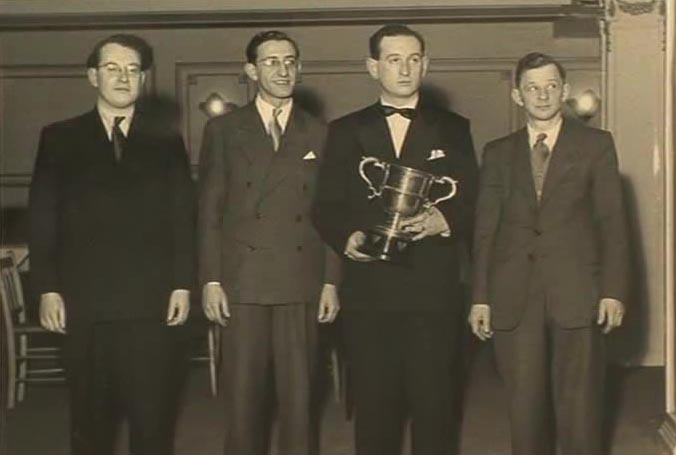
AF: The winning team of the EBU Teams of Four Congress (English Bridge Union), l-r Maurice Blank, AF, Archie Preston and Hymie Reece. Blackpool, 1950s
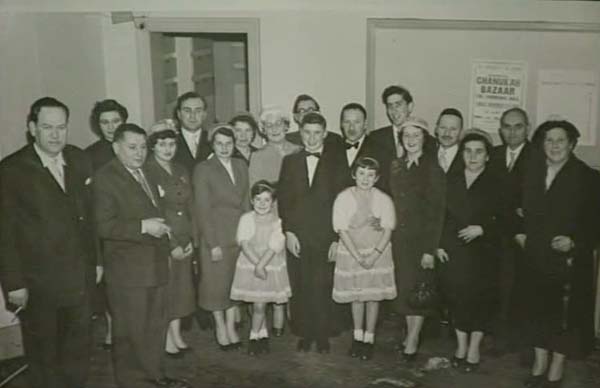
JC: Lionel Cofnas, son, Bar Mitzvah, Birmingham, 1956; JC on the right of his son
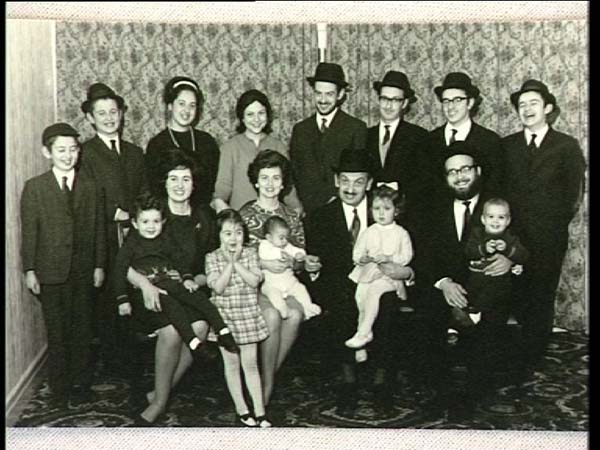
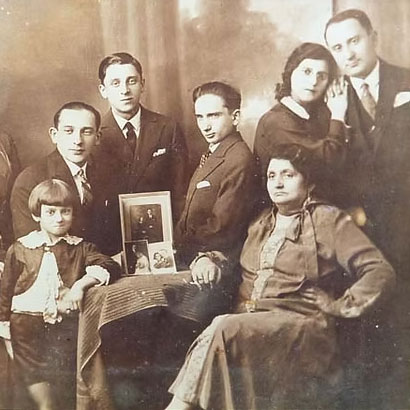
WB: Extended family, 1960s
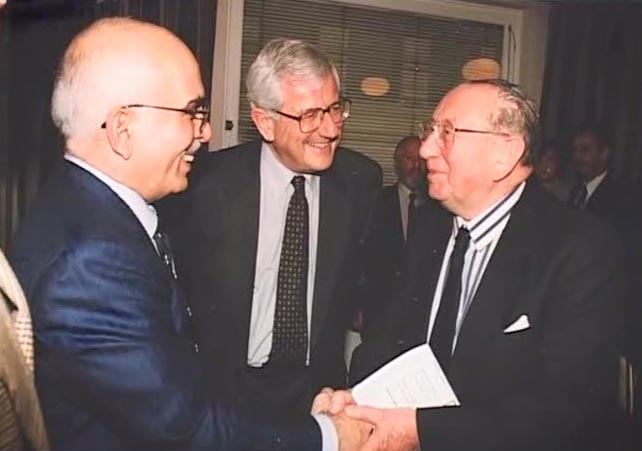
AH: AH with King Hussein of Jordan and the editor of the Jewish Chronicle, ca. mid 1990s
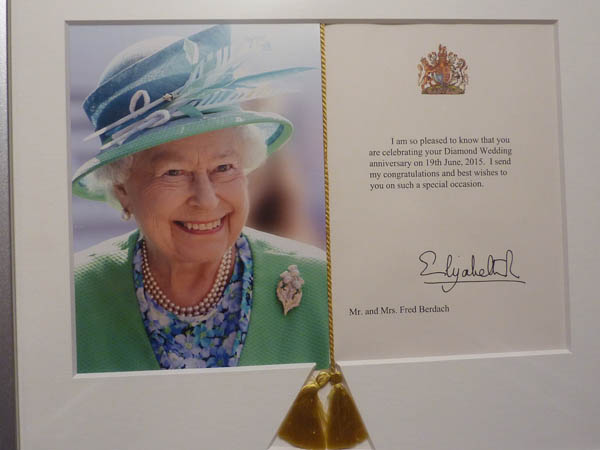
FB: "And this was a card sent Her Majesty to Vanda and myself on our Golden wedding anniversary. This is a card sent by Her Majesty the Queen on the 9th- on the19th – actually on the day – on the 19th of June to mark the Diamond Anniversary of our wedding. And it actually came by courier, a special courier. I had to sign for that. This is a lovely, lovely photo of Her Majesty."
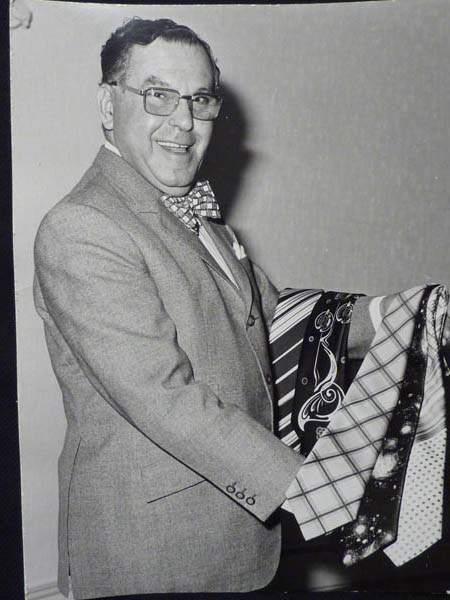
FB: Father at a menswear exhibition, "where we were showing off ties and bow ties," ca1974
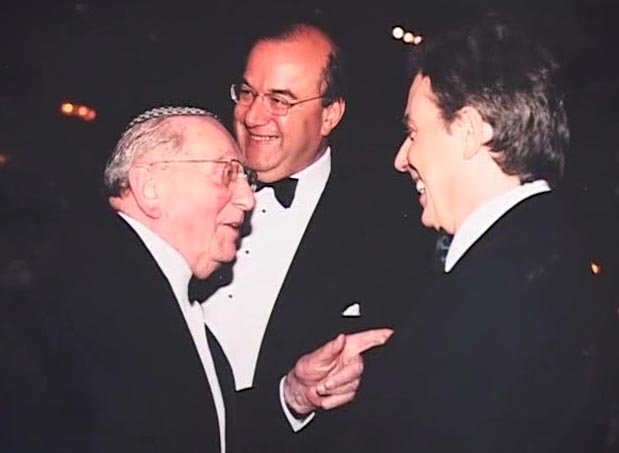
AH: AH with great-grandson, speaking to Tony Blair, Israel, ca. 2000
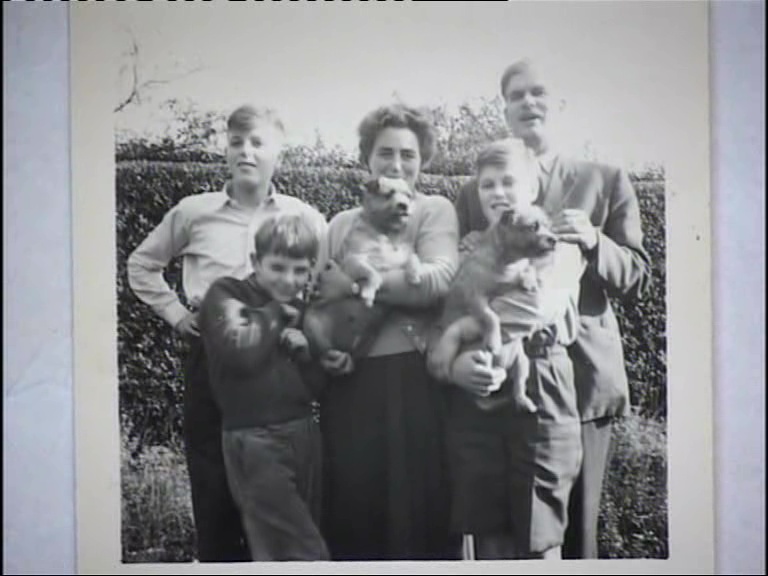
RS: The Sellers family, London, 1958
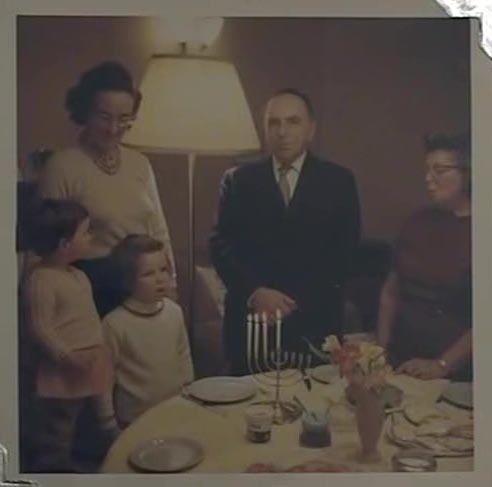
HK: Henry's parents and his children, Hanukkah, London, around 1963
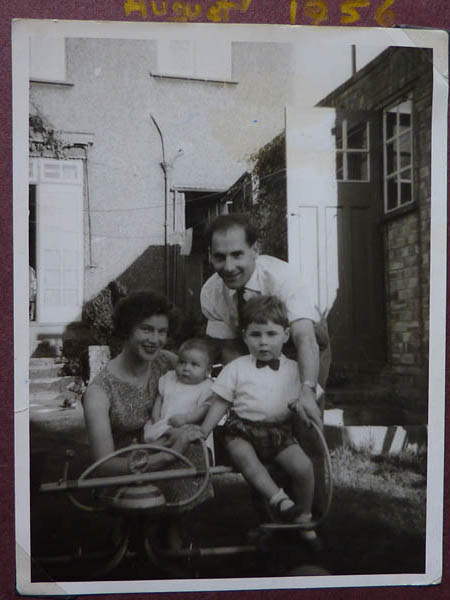
RK: With family. "Ann, myself, David and Andy in the garden of our house in Ballogie Avenue in Neasden. We had a flat in Maida Vale for the first two years of our married life, and then moved to this small house- a semi-detached in Neasden, where we spent sixteen years before moving to Kenton."
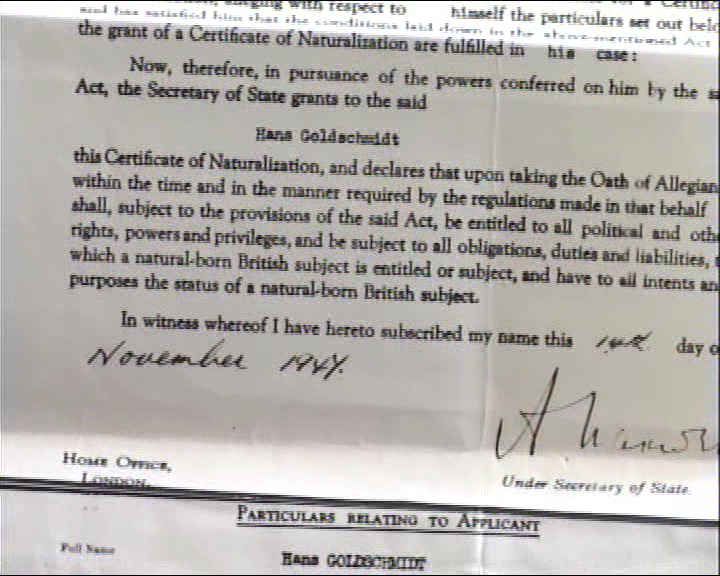
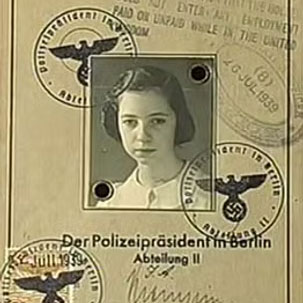
JG: Certificate of naturalisation as Hans Goldschmidt, London November 1947
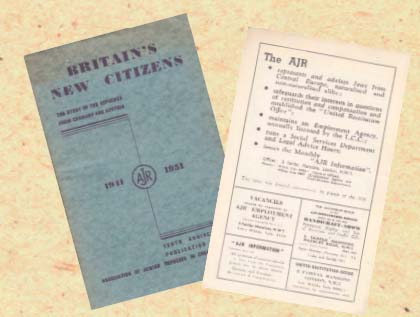
The AJR marked its first ten years in 1951
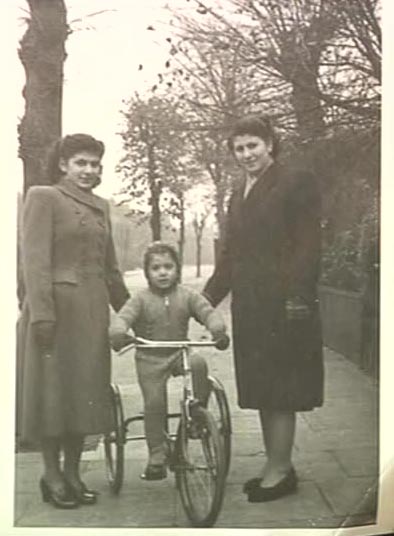
HW: HW, her sister Faigey Storfer and her son Leon (born in 1946)
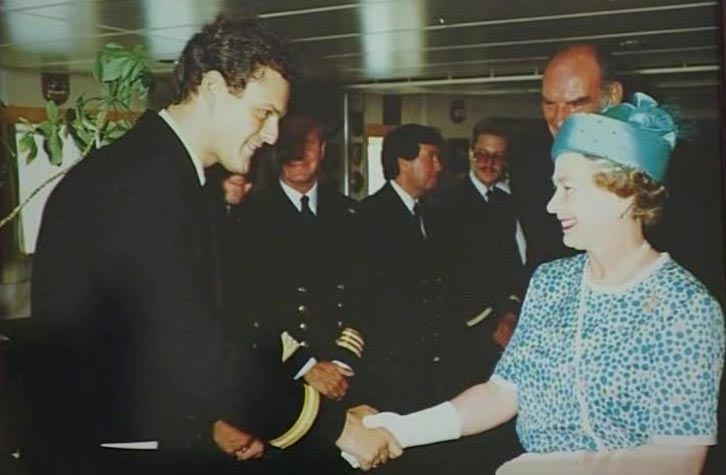
RL: Son Jonathan on the cruise liner, QEII meeting her Majesty Queen Elizabeth, ca. 1995.
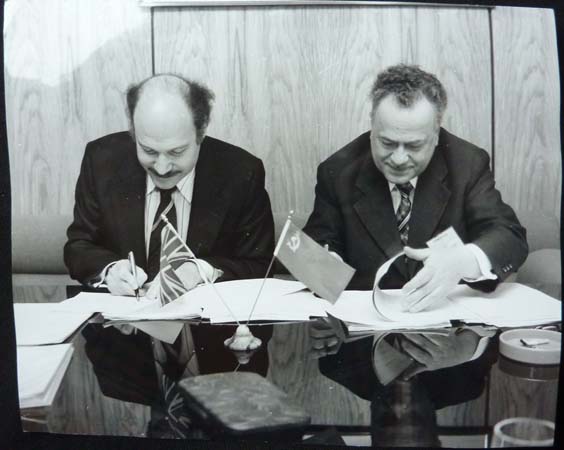
RL: Signing a contract in Moscow, early 1980s. "And this was a multi-million-pound contract. They sent me an invitation at about the year's end - just near- near the end - and said would I come out over the year’s end to sign a contract? And I was going to say, “Well I can’t- I can’t do that.” And they said, “Well the year is finished. You've got the financial allocation for that order. If you- if you don't sign it, it'll go away.” I travelled."
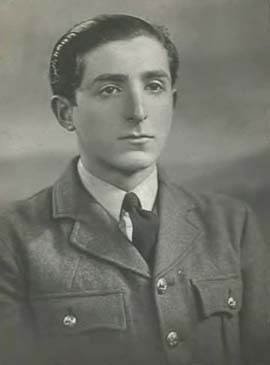
AK: Alexander in his RAF uniform
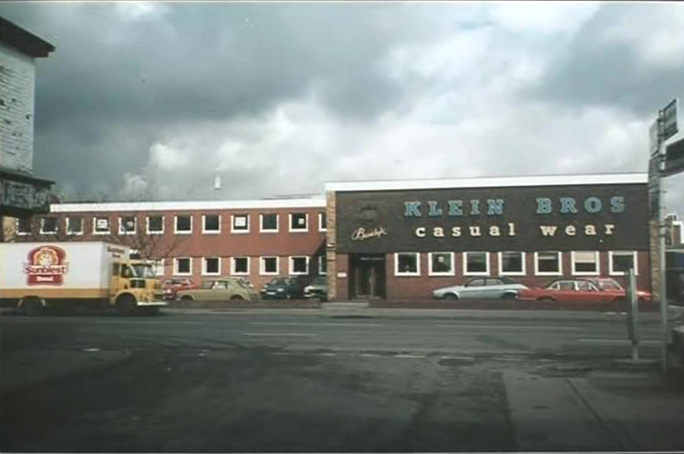
AK: The factory of Gershon and Alexander Klein called Klein Brothers Casual Wear Ltd, Liverpool Street, Salford, 1985
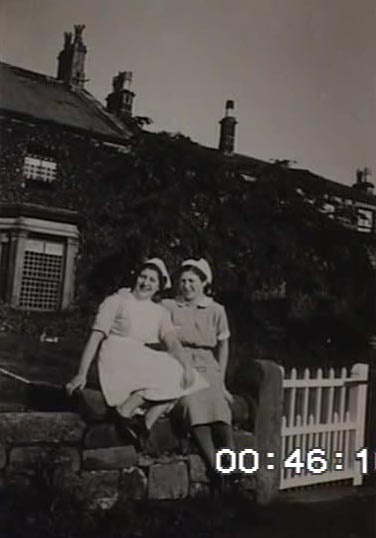
IW: With her friend Helen, Pannal Harrogate, ca 1940
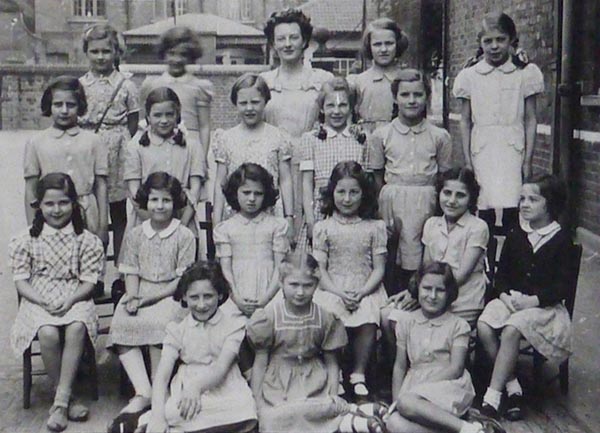
LL: South Hampstead High School, LL in the first row, second child in from the left, holding a gift from Lola: a pair of silver Dutch clogs keyring
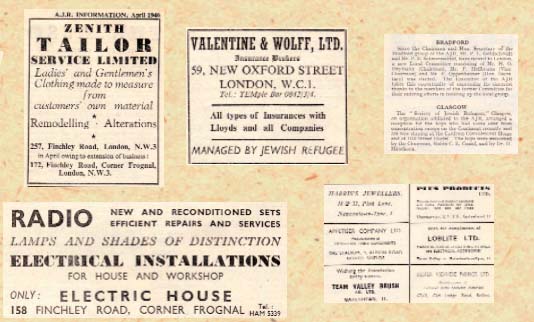
Jewish refugees started new businesses in and outside London
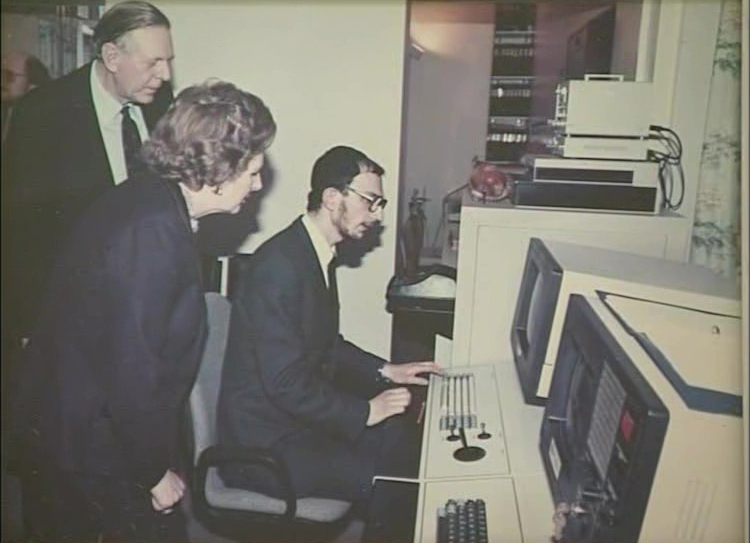
BK: Dr. Richard Klipstein, Berta’s son, with Mrs Thatcher and Donald Longwood, demonstrating a molecular resonance machine at the Brompton Hospital. London. March 1987
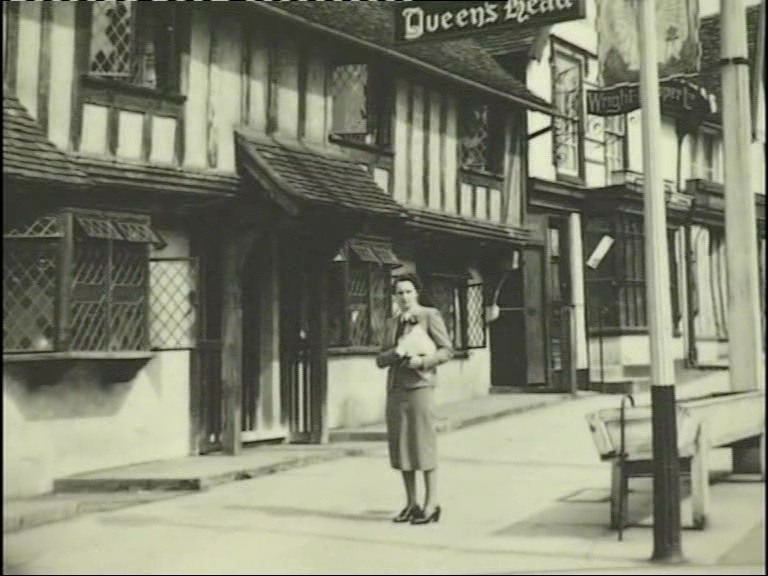
MS: Pinner High Street, 1938
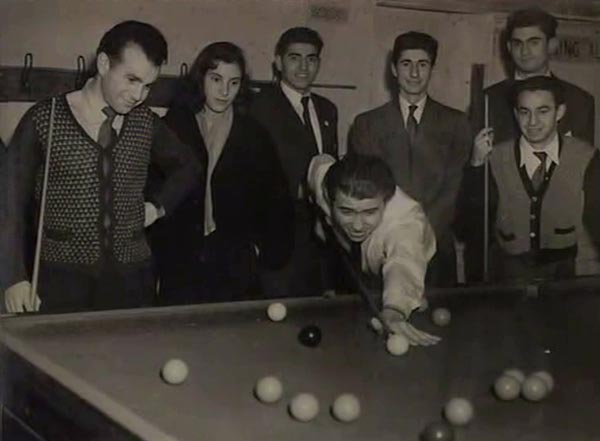
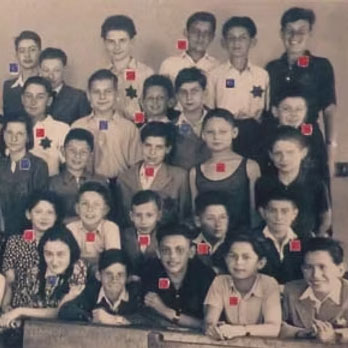
EF: EF with other members of the Primrose Youth Club. Most of these boys are concentration camp survivors celebrating the opening of a new house on Finchley Road for the club in 1952 with a game of snooker.
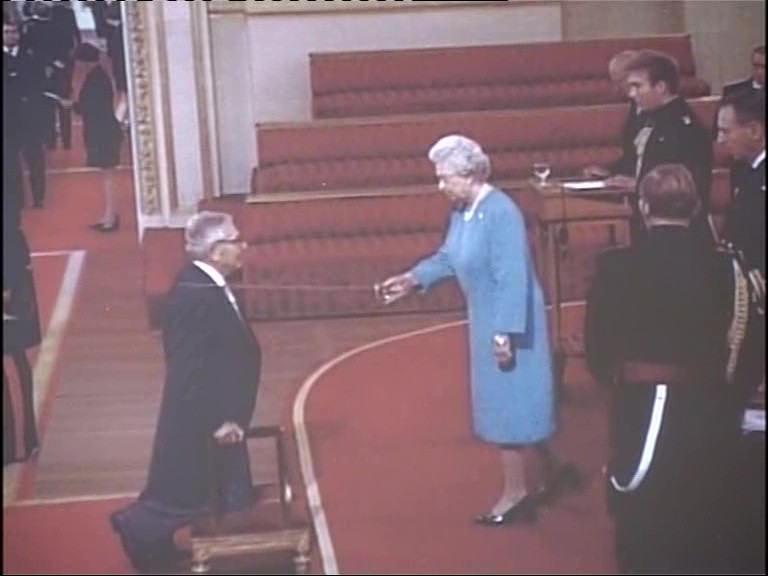
KA: Knighthood by Her Majesty The Queen, Buckingham Palace, 2003
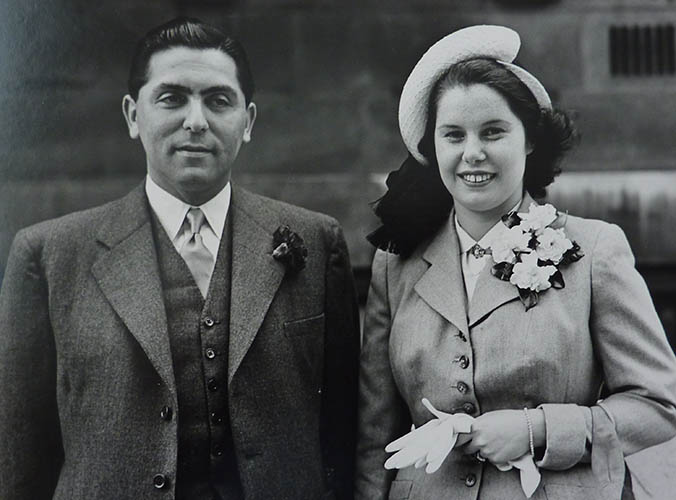
HE: Willy and Helga (nee Fantl) Ederer, Wedding day, London, 1950
But there was a girl in my class [in England]. We had an argument. I can't remember what it was about, and she was the one who called me a dirty German Jew. So I was far too scared to do this, but I just pulled her hair. Pulled it very hard until she was screaming. And the same headmistress came past and said, "What is going on here?" And she looked, and the, the girl said, "She pulled my hair." The headmistress looked at me and said, "I really wouldn't have expected that of you." I said, "She called me a dirty German Jew." Whereupon the headmistress Christian, with values, turned up on her and said, "That's a terrible thing to say," and she gave her a real telling off
And people are quite scornful about assimilation. I mean, I see it when I read books, too. I think a lot of Jews felt that assimilation, the desire for German Jews to assimilate, was partly responsible for what happened. That they kidded themselves that they were part of the society when they weren’t. Lots of stuff like that. And there was a very- quite an antagonistic feeling.
Well, first of all, I was very surprised how bad the childcare was in this country [UK]. And I was also very surprised that there are many types of freedom. Cause the freedom for women - women - was much less than that in Czechoslovakia. So it was a big shock, because...Everywhere. In the workplace, everywhere. I remember I went for a job interview in- at University College in ’59 or ’60. Must have been ’60. And I was pregnant with my first daughter. And this guy that interviewed me said that, “Well, you are very suitable for this job but I can’t give it to you because it wouldn’t be fair to your child.
As a photographer? Well I liked portraits; I was used to that. But I branched out in advertising. And I liked it very much. Anneli Bunyard specialised in actors, theatrical work. But she often didn’t come, and I could take her work, and we did that together. We always had to sign the photographs - we had formed a limited company as Bunyard Ader - it didn’t matter who took it. That was one of the conditions. People say, “Are you the person- My child’s picture on my bedside table, and signed Bunyard Ader - was it taken by you?”
My brother was in the same barracks eight weeks earlier. He was called in to the office the first day he was in barracks and told to change his name. He asked why. So it was explained that if he went- if he went on active service and was unlucky enough to be taken prisoner, he would have great troubles with a name like that. So, he asked for guidance as to what to change it to. His CO who was Scot, wanted to know what the name meant. He explained - Kirchheimer. The first part of the name is- is Kirch, Kirchheimer. “Kirch is a church.” “Okay, Kirch is a church. We're in Scotland. A church is a kirk, so therefore your name is Kirk.” So I decided I better follow suit.
My change of name was forced on me in the army during the war. After my initial training I was told when going on leave: 'You better come back with an English name.' I totally forgot. On my return I suddenly realised I hadn’t thought about names & quickly looked in the telephone directory. I wanted to keep my initials LB. There weren’t many 1st names that appealed & Leslie Howard was very much en vogue. So I thought Leslie would be a good name to choose. And Brent I had just chosen almost at random from the telephone directory, because it seemed to go reasonably well with Leslie. So I became Leslie Brent. Well, that was okay, I mean that did help me to integrate, it helped me in the army. I became an officer in the army. I had to become English pretty dead quick actually. Because I had to look after English soldiers & so on. So having an English name was a very good thing from that point, too.
If not for England I don’t know what would have happened to us, so for that I am eternally grateful. In Germany, before there was just ... a policeman was a figure of authority, in London he was a figure of a helper; he was there to help you.
My father went to Germany. He went to a trade fair. He used to get a lot of his ideas from going to trade fairs in Germany. And I think one of the first times he went he found out what happened to his parents. And he came back and he told my mother. But they didn’t discuss it in front of me. They didn’t tell me anything. They just said, they- he found out. But I gathered that they were dead. That’s all I gathered.
And my father said, in 1946, “I’m going to teach the English… how to wear a bow tie.” ...And my father paid him and took home the sack, some of which material was useless but some of it was absolutely right for making black bow ties. So my mother, having made a pattern, made a bow tie. One bow tie. You have to make it on the reverse side, you have to reverse- you have to turn it inside out, you have to sew up the ends. You have to iron it. There’s a lot of things to making a bow tie. Bow ties are much more difficult to make than ties. Much more difficult. So my father having made this bow tie… he decided he would start at the top. And he went to Burlington Arcade, to the one menswear shop called ‘S. Fisher’ and showed him this bow tie. And my father said, “I’m making these bow ties. Are you interested?” So the man, Mr. Fisher himself said, “Yes, I’m interested. I want you to make me a dozen.” Trying him out. At that time a lot of officers were coming back from the Army- being dischar- you know, demobbed and so on. There were a lot of parties. So black ties were well in demand.
And suddenly I was a refugee. Somehow I always kept a pride that my father had instilled. He used to say ‘What you have in your hands is nothing. What you have in your head is there’. I remember in later years being told that I didn’t behave like a refugee. I was always quite proud. It helped me to survive. It was very, very difficult. But I do remember with great gratitude many of the English who were kind and good. I struggled very hard in the beginning, and I had nothing, and I was too proud to accept anything.
I feel British. I am always grateful for them accepting us here, I am. If I saw the Queen, I would thank her. I don’t feel out of place at all, perhaps because I was a child, I don’t know.
It was the most wonderful, wonderful thing that the British government did. They saved the lives of 10,000 Jewish children by opening their doors to them. No other country in the whole wide world made such an offer, neither America nor Canada nor Australia only Great Britain. Great Britain was the only country in the whole wide world. The world must never forget this wonderful, wonderful action on the part of the British government. In Germany, they murdered Jewish children; in Great Britain families opened their homes to them to save their lives. Great Britain is the best country in the whole wide world! We must always, always remember that!
We went to Cirencester as evacuees. I was sent to a small private school, run by two sisters with a couple of assistants. They had a huge effect on me. I mean they let you read all sorts of books that you wouldn’t have been able to read in a normal school. It was also that time that I realised that I had mastered English. I could understand not just the general gist of what was being said, but everything. And I got such a feeling of elation that I immediately: I’ve got to write all these words down!
[Her husband's attitude towards her background] Ignorance. Complete ignorance. Ja. And the way they used to treat the wives over here apparently, you know in the mining area or in a working area. All that was expected of it was dinner on the table when they got home. And that’s about it. If you didn’t have the dinner on the table, you might as well as go and be dead.
English people didn’t understand anything about the camps. Whatever you said they didn’t believe it. So that [showing his KL tattoo], I used to say was King’s Loyalty, KL. It stands for Koncentration Lager. That was put on in Mielic, the only camp that had that put on. I haven’t got a number on my arm. When I came to Manchester I met Moshe Besserman. He was in Mielic, we got very friendly. After 5 years of marriage he committed suicide. So in England I am the only one with with KL.
Well, when we came to England we only spoke German, because you could only speak a few words of English, what we learnt before we came over. The one word that amused us was handkerchief. We couldn’t believe that a little thing like a hankie got such a long word. So anyway, I know that, and then mishpocha said ‘now you’re in England, you speak English’. We couldn’t speak English, we weren’t allowed to speak German, so we didn’t speak. We didn’t talk, that’s it. I learnt English with the newspaper… slowly, slowly, you know, the newspaper, and then later on I read all the kids schoolbooks, you know, and gradually, gradually, I can read English, my English writing is very bad, but I can read, yes. I went to night school at one time, but they learnt poetry and that was not for me, I don’t like poetry, no.
I think some people tried to give us English lessons… Mr. Mundheim - Handgröße acht (hand size 8), in case we didn’t behave ourselves - gave us a few lessons, but if you want to know how we learned English, it was The Dandy and The Beano. We got them after the kids, the English kids in Belfast the Jewish English kids in Belfast, had finished with them.
I’m British, but you see, when I go somewhere and the people don’t know me [they say]: ‘How do you do’? The next question, because of my accent, is always: ‘Where do you come from’? Well, I get very cynical because I say: ‘It took you five minutes. When I came to England, it only took half a minute before they asked me where I came from’. So! When you learn [English] as a child, that’s okay. But when you learn it at 34, you can’t ever get rid of the accent
Never a day goes by without my thinking of my past, and thinking of my family, and what happened as a result of the Nazis. It’s really not something which I forget about. But I do think about it. It’s very much part of my life. I even dream about it. And therefore, it’s played a great role in my life the fact that I came from Germany originally, but I’m very proud to be British, very lucky to be alive as I’ve said.
It was called By Candlelight and my [twin] brother and I were dressed up as porters, and we used to do – we used to sing in English and in German. There were obviously many other entertainers, and we used to have little things to say to each other, you know, silly things like, ‘Would you like a cigarette?’ The other one – we were only eight years old – would say, ‘No, I only smoke cigars.’ You know, people laughed at that…
when we were only about eight or nine years of age of course the War was still going on. So they asked whether we would entertain the Forces, mainly the American Forces. So, the American Forces gave us naval uniforms, and we used to entertain them. And this was great. We used to say, ‘Hey there mister, you’d better hide your sister ‘cos the fleet’s in, the fleet’s in. Hey there mister, don’t say nobody’s kissed her, ‘cos the fleet’s in.’
You know, I accepted you know, that was... the way it worked [how the Refugee Committee placed children]. You know, I think all the love that I had from the age of eleven, and... You know, I couldn't have had better parents. And I don't know how one feels towards one's real mother and father. But I couldn't have, you know- feel any- any more, I don't think. And you know my- I looked after my aunt, you know, when she- when she was ailing. And you know, we were very - very close.
But she [his mother] found it [making a living] very difficult. And then, and then I mean she had – then, after the war British Restaurants became - were transformed into School Meal Service. And she worked there. And eventually, she got a job in Blackburn as a Number Two organising it. And the Number One left, and my mum acted up, and applied for the job and was turned down. They didn’t fill the post; she acted up again. They advertised again; she applied for the job again, and she was turned down. And she heard one of the interviewers say, “We’re not giving a job to that bloody foreigner!” So she- I know, I remember her being incredibly upset.
No, when I was young I didn’t like Benno very much; in fact, I didn’t like it at all. And I used to call myself Benny. And a lot of my friends still call me Benny, but as I’ve grown older I rather like Benno. So I, a lot of friends call me Benno as well. Benno is very good because very few people have got the name Benno in England. And it means I don’t get mixed up with other people.
Nobody talked about anything after the war. My adoptive parents took the attitude that they didn’t want to remind me of bad things and of hard times. And they didn’t ask anything at all. And I was and is okay about that really, but I did want to know what had happened. I didn’t want to tell my memories; I wanted to have my memories fleshed out.
There was a silence which lasted many years until- until, my children became old enough to be told about it. They kept asking certain questions, you know, “Why do you talk with a funny accent?” and, “Why don’t we have grandparents and family like the other children?” So we had to tell them something.
[About her father, Rabbi Dr. Georg Salzberger, his new congregation in London] He could speak to them in German. Preach in German which was his language and always remained the German of his poetry. Poetic language. It felt very much like home. Very stressed people in hard circumstances with little to live on. And so had we - very little to live on. But it felt like a bit of home with a lot of tragedy hanging around us and a lot of worry. But [a] feeling of closeness and warmth and connectedness to the past.
they kept bringing literature in. British National Party literature in. And I was objecting. Now, the majority of the English National Opera were not thinking like that, but they also couldn’t be bothered. So when I was objecting, then I was the troublemaker! Because nobody minds who does what and I was doing the protesting. And then there was a cellist – sweet little thing - who kept telling me that “Oh…” - is it ok if I use a rude word?” It’s not OK- not OK. But she was using a very rude word about these foreigners who take away English people’s jobs. And that was going on continuously. And- One day I hit her. And I was dismissed. The fact that I had to go through this [all her life experiences e.g. second generation Holocaust survivor], didn’t matter.
Well we went to Hertz all the time obviously. You know Hertz, the cabaret, the Jewish cabaret. Hertz, he had a cabaret in Finchley Road, by refugees, mostly. And that was the only entertainment we had really during the war. It was in Finchley Road. He was Viennese; he was a producer, or owner or God knows what. And he made a very good job there, yes. It was always quite interesting and quite lively and quite nice and pleasant, you know. It was the only entertainment we really had. But we went to Dorice quite a lot, the coffee shop, and the Cosmo, more the Dorice than the Cosmo.
My room [postwar in Reading] was tiny. Their room had a double bed, our eating table, their trunks. Our 'everything else' room. We stayed 8 years. My mother had to fit in with the owner: cooking when the owner wasn't cooking–dreadful for them. I'd sit in the shed in the garden mostly. I organised a couple of metal bars, so if somebody banged them, I'd know. I made it my little den. It was only a tiny little shed. I would sit & read. My mother would leave me a tea in a little round tin. That Gollancz leaflet? 'Nowhere to hide their heads' that was published at the end of the war, which my parents hid. This yellow pamphlet about concentration camps. I found it & I read it & I- absolutely terrified.
Because Martin and I had to go and meet her [their mother] at the station. I can't remember which station but... I remember... just not knowing what to do. And Martin telling me that – that… she was our mother, and we should be happy to go and see her. And then I remember that he couldn't face her either. But he looked away and... He was ill at ease once she arrived off the train. And- it was an impossible situation. She didn't speak any English, and I didn't know any German. Martin I think had retained some German. But it was an absolutely impossible situation. Very, very painful for everyone... And as soon as she got back to Germany, my father served a court order on my foster parents. And my foster mother, who'd said I was one of the family, had to take me to Germany and leave me there. And that was the final betrayal. That the one person I thought was really there for me... had to leave me. I mean, up here I knew that she had to. I- I- at fourteen I knew what a court order was. But in my guts it was the final betrayal.
When you get into this country like I did, you don’t look around and say ‘will I like it? Do I like it?‘ No. I have to be here, that’s it. I took things as they came. I have to be satisfied.
I applied for (UK) naturalisation and I had to appear in front of three judges, and one of them said “Mr Henderson, you have been interned.” “Yes.” “Tell me why were you interned?” I said, “In all fairness sir, would you please tell me why I was interned?” He said “Thank you very much Mr Henderson. Granted.”
I remember throwing a tantrum at the station when we were setting off to go to England on the Kindertransport. And I connected that in my mind with being a very, very naughty girl and that's why I was sent away. And if only I could be good, my parents would have me back home. And I never succeeded in being good, because I could never understand what adults wanted of me. I was always getting into trouble, particularly in the first foster family.
We didn’t know where my father was, we had no idea. My father came to England in June or July of 1939. When we arrived, we were put into a hostel, and the first thing my mother did was to go round the men’s hostels to see if anybody knew. She went with a photograph, if anybody had seen him, heard of him, knew of him, knew what had happened to him. ‘Cause I mean that’s what people did. And she knocked on this door, in this Highams [Lane] hostel. And my father opened it. And that was- That is quite remarkable, isn’t it? And that’s how they found each other.
I found myself in a boarding house in Finsbury Park and a couple of people, older than I was took me to a cinema. My first visit to an English cinema was amazing. Half way between the two main programmes, the cinema organ came up from the floor and words appeared on the screen and people sang along with the cinema organ. I had never seen anything like this before and I thought I’d landed in a lunatic asylum. It was the strangest thing that I had seen.
It was a horror. I mean, you can imagine. All of a sudden I'm with an elderly couple who don't know a single word of German. I don't know a single word of English. I'm six years old and I don't know what's happening to me. And… they- I think they thought they would have to return me somewhere, because I just could not stop crying. And eventually they put me to bed and… …I eventually went to sleep. I distinctly remember the next morning… By then I’d obviously stopped crying. And I don’t know whether there was some sort of innate… response in me to all this that was happening, and I realised that there was nothing I could do about anything. And crying wasn't going to get me anywhere. And… I think this is a philosophy I've now had for the rest of my life, that bad things happen and getting oneself into an absolute tizz… doesn’t make it any better. It just makes it worse.
My mother was in charge. She was very capable, even though she was so young. Any money that we had, you had to leave behind. So she decided that we were going to fly to England and spend the money on an expensive air ticket. It was February the 4th, I vaguely remember this, 1939. We went to Berlin by train and from Berlin to Amsterdam, from Amsterdam to Croydon. And then we went straight to Manchester.
I think my life in particular—I’m not sure about all our lives—seems to have been punctuated by tragedies that turned into… good luck in a variety of ways.
I don’t remember much of the [Kindertransport] journey. I have this feeling I had a lack of feeling.I wasn’t scared, I wasn’t particularly pleased. Apparently I said to my sister 'I bet the people who receive us have a car.' They had a Rolls Bentley. I was very pleased with that. They lived in a house. The house is listed & quite famous. An architect called Walter Gropius came to England at that time & this was the only house that he designed for private residence–ever. A Gropius & Fry design: 66 Old Church Street. I slept there through the Blitz. There’s one vivid memory of the Blitz. I slept next to a curved bit of glass which was a house feature. I’d got up. There was a lot of noise. Looked out through another window at searchlights & then went to visit the lavatory, at which time a landmine exploded not very far away. It blew in that window, that curved window. I came back & there it was on my pillow. That was my only near-miss of the Blitz. We had a shelter in the bottom of the house which nobody ever used.
I will tell you what I thought of Manchester. When I lived in Broom Lane I used to walk down Bury New Road, that far down there used to be the Assize Court, where the prison is now, and there were all Jewish shops, and every Jewish shop used to have a name in, and I used to walk up and down and I used to read the names: Goldberg, Lehman, Jacobs, Cohen, and that was my idea of freedom, because in Germany, people still had businesses and they used to take the names off. And then of course the Jewish businesses were closed. And here were Jews, displaying their names, so openly, this is absolute freedom. I wouldn’t like to tell you how many times I walked up and down Bury New Road just to read the names. Strange isn’t it how people are affected differently, yes, freedom, absolute freedom, you can display your name and you don’t have to look over your shoulder, you don’t have to be afraid, what a wonderful feeling.
I had to take a job on Saturday afternoon. I saw an advertisement by a Cambridge professor for a gardener. I applied, and it turned out to be Professor Lauterpacht, a very famous international lawyer. I started gardening and he started talking to me and found out what my ambitions were. And he would tutor me for an hour and then insist on paying me for the gardening. So that was very good.
Caerau. It's a little mining village in Glamorgan. Very small, very friendly. We were all put in a local hall. They gave us orange juice and then people chose. “I'll have that child”, “I'll have that child”. And the family that took me, tell me- I was the last one chosen, because they thought I was mentally deficient. Because I didn't speak English. And I was really lucky. I mean, really lovely family.
My sister and I, we vowed to ourselves if, when the time comes, and we are lucky, we were to meet our parents again, we wouldn’t tell them how unhappy we were here, and we’d never write them that we were unhappy here. They didn’t give us… they didn’t feed us properly either, didn’t clothe us and didn’t feed us. We had no cardigan, my hands and my sister’s hands were chapped up to here, we had chill blains, and we didn’t have any winter clothing, and I don’t remember getting any shoes or stockings or anything, but we wore what we had.
They [the parents] tried not to show it [the struggle as a refugee] as far as we, we were concerned and so on. But it was a real struggle for them in a sense. But my mother showed her qualities in the sense because she could cope much more easily than my father. My father was a businessman, but she was an artist. And she made these- and she made these handbags. Brilliant things. She designed them… and… cut the cloth and, and so on. And then went out into the- into the fashion shops in, in, in Mayfair and in Regent Street and everywhere and showed them.
When I left on the Kindertransport train in Munich and my brother left a couple of months earlier, the feeling was: we’ll all be together again. We never thought we wouldn’t; that was inconceivable. I was then a little girl of 14 going on 10 by today’s standards. I went to Peru [at] 27. I had met my parents before, but I was able to spend two years with them and in a curious way, almost caught up with the childhood that I had missed out on.
[Internment] Probably Holloway, you know, or Pentonville. One- one of those ladies’ prisons. They dumped us there. And then I- well, we went in to the dining hall. And you were- well, it was a long, long room, and long benches, and long tables. And I was sitting there. And I thought, well, I’m going to try and find my sister. So we had a whistle. So I whistled. And a whistle came back! It was absolutely the other end. And then I- we stood up. You know, whistled. And so once we knew we are there, we would meet. And we did.…Only that one night, because we went from there to Liverpool, and- then from Liverpool we went all to Douglas, Isle of Man. And from there we- they split us up again. That’s why we ended up in Port Erin.
We were never separated. This, I think- People have said, many times to ask me about, “You know, you are refugees…” But my answer’s always been, you know, if you were on your own, and if you came as a child, then all sorts of things happen. You’ve lost your parents or… your siblings. You’re alone in a strange environment. Your language… isn’t what the one you’re used to. And many problems arise. But I think, the status and the sanity of those who came with parents and children, it’s a different story.
The journey should take 36 hours by train. It took us 4 days. We got to Cologne & the Germans caused us some problems. We were turfed off the train. It’s midnight, pitch dark, I remember Cologne as an absolutely empty station, just us sitting around not knowing what to do. We found a train the following morning & went to Holland. This time we were in a bigger train, about 200 refugees. Once again we were thrown off with quite a number of these other people, but by some miracle we got onto another train & managed to get through to Flushing. A funny recollection: in those days Dutch engines had a very unique feature, highly polished brass sort of round turrets on their engines. I can still see these polished dome things sitting on the engine. Anyway, we got to Flushing and then we went across to Harwich. We arrived at Liverpool Street Station. It’s always midnight, every time we arrive it’s midnight, I don’t know why. They threw the luggage out from the luggage van. My aunt had a huge duffel bag for the family shoes & this thing ripped & there on the platform were all the shoes. That’s my arrival at Liverpool Street Station.
I was very homesick for a while. But I soon got under the way of the school. I noticed the huge difference between the English schoolchildren and German school children. The English school children were all very kind. They’d been told who we were - there were about 3 children who arrived in the school, and they helped us all they could. Whereas in Germany you would have expected, if you were different in any way, you would have been bothered or discriminated against. In the English school it was the opposite; you were helped.
There was a little girl [on the Kindertransport] who was in absolutely frantic, because she'd lost a case of- it was clear [key] to her suitcase. I mean, whether she ever found it or not, remains one of the unanswered questions in my life. She was in a terrible state about that, and my sister was very good to her.
I remember that [leaving with the Kindertransport from Westbahnhof], and I remember, that was the last glimpse I got of my uncle- The family that was shot in Yugoslavia. Because they all came to the station. And I still- There were so many people milling around, you couldn’t find anybody. But when I looked out of the window when the train started moving, I saw them. And we waved, and that was the last I ever saw of them. Ja. I was sad, really.
My first day in Manchester? Do you really want me to tell you? They were very nice people but the first day we were having tea & I cut up the lettuce. I was told you don't eat lettuce cut up. It was London lettuce, you eat it with your hands. So I got tears in my eyes. That was my first day. I don’t want to… I should imagine it isn't easy taking on another child when you've got 3 but they saved my life. They were very good people, but maybe it was home-sickness? I don't know. What was strange was the fires—the black grate. In Germany we didn't have that. It was very strange. I was nearly 14. All of a sudden you were away from your parents. It was very difficult. I was very fortunate. It was a nice home. A kosher home. She was a wonderful cook. They thought they had a cheap help as well, you know. But they were good people. Maybe in those days—I wasn't 14 yet, 3 months before I was 14—maybe in those days people got girls to help them in the house at that age, you know. But it didn't matter. But I never went to school.
I had the domestic permit. We had to clean the rooms every day - although there was nobody in them. I also had to clear the grates, then the butler came after and laid the fire. The butler and the cook were the most important people. We were supposed to be in the servants’ hall with the others. So if I sat in the room, I had either the choice of sitting there in the cold or joining the others in the servants’ room.
We went to Lyon’s Corner House and had lunch, which was absolutely fantastic because we hadn’t, of course, been in a restaurant or anything like that in Germany for years.
I remember I had Erika, my doll. I remember we went on a boat. We must have had a cabin, because I remember a table, and you lifted the table up and it was a wash stand. I thought that was absolute magic. When I say I remember, I now remember remembering it but I haven't been told. These are not things I've been told. This I remember. I remember we arrived in a London station. I don't know which station it was. My uncle Alfons met us. And that's all I remember of the journey.
My mother took me to Woburn House and said: "my daughter is very clever with her hands." What was offered was a position in a big laundry. I can still see my mother: "What, my daughter a washerwoman? Out of the question."
[Leaving on the Kindertransport:] Only one parent was allowed to come to the station. It was another little Nazi thing. We sat in the waiting room. Our names were called. Gestapo everywhere. And you just went. You were escorted to the train and you got onto the train. And then the train went off. That was it.
And so in the course of two years I was with eight different families. Some were wonderful. Some had a Rolls Royce and a television in 1939. Amazing. And others were- dreadful. Where there was a spinster – no it couldn’t have been a spinster. She was a lady who had lost her husband in the First World War and still had a swagger stick. He was a sergeant in the British Army in the First World War and… she beat me with that swagger stick if I didn’t do exactly as she said. So there were good times and not so good times. And I wrote to my mother once a week. …And that- she wrote to me once a week and that’s how we kept in touch. I saw her at Christmas basically as twice only in that time.
When I first came to Manchester, my uncle said at fourteen years of age I wasn’t compelled to go to school. I would just have to educate myself and that is what I did. As soon as my English improved, I started reading some of the classics and so on, and I picked up English very quickly.
I loved my violin. But I wasn’t allowed to take it with me, and I was very sad about that. But what my mother did was to pack violin music in my suitcase, hoping when I got to England somebody would realise and give me a violin, which they did.
We were never separated. This, I think- People have said, many times to ask me about, “You know, you are refugees…” But my answer’s always been, you know, if you were on your own, and if you came as a child, then all sorts of things happen. You’ve lost your parents or… your siblings. You’re alone in a strange environment. Your language… isn’t what the one you’re used to. And many problems arise. But I think, the status and the sanity of those who came with parents and children, it’s a different story.
Well, I understood I was going to school. My mother always said, “If you do well in your chemistry, you will be able to work for Solly.” (My cousin was an analytical chemist - he had a laboratory in town). But I never went to school. Whatever I learned, I learned. Later on I went to live with an aunt. Then the Refugee Committee put me into a factory to learn to be a machinist. I was not very keen on that so I learned shorthand and typing at night... I worked in offices later on.
I seem to- I have a...a- a picture - whether it's made up or not – of being with lots of children. This train- I think I had actually a teddy bear thing and my parents - my mother I remember, I think on the station. I don’t know how they let me get there or anything, but it mean- it may be an imaginary thing. I don't know. What you- I think what you think you remember is probably more important than what actually happened. So... And I don't remember anything of the journey or at the other end, coming in here.
I was on the train and I saw my father crying. Of course that made me cry and my mother said "Perhaps she doesn't want to go." And I said, "Yes, I do want to go." I remember saying that but not in English of course and the next thing we were gone. It was a very quick goodbye. Nobody thought that we would never seem them again. I thought it would be a matter of six or seven months and we would be together again.
I remember as we left Prague with my mother’s parents on the platform, weeping. And …then my, Edith, my cousin, and my mother went out into the corridor …to weep. And then there was the great anxiety, of going across Germany. And the amazing relief which I as a small boy even, felt, as we entered Belgium. And… came to Ostend. And we were clear of the Germans. And of course all across Germany there were these guys clomping in with jackboots and …pistol holsters, looking at our papers. And how my parents, who had greater appreciation than me of the situation, must have been anxious is you know, mind boggling.
On the S.S. Washington we had orange juice. Oh that was delicious. Never had it before. In Germany it was guns before butter; you just couldn’t get that. I remember the orange juice; it was beautiful.
Mother must have just told us. I mean, never thinking that we wouldn’t see my mother again. I remember, sorting out what we could take. What can an eight-year-old carry? Just took a change of clothing and drawing books and pencils. I remember people coming to the house …And a lot of talking going on and they must have been the ones that arranged it all. I think the majority of Dr Schonfeld’s children went into Jewish homes. A lot of the Kindertransport children didn’t. They were only too pleased to find homes for them.
So my parents and Aulchen [the nanny] had taken us, and then we boarded the train. And you know this was, as I said Bahnhof Friedrichstraße, but everybody, all the parents or anybody who had accompanied children, rushed off to take the S-Bahn zum Bahnhof Zoo, because the train would come through Bahnhof Zoo - you know from Friedrichstraße to Bahnhof Zoo - to wave once more. Dreadful, huh? Dreadful!
I’ve often been asked about the St. Louis. Not so much about what happened to the passengers, but the fact that the world could not take in 900-odd people and save them from what would have been certain death if they’d been sent back to Germany. It shows that the world did not care sufficiently to save us, and in those days there was no such thing as illegal immigrants. Goebbels wrote in the papers to say “nobody else wants them either. At least we’re building camps for them.” For Hitler it gave him carte blanche to do what he wanted to do, because he knew the world wouldn’t do anything about it.
I used to cry a lot at night, I used to go to the room and just cry, because they didn’t know, I wanted to keep Shabbat and they didn’t know what that was all about, and then to ease the pain they thought they would buy me a pair of roller skates. I used to live on those roller skates, I used to go to school on them, come home on them, but of course that couldn’t go on, that wasn’t a life. Eventually I pleaded with … and I went back to Davidson.
It was the first time I saw television. The television was in the hall of that little hotel in Bloomsbury and all I could remember is it was a tiny screen, it must have been nine inches across, and it was standing in the hall and the pictures were blue and white. Not black and white but blue and white. I don’t know why. And it was flickering and I said to my father, I said, papa look, a film, a Kino, a cinema here in a room. And he said yes that’s a new invention and so on. This was 1938.
It was a doctor’s house with 23 rooms, including the surgeries. That’s what I had to do. That’s what I had to do. And, after seven weeks, my hands were shaking, then it was really-, I couldn’t do that. It was such hard work. It was from 8 o’clock in the morning to 11 o’clock at night, with one hour lunch-time and nothing else, so it was very, very hard going. And, I’m sorry to say, I don’t know if I should say it, I’m sorry to say, my brother phoned my employer to say that it’s such hard, long hours and so on, and she said: ‘Well, if it’s too much for her, I send her back to Hitler.’ True. And I left. I had to leave. My next job was as a nanny with a little child. And there we were friends, they were so kind, they were really friends to me and to my brother, he came to visit, and they helped me to bring my parents over.
Everybody had to have some kind of either job or somebody who could vouch for them in England. So, in August 1939 we had permission to go to America, see? England was only a transit. But being so close to the war, I’m not so sure we weren’t the last boat out- we landed up at Harwich. And then war broke out, so that was the end of that. We couldn’t go to America.
It was called- it had two names. Chestnuts because of the- obviously the... trees. And also a misnomer if there ever was one: Shalom House, right? Which... it was anything but. And I was there for six years. There were other refugee children there- at the end probably about forty children altogether- something like that. We- we did most of the housework, cleaning, make beds and that before we went to school. Or also you know they, they used us pretty well for- for all their domestic needs. And it was- it was a very bad place and, and punishments and... and hitting. And was really- it was very bad.
But all I remember is, sitting in a train, travelling northwards across Poland, with my parents, sitting on wooden train seats and the four of us almost frozen with fear. Sitting in that train, not speaking and just sitting there praying we'd get to the port of Gdynia, to get on that boat. As far as I know, I think it was the last time that boat actually left Gdynia, to put to sea, to go to England. And that was in middle of June ‘39.
And I had three suitcases and a pair of skis when I came to England. [laughs]...Well I’d had one skiing holiday with the school and this skis- this pair of skis had actually been given to me by somebody who no longer wanted them. But [laughs] it does seem rather ridiculous that there I came with- and in those days you could arrange for luggage to be sent… on my train. And so these three suitcases and my skis did arrive in London, much to my surprise.
King George the Sixth I think it was called. It was a coal-carrying ship. That is all it had on board… and all the sailors smelt of tea, which was a new smell to us, tea … They were very, very nice to us, but of course they had no facilities for refugees.
I was lying in bed trying to think which ways could I escape? Going on a train, underneath the train, on top of the train, in the toilet maybe? I decided that I’m going to go across and find my way into Belgium. When I mentioned this to my parents, they were aghast, ‘No you can’t do that. What made you think of doing this?’ I explained that though 14, I looked only like 12. ‘The Germans won’t do me any harm. They’ll probably let me through and then I’ll find my way.’
We were all put into hotels round Bloomsbury Square and we spent some time in the hotel and then they had to decide what to do with us subsequently, because as you know, there was no social security in those days, and you weren’t allowed to do any work except cleaning, and so one of the girls on the boat and I were sent to a Jewish convalescent home in Broadstairs to do the cleaning there. I was fifteen then.
And I sat there just minding my own business for most of the journey, and… was terrified. As we stopped at the border, at [Bad] Bentheim, as the train- the border police came on board - came through checking, mainly checking- checking luggage. I mean, there wasn’t much in the way of paperwork, because after all we were on a group visa. But a number of things got confiscated, including my stamp collection. I didn't have an export licence for it, so I couldn’t argue.
We got a connection to a domestic science training college for teachers. It was called National Societies; it was in a Protestant church. It was very nice & I was very happy. Everything was new to me. You put in your hand in the letterbox to fetch the key to get into the house. We only had one bath a week. And the English system: in your bed the upper sheet became the lower sheet and you had a clean sheet once a week.
[It was] wonderful, wonderful. The Lyons Corner House made a great impression on me. No, I was free, you know, the feeling of freedom. I stayed with family friends. It was a sort of a different – I could feel it was a different atmosphere.
On the train through Germany there was another girl who came from, Leipzig I think, I don’t know, who was a furrier’s daughter, she was older than I was, and she had a fur coat with her, and when we got to Germany they took a knife and they cut through it, and she was quite stern faced about it, and when we were on our own again I said, “Are you not upset about this”.
And she said, “It can be mended quite easily.” That was her capital if you see what I mean, she could sell that.
The train eased itself over to the Dutch Border where the Dutch came in, and the cry for joy that arose from everybody there, such a sense of release, was spontaneous, overwhelming, I will never forget it, I mean … that was.
Had we known that we were, when you lived in a dictatorship like Germany, we grow up there, things become normal, you know you took it for granted that you mustn’t do this, and mustn’t do that. The minute the shackles come off, when you feel released, it was fantastic, I mean at the age of fifteen and a half I was certainly conscious of it, and most of the people that were in our group were about the same age.
So, quite suddenly, I was told I was going to be taken to London. Packed a little suitcase, was taken to the Hauptbahnhof, the main station in Berlin. And I remember my carers, an uncle and a grandparent, walking up and down the platform, saying to the people who were going on that train, “Fahren Sie nach London? Fahren Sie nach London? Fahren Sie nach London?” And in the end, they found a couple who not only were travelling to London, but were willing to take me with them. And so I said to my family, on the platform of the Hauptbahnhof, and of course, I never saw them again
As we know, whatever criticism one might make of the attitudes of the British government, there was no doubt that the private and voluntary efforts to aid refugees in Britain were second to none. And, in the end, through the good offices of a clergyman’s family in Hertfordshire, we were able to come out in February 1939.
I was trying to get Claire over. And I thought she would have made a wonderful domestic servant. And I tried, I pleaded with the people you know to find a sponsor for her. To find somebody who would employ here. And I assured her that she would be a treasure, unlike me. [half-laughs] And she did find somebody. But the Home Office wouldn’t have her because she was two years too old. She was fifty-seven, and they said the age limit was fifty-five. But although I know people who were older and got over. My aunt was older, and she got over, because the Quakers got her over. I suppose it depended on the sort of clout you have. And, and I couldn’t get- And I never got over that, you know, that I... I couldn’t save her.
I stayed the night in London. Again, my auntie's cousin was in London who called for me at the station. She took me to her home and let me sleep the night there. Took me the next day to what I presume was Euston and put me on the train for Piccadilly. All I had was Auntie Lena's address on a piece of paper. I got on the train and I got to Piccadilly. I knew there would be nobody waiting for me. I took a taxi. I showed the taxi driver this address and I got there.
When I was sent to that Jewish convalescent home in Broadstairs, I must say it was not the hard work that made us unhappy, but the fact that we got so little to eat. The matron wasn’t very kind to us and we were always hungry and then we walked along the beach in Broadstairs and we met Czech soldiers, Jewish Czech soldiers, that had come from Czechoslovakia and they took us to their canteen and the cook fed us, so that was quite good.
People need to remember, The Kindertransport is something quite unique. It didn’t happen before. There were Spanish, 3,000, but they went back most of them. But…remember what the British- They saved nearly 10,000 children. They, in my view, yeah? Contributed an enormous amount to making sure that some of the children got out. On the other hand, you’ve always got to remember that the children contributed back.
I was evacuated with the Westminster Jewish Faith School, we were sent to Wiltshire. My headmaster was Mr Silverstone. It was a large school so we were divided, I think, into three villages, and every, he was a very kind man, understanding man, but he had an impossible situation, because he had English Jewish children and continental Jewish children and the village people didn’t accept us very well. As far as they were concerned we were Germans, or we were Austrians, so we were the enemy, and I think there were 16 of us from Austria and Germany and we used to get together and gabble away in German until the headmaster separated us and put us into English speaking families, and we soon learned English. We were going to a village school. I was there for two years.
All I wanted to be was an English schoolgirl. I had no regrets, I didn’t feel homesick, and I didn’t want to speak German. All I wanted to be was an English schoolgirl, in my school uniform, riding my bicycle.
I was so surrounded by everything new. I was in a different world and all I did was write, write, write to tell them everything. I used to write sixteen or seventeen letters in a week. All my family I used to write to, friends and family. That is all I did in the evenings - just write letters.
We had meetings with the YCL, you know, the ‘Young Communist League’. And the rambles we went on with the ‘Young Communist League’. And so much so I became so... enthusiastic... that I had a very good job in the early 40s. I worked in a lovely, very elegant shop in Piccadilly. And I earned a lot of money. And suddenly the... the ‘Young Austria’ authorities said, “Everybody has to work in munitions work.” You know, ‘nobody can work privately’. And my mother begged me not to leave, but I did. And I worked in the munitions factory, where I earned next to nothing. The war effort.